





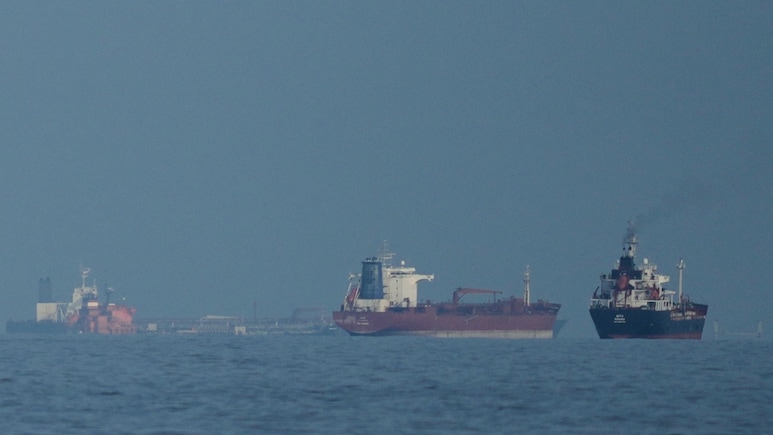
- The ceasefire plan allows for both Iran and Oman to charge fees on ships transiting through Hormuz
- The money raised through tolls will be used by Iran for reconstruction, sources said
- India is not in favour of any kind of toll for passage of cargo ships through the Strait, sources told NDTV
Under a two-week ceasefire agreement reached with the US, maritime traffic through the vital Strait of Hormuz, through which a fifth of global oil and gas passes, would be guaranteed.
Meaning, the Strait is now open for business.
Iran's ability to control the Strait of Hormuz since the war began on February 28 proved a tremendous strategic advantage.
The ceasefire may formalise that control - and give Iran a new source of revenue.
The plan allows for both Iran and Oman to charge fees on ships transiting through the Strait, AFP reported, quoting a regional official who was directly involved in negotiations.
The official said Iran would use the money it raised for reconstruction.
That would upend decades of precedent treating the Strait as an international waterway that was free to transit and will likely not be acceptable to the Gulf Arab states, which also need to rebuild after repeated Iranian attacks targeting their oil fields.
Iranian Foreign Minister Abbas Araghchi said passage through the Strait would be allowed under Iranian military management - further clouding the picture of who would be allowed to transit the waterway.
India is not in favour of giving any kind of toll for passage of cargo ships through the Strait of Hormuz, government sources told NDTV.
The United Nations Convention on the Law of the Sea bans interfering with ships passing through the Strait of Hormuz. That would be illegal under the Law of the Sea, as the pact is widely known.
The law establishes certain waterways, like the Strait of Hormuz, as a freely passable to international shipping and bars interference like tolls.
The concerned UN Charter will have to be amended to allow Iran to impose toll on cargo ships passing through the Strait of Hormuz.
India has held no talks with Iran on the toll issue so far, sources added.
Some shipowners and charterers are preparing to move their vessels stuck in the Gulf, shipping journal Lloyd's List reported on Wednesday morning. It estimates around 800 ships are currently stuck in the Gulf.
From March 1 to April 7, commodities carriers have made 307 crossings, according to Kpler data, a 95-percent decrease from peacetime traffic.
Track Latest News Live on NDTV.com and get news updates from India and around the world

