Opinion | War Ally To Mere Bystander: Is This The Loneliest Day For Netanyahu?
Israel, the US's closest partner in the region and which lured Trump to take on Iran, was ultimately a mere spectator to the ceasefire agreement.
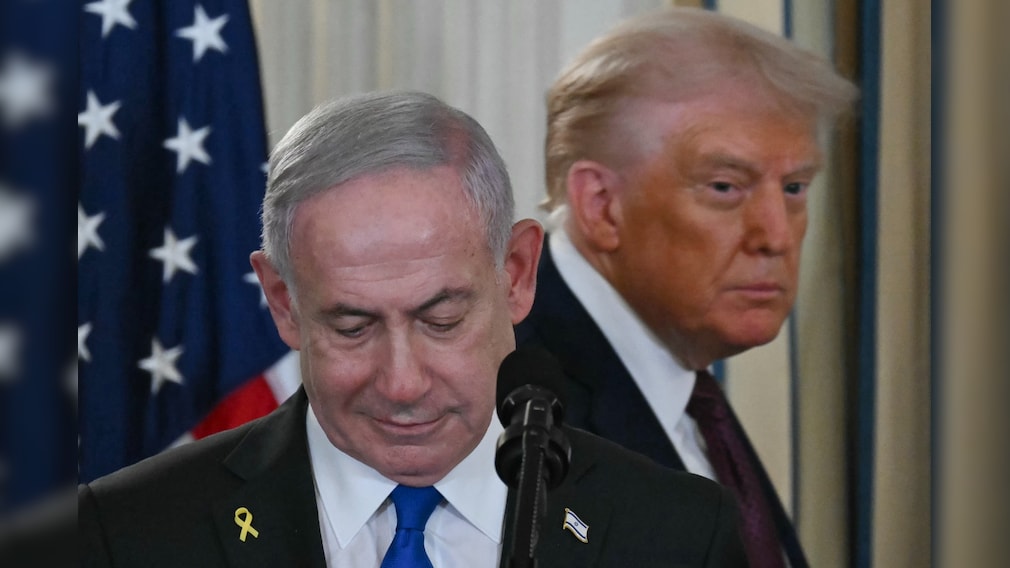
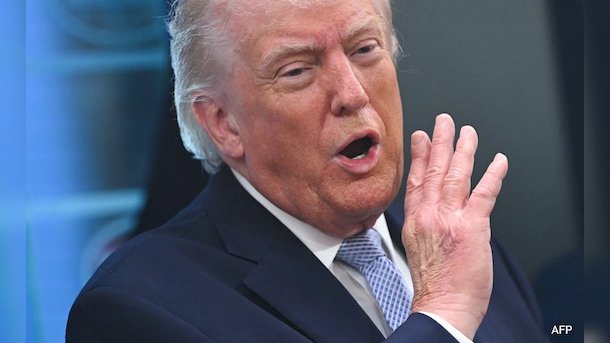
In the early hours of April 9, a few moments after US President Donald Trump took to social media and proclaimed that "a whole civilisation will die tonight, never to be brought back again", Iran and the US agreed to a two-week ceasefire arrangement via mediation of Pakistan. This arrangement seems to be the off-ramp the American leader was looking for, an escape from a potential 'forever war', something he has spent a vast amount of time deriding former US presidents for during his campaigns.
It is difficult to deny that Trump was in a quagmire. The war was not only escalating but also entrenching into a protracted conflict. Long-standing regional fault-lines, which were actively being managed over the past years, were renewed and pulled back into a situation heading towards a global economic abyss. Trump, once again, took to social media to announce the ceasefire, and Iran's Foreign Minister, Syed Abbas Araghchi, also released a statement, in broad acceptance of the two-week timeline, but with more leverage than the White House in play.
A New Middle East
As the global economy, markets, and oil and gas supply chains took a sigh of relief, staring at the brink of an international energy crisis, the Middle East geopolitically is looking at a reorientation that it did not order, but now must deal with. The ceasefire agreement, as per available information, is designed for a US off-ramp and not regional stability. Talks to take forward the ceasefire understanding are slated to take place in Pakistan on Friday (April 10) without direct intervention or participation of either Israel or any of the Gulf states, while demands for an end to the warfare in countries like Lebanon have been put forward by Tehran.
The non-participation of Israel and the Gulf states opens a Pandora's box on how the region moves forward in the coming months. Iran, maintaining tight control over the critical Strait of Hormuz and doubling down on its assertion about its armed forces having the right to decide the waterways' operationality, seems to have come out with the upper hand despite suffering immense damage over the 40-day-long bombing operation. However, the regime has survived, despite the assassination of Ayatollah Ali Khamenei in a US-Israeli strike in February, and questions over the ability of his son and successor, Ayatollah Mojtaba Khamenei.
Bibi Out In The Cold?
Israel, the US's closest partner in the region and which lured Trump to take on Iran, was a spectator to the ceasefire agreement and was forced to halt strikes against Iran (but has said it will continue its campaign against Hezbollah in Lebanon). From saying Iran was close to making a few nuclear warheads back in the summer of 2025 to highlighting that an uprising from within the Iranian population was inevitable following an aerial campaign against the regime, Netanyahu has seen Trump as a one-in-a-lifetime opportunity to fundamentally degrade Iran, whatever the cost.
However, while the military campaign has certainly dealt a mighty blow to Iranian capacities, it has also solidified the idea that any future security construct of the region, specifically with relation to the Strait of Hormuz, cannot be put together without Iranian say.
For Israel, the ceasefire may be a bitter pill to swallow, with its strategic aims remaining in suspension. Its strategy of 'mowing the grass', or short bursts of military campaigns to keep a threat degraded, may work in Gaza and Lebanon, but conducting these operations against Iran consistently will not be possible without the US. Israel's opposition leader, Yair Lapid, who supported these actions against Iran, called the ceasefire deal a "political disaster" due to Israel not being at the table during the ceasefire talks.
Rumblings Within Gulf
Meanwhile, the likes of Saudi Arabia, Qatar, Bahrain, Kuwait and the United Arab Emirates (UAE) are now looking at an emboldened Iran that will exert its weight in the Persian Gulf with limited securitisation options. They may now have to make sure that US firepower remains a constant in the region, challenging their own aims of building long-term strategic autonomy. More quietly, Gulf states may have to align more with Israel as far as Iranian threat perceptions moving forward are concerned. This is a less-than-ideal situation, considering Israel's unpopular war in Gaza, but it may become a strategic necessity moving forward. The only country in the Gulf with explicit support for the ceasefire till now is Oman, which previously has also said that the war was thrust upon Iran, and was not the latter's choice.
How the powerful Islamic Revolutionary Guard Corps (IRGC) of Iran takes this detente arrangement is also worth keeping an eye on. The killing of the Ayatollah, along with a slew of the country and the corps' top leadership, means that the military may chase vendettas. Over the past month, a level of decentralisation has been orchestrated in operational tactics, meaning IRGC commanders may not necessarily wait for a chain of command to deliver orders. They are able and capable of doing so themselves. Countries like the UAE are still reporting projectile launches from Iran, highlighting that implementation of such a deal is much more complex than a few announcements on TruthSocial.
Finally, the longevity of this ceasefire will have Iran as the biggest stakeholder, along with the US. That automatically elevates its geopolitical standing in the region up many notches, a new reality very few others will be comfortable with. Over the next two weeks, the US will press for its exit, Iran will press for its institutional embedment in all things security for the region, while Israel and Gulf states reorient on how to navigate a 'new Middle East' that no one had asked for.
(Kabir Taneja is Executive Director of the Observer Research Foundation Middle East)
Disclaimer: These are the personal opinions of the author
-
Opinion | Great 'Exceptions': How The Oil India Was Attacked For Is The Oil Trump Now Seeks

A law written to punish the buyers of Russian oil was suspended by the US to protect a purchase of Russian oil. India spent fourteen months being lectured for less.
-
Opinion | Louis Vuitton Loot, Torched Cars: France Protests Have An Unlikely Beneficiary
It's an unbelievable moment. Crowds looting the most exclusive stores in Paris, including the famed Luis Vuitton. But what's behind this meltdown?
-
Blog: Kolkata Didn't Learn From 2015. Eleven Years Later, It Proved To Be Fatal
The City of Joy isn't a stranger to crowd control. Be it during Pujo or Christmas at Park Street, Eden Gardens cricket matches, or Derbies between Mohun Bagan and East Bengal. But during Pujo, the entire city is on alert.
-
Opinion | Slurs, Threats, Now A Temple Attack Plot: When Did America Become So Hostile To Indians?
The rising tide of anti-India, anti-Hindu, and racist attacks serves as a stark reminder that economic prosperity does not automatically guarantee social immunity from bigotry.
-
A Step Behind Neha Bora: What Rahul Gandhi's Gesture Says About Congress' Gen-Z Pitch
At INDIA bloc's march to Supreme Court, Rahul Gandhi placed himself a step behind two women, hands resting on their shoulders. One was his sister Priyanka. The one on his right was Neha Bora. Here's what the image means for the protest wave now, and for Rahul's politics in general.
-
Opinion | Imran Khan, And The Perils Of Having An 'Opinion' In Bollywood
The reality of the industry is quite grimy. More often than not, its inhabitants have been fairweather friends, happy to sing the praises of whoever is in a position of authority.
-
Exclusive: India's Food Safety Problem Goes Beyond Just Dirty Kitchens - By Tukaram Mundhe
On World Food Day, Maharashtra's Commissioner of Food Safety explains why instead of taking stopgap measures, the entire supply chain in India needs to be held accountable and made transparent.
-
Opinion | India Has Enough Coal. So Why Are Power Plants Running Short? A 76 Million 'Crunch'
As of October 5, as many as 82 of the 191 thermal plants monitored by the Central Electricity Authority were in the 'critical' category
-
Opinion | Starlink, India, And Why Elon Musk Must Know His Billionaire Tantrums Won't Work
India should neither be intimidated by Musk's global influence nor distracted by his theatrics.
-
Blog | 'Baap Da Brat': Kerala Mini Cooper Crash, And Why 'Daddy' Can't Keep Saving You
There are three things you should never underestimate in India: the power of 'jugaad', the elasticity of the law, and the confidence of a 'Baap da Brat' who believes his Papa Posh can fix absolutely anything.