





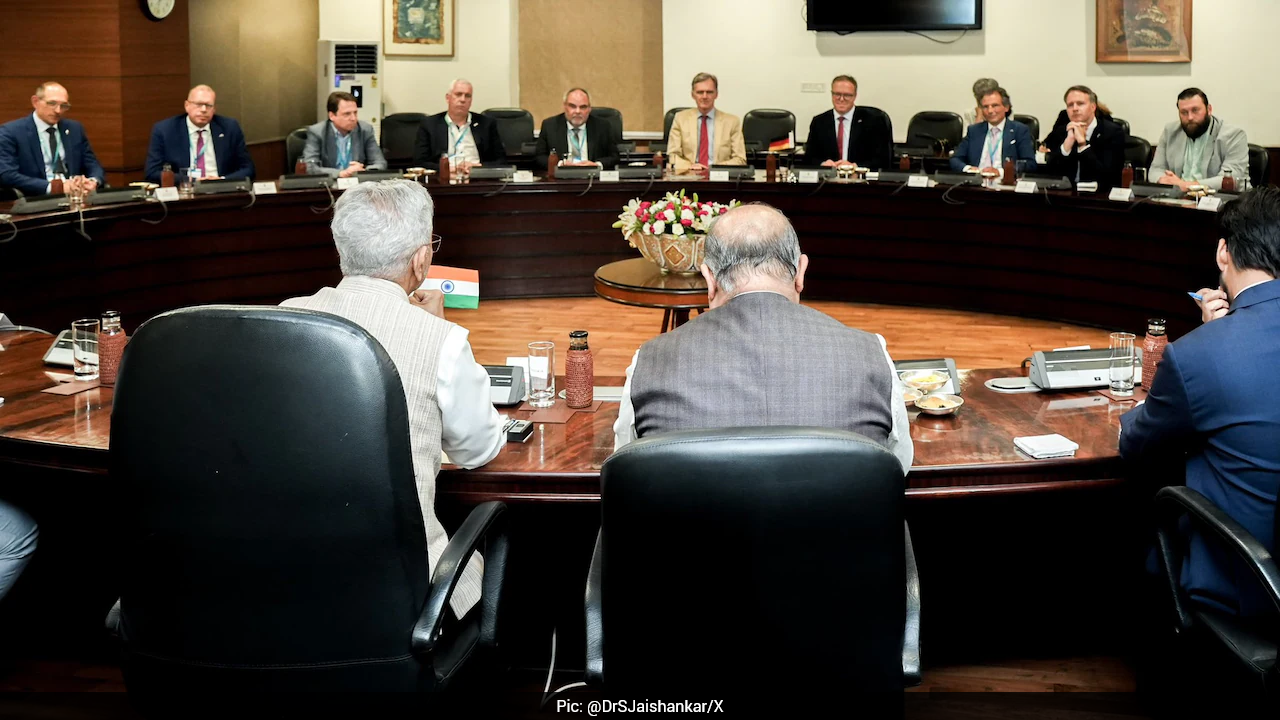
With India and Germany focusing on improving their energy security, decreasing dependence on imports of fossil fuel, and moving towards sustainable development, the two nations are once again collaborating in the field of renewable energy.
This was highlighted in the tenth session of the Indo-German Partnership for Green and Sustainable Development (GSDP) Conversation Series on the topic of "Energy Security Through Renewable Energies," organized by MNRE.
In the discussions involving officials of the government, industry leaders, think tanks, renewable energy experts, and private sector companies, ways were discussed to speed up the clean energy transition process in India and make it more resilient in the face of uncertain fossil fuel markets.
Addressing the event, German Ambassador to India Dr. Philipp Ackermann stated that renewable energy had now become not just a priority of climate change but an economic and strategic priority as well for many nations.
"It is the challenge shared by both India and Germany to decrease dependence on imported fossil fuels and achieve energy independence. The trinity of climate action, economic opportunity and energy security makes renewables an absolute necessity," he said.
Speaking about the importance of collaboration between the two nations, Dr. Ackermann said that 2022 marks the 75th anniversary of the establishment of diplomatic relations between India and Germany. He informed that the relationship had progressed from traditional development cooperation to climate action, sustainable development and resilient economic growth.
Currently, the two nations are collaborating in several fields including renewable energy deployment and manufacturing, battery storage, grid integration, energy efficiency, green urban mobility, biodiversity conservation, climate adaptation and vocational education.
In his address, Secretary of MNRE, Santosh Kumar Sarangi, mentioned that there has been increasing focus on energy security amidst geopolitical uncertainty.
"The crisis in West Asia has again reminded us of the importance of energy security. Renewable energy, including solar, wind, battery energy storage systems, and green hydrogen, has tremendous potential in ensuring energy security in addition to sustainable development," he said.
Mr. Sarangi further mentioned that sources of energy other than fossil fuels accounted for almost 54 percent of the total installed electricity capacity in India, and India is dedicated to achieving 500 GW of electricity capacity from sources of energy other than fossil fuels by 2030.
"Being partners in global energy transition, India and Germany will continue to collaborate to innovate, invest and achieve our shared objectives of energy security, sustainable development and climate action," he added.
India has set some ambitious objectives related to climate change and energy such as achieving 500 GW of electricity capacity from sources of energy other than fossil fuels by 2030 and reaching net-zero emissions by 2070. Solar energy, wind energy and battery storage technologies will play a significant role in reducing dependence on fossil fuels and creating a low-carbon economy.
In the discussion, it was mentioned that huge investments would be needed in energy storage systems, grid modernization, and public-private partnerships to ensure energy supply in the face of growing demands.
Renewable energy is rapidly becoming the backbone of all decarbonisation efforts in various sectors. However, the next stage of energy transition in India will require a holistic approach to cover generation, transmission, distribution, storage, financing, domestic manufacturing and electrification of energy-intensive industries.
As per the recently launched NITI Aayog Pathway to Net Zero report, the major problem is not the availability of cleaner technology but the capacity of the system to integrate, transmit, finance and utilize clean energy.
The panelists included German Ambassador Dr. Philipp Ackermann, MNRE Secretary Santosh Kumar Sarangi, Co-founder and Chairperson of Sustainability of ReNew Vaishali Nigam Sinha, and Observer Research Foundation Fellow Aparna Roy.
Established in 2022, the Indo-German Partnership for Green and Sustainable Development acts as a strategic platform to pursue climate-aligned development and fulfill the objectives of the Paris Agreement and Sustainable Development Goals.
With India being keen on becoming a developed nation by 2047, energy security and the expansion of clean energy would become crucial pillars of economic growth.
Track Latest News Live on NDTV.com and get news updates from India and around the world

