




India has ranked 70th out of 120 countries in the World Economic Forum's 2026 Energy Transition Index, having advanced two places. The push has come from stronger readiness and broad-based system gains, driven by a sharp rise in infrastructure, alongside improvements in equity, sustainability and financial investment.
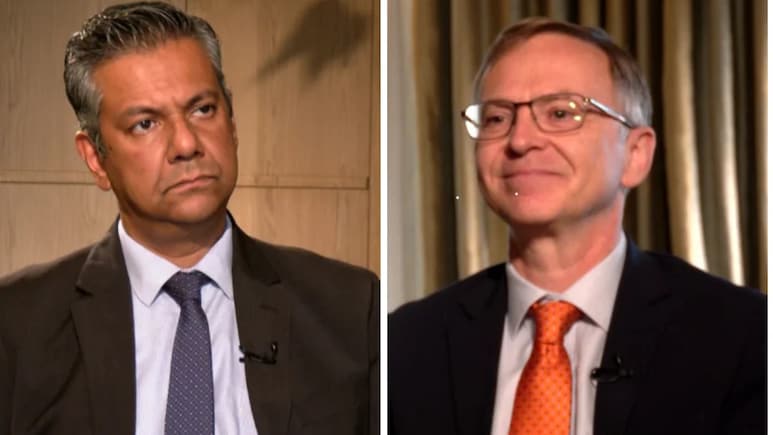
In an exclusive interview with NDTV's Vishnu Som, Roberto Bocca, Head of the World Economic Forum's Centre for Energy and Materials, said India has done well in terms of improvement.
Pointing out that it is actually a question of progress versus the past, he said the reason "is that our industry is looking not only at the energy system of today, but also at the enabler for the future. And India is doing very good".
"In terms of infrastructure, capital, education and sustainability, there have been concrete improvements, but also the outlook is positive. So that's where India is really playing a good role, is looking forward... not just based on the past but really looking at the future," he added.
Asked where he would like to see improvement, Bocca said the complexity of the energy system transformation comes through "what we call the energy trilemma".
What India is doing, and many other countries are trying, is to balance sustainability, security and affordability.
"So only sustainability is not enough, because as we know today, security is really one of the key elements. At the same time, you can't be secure and overspend because you need affordability for the economy to be resilient. So this is really balancing these three dimensions," he said. India, he added, is "finding a way to go through it," he said.
The next step for India, he said, is the integration of energy technology and the digital technology, because the country is "very strong in both". Here, Artificial Intelligence, he said, has a key role to play.
"when we think of AI, often people think about the energy consumption this will create," he said.
"But at the same time, AI can enable an optimisation of the system when the interconnection between supply and demand can be more effective and bring huge efficiency and productivity," he added. This, he said, could mean as much as 30 per cent in the energy system.
About the possibility of converting farm waste like stubble into energy -- a topic drawing much attention as the national capital is enveloped once again in its winter pollution blanket -- he said it makes absolute sense and is worthy of investment.
"We are looking at this actually at the formal global level. Here in India we started the Global Biofuel Alliance as well to go in that direction. So biofuels or cleaning the fuels is one of that opportunity," he said.
While fossil fuels like coal won't go away, their emission levels can be reduced by merging them with a bio-solution, he said.
Asked about India's role in ensuring global energy security, Bocca said India should push ahead with the innovations.
"In my view, it is really this combination of energy technology and digital technology is where India can keep innovating and finding new solutions that could be helpful for everybody," he added.
Track Latest News Live on NDTV.com and get news updates from India and around the world

