





As tensions in Middle East continue to push crude oil prices higher, concerns over India's energy security have once again come into focus. The Indian basket crude oil price, which largely remained around $60-70 per barrel through 2025, has climbed sharply in 2026, crossing $110 per barrel in March and April before crossing $130 per barrel in September 16, 2026. For a country that imports lion's share of its crude requirement, such a spike would normally raise fears of an energy crisis.
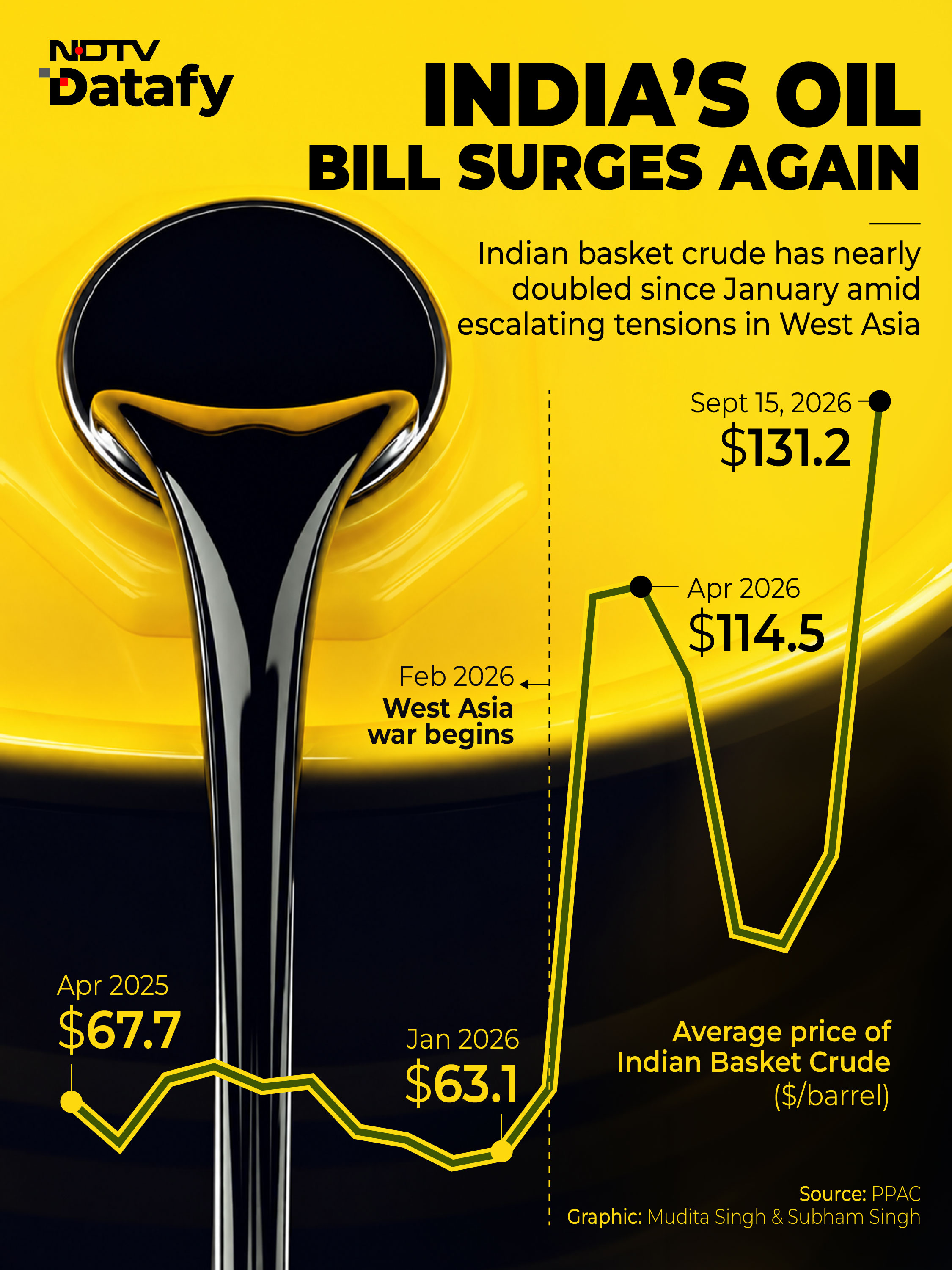
But data on oil imports, fuel demand and natural gas consumption show how India managed rising energy costs amid escalating tensions in Middle East.
India's Oil Source Strategy
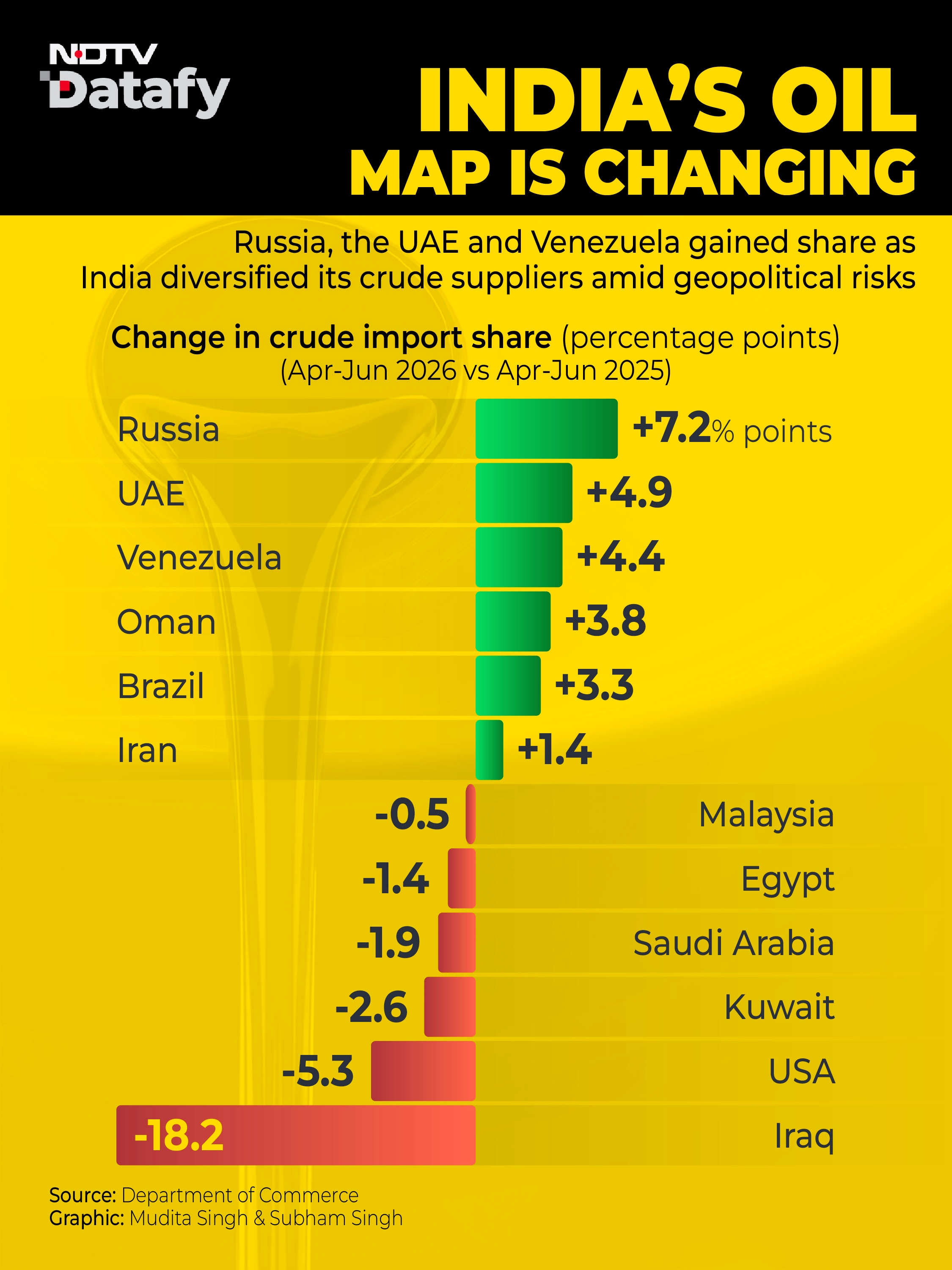
A key reason India has been able to navigate the latest oil shock lies in the way it has reshaped its crude import basket. As geopolitical tensions disrupted global energy markets, India increased purchases from a wider set of suppliers. Russia remained the country's largest source of crude, with its share rising from 33.7 per cent in April-June 2025 to 40.9 per cent a year later. Higher imports from the UAE, Venezuela, Oman and Brazil also added to the supply cushion. At the same time, the share of imports from countries such as Iraq and the US declined sharply. The shift highlights India's ability to rebalance supplies and tap multiple sources at a time when oil markets were facing renewed uncertainty.
Managing Demand Without Hitting Mobility
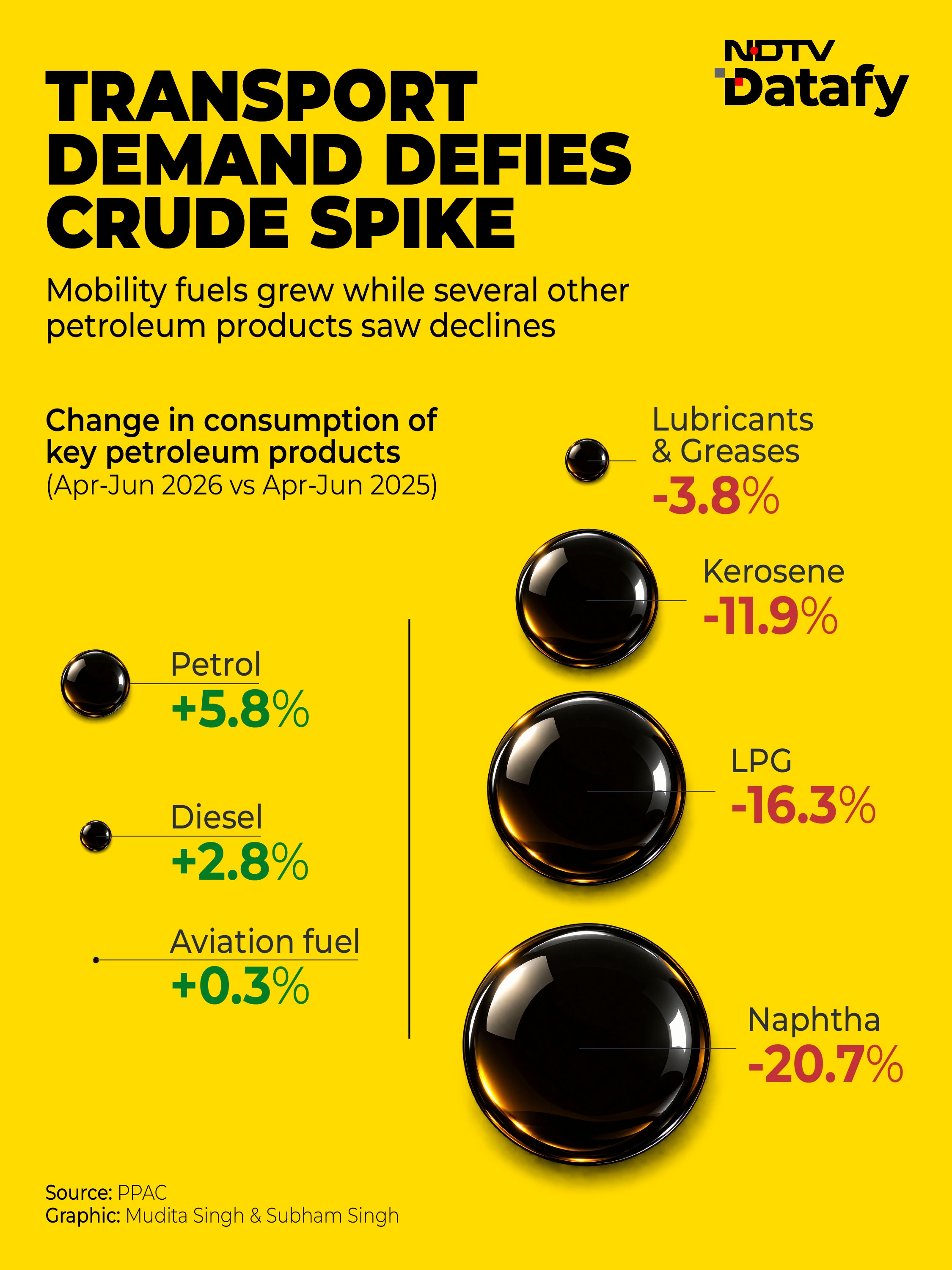
India's response was not simply about securing crude supplies. The consumption data from PPAC suggest a balancing act at home as well. Petrol and diesel demand continued to grow despite higher crude prices, indicating that mobility and goods movement remained largely unaffected. Meanwhile, consumption of LPG, kerosene and naphtha declined during the period. The pattern suggests that the impact of higher energy costs was not uniform across fuels, allowing overall energy demand to remain manageable despite the oil price shock.
Homes Protected, Industry Adjusts
Natural gas data reveal another important aspect of India's response. Rather than allowing the burden of higher energy costs to fall equally across all sectors, consumption patterns indicate that household and city consumers were largely protected.
City Gas Distribution, which supplies piped gas to households and compressed natural gas for vehicles, recorded a strong 26 per cent increase in consumption during April-June 2026. Fertiliser consumption also remained largely stable.
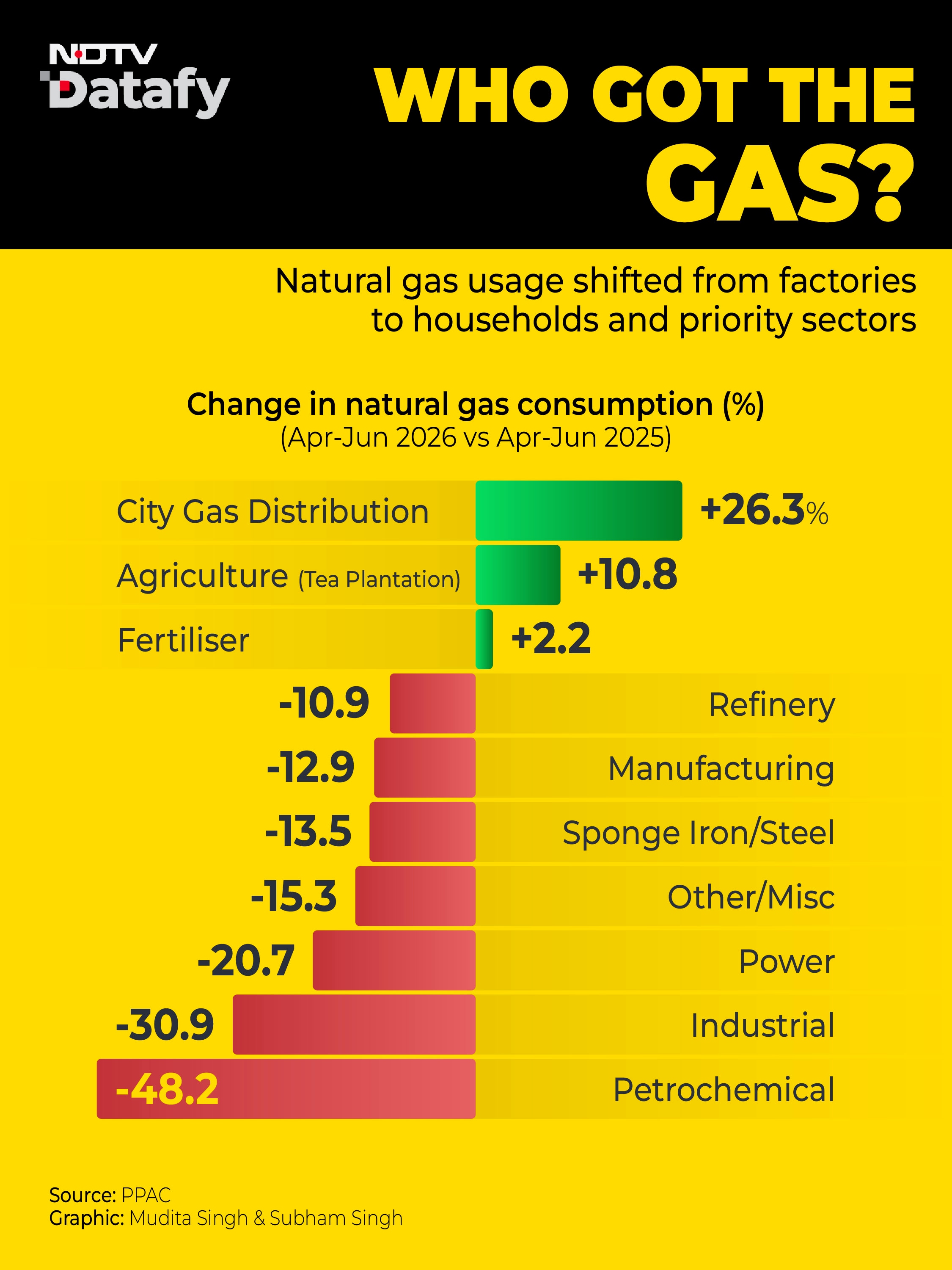
In contrast, several industrial sectors reported declines in gas usage. Consumption fell by nearly 48 per cent in the petrochemical sector, 31 per cent in industrial applications and 21 per cent in the power sector. The data suggest that industries absorbed a larger share of the adjustment while supplies to homes and essential segments continued to remain available.
Balancing Supplies And Demand
Taken together, the numbers point to a broader story. India's response to the latest oil shock has not been driven by lower energy demand. Instead, it has been built around securing crude supplies from a wider range of countries while ensuring that household energy needs and transport fuel consumption remain largely unaffected.
With crude oil prices once again above $130 per barrel amid escalating tensions in Middle East, the challenge is far from over. Yet the data show that diversified imports, stable fuel demand and targeted energy management have so far helped India avoid the kind of widespread energy stress that often accompanies major global oil disruptions.
Track Latest News Live on NDTV.com and get news updates from India and around the world

