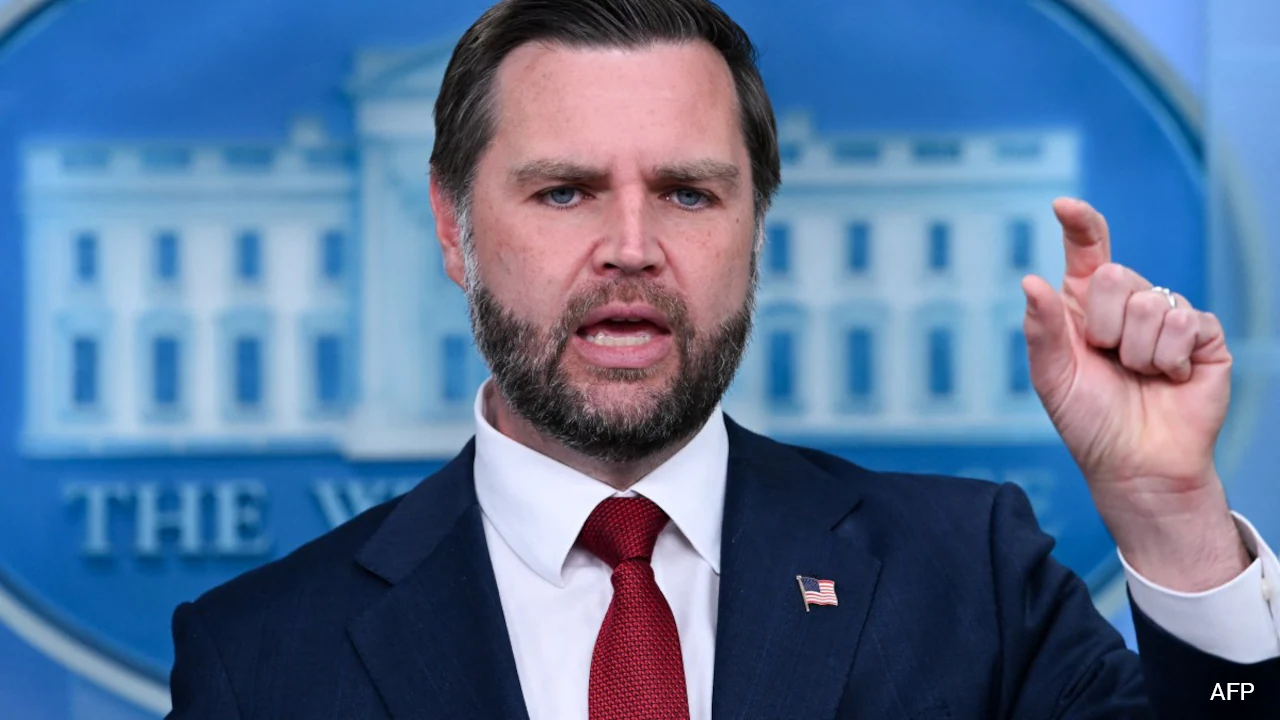
US Vice President JD Vance on Thursday (local time) said that the Trump administration has a range of options at its disposal to deal with Iran, including economic, military, diplomatic and covert measures, as tensions between Washington and Tehran continue to escalate amid the conflict in West Asia.
Speaking during a media briefing, Vance said the administration would not publicly disclose its plans for engaging with Iran, stressing that doing so would limit US President Donald Trump's ability to make decisions.
"There are a lot of additional tools that we have at our disposal. Some of those the President will use and some of them he won't," Vance said.
"But everything that could happen is on the table. Economic pressure, military pressure, diplomatic pressure, covert pressure. Of course these are tools in the President's toolkit," he added.
Vance said the administration's approach was also aimed at preventing a wider global energy crisis, accusing Iran of continuing to target commercial shipping in the Strait of Hormuz.
"We would have had an energy crisis because the Iranians refuse to stop acting like terrorists in the Strait of Hormuz," Vance said, while defending the US military's efforts to protect commercial shipping and maintain the flow of oil and gas.
The Vice President said Washington had to retain flexibility in deciding how to respond to Tehran and declined to spell out what measures could be adopted in the coming months.
"Part of the reason they're tools in the toolkit is because the Vice President, hopefully, is not dumb enough to stand up before all of you and a million Americans watching at home and say exactly what it is that we plan on doing," Vance said.
His remarks come as the seven-month-old conflict between the US and Iran shows few signs of a lasting resolution, despite indications that Trump may be considering declaring the war over.
According to a Wall Street Journal report, Trump is privately weighing whether to declare an end to the war, particularly as the US approaches midterm elections and energy prices remain elevated because of the conflict. At the same time, the Pentagon has extended troop deployments in West Asia, raising the possibility that military tensions could persist into next year.
The report came amid a fresh wave of strikes between the two sides. The United States Central Command said it had conducted strikes against multiple sites inside Iran, while Tehran responded with attacks on US-linked facilities across the Gulf.
Trump, meanwhile, said on Wednesday that he did not expect the conflict, which began on February 28, to continue for "very much longer".
Speaking to reporters at the Oval Office, Trump said US forces had carried out a "very heavy attack" on Iran the previous night, targeting newly established military equipment along the Strait of Hormuz, including radar and missile-related systems.
"We hit them hard last night, very hard. They gave a little love tap, but we hit them very hard last night," Trump said.
The escalation comes shortly after the Trump administration launched "Operation Economic Outcast", a campaign announced by US Treasury Secretary Scott Bessent to intensify economic pressure on Iran.
The operation is aimed at targeting what Washington describes as Tehran's principal economic lifelines, including oil, shipping, aviation and digital assets. Bessent said the campaign seeks to cut Iran off from international financial networks and restrict revenue streams supporting the Iranian government.
(Except for the headline, this story has not been edited by NDTV staff and is published from a syndicated feed.)
Track Latest News Live on NDTV.com and get news updates from India and around the world


