





- Union Minister Nitin Gadkari announced E100-compatible vehicles may launch within six weeks
- India has surpassed its target of 20 per cent ethanol blending in petrol ahead of schedule
- E100 is pure ethanol fuel, requiring a different storage and distribution system than E20
Union Minister Nitin Gadkari's announcement that E100-compatible vehicles could arrive within six weeks has revived the conversation around ethanol as an alternative fuel. India has already achieved its target of blending 20 per cent ethanol with petrol ahead of schedule. The next step, however, is far more ambitious.
Unlike E20, E100 is not a blend. It is fuel made entirely from ethanol.
That distinction matters because India's ethanol ecosystem has been built around blending ethanol with petrol before it reaches consumers. The country's success so far has depended on expanding ethanol production and supplying it to oil marketing companies for blending. Selling E100 at scale requires a different ecosystem, one where ethanol is stored, transported and dispensed as a standalone fuel.
Where We Are Lagging
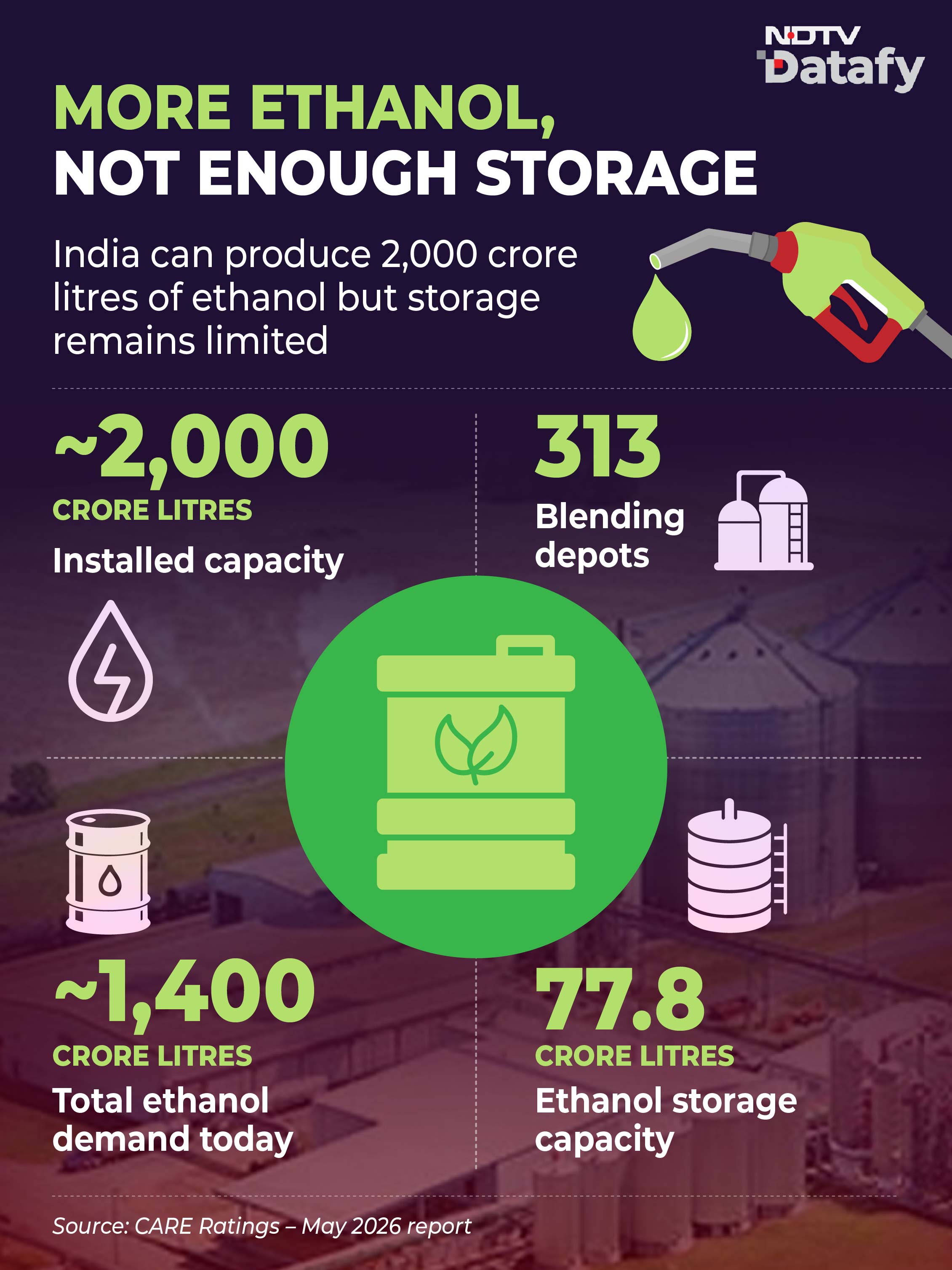
On the production front, India appears ready. Ethanol production capacity has expanded to nearly 2,000 crore litres annually, exceeding the requirements of the E20 programme. What India has solved is the supply of ethanol. The question now is whether it has built the infrastructure needed to deliver that fuel to consumers.
The numbers suggest the answer is still ‘No'.
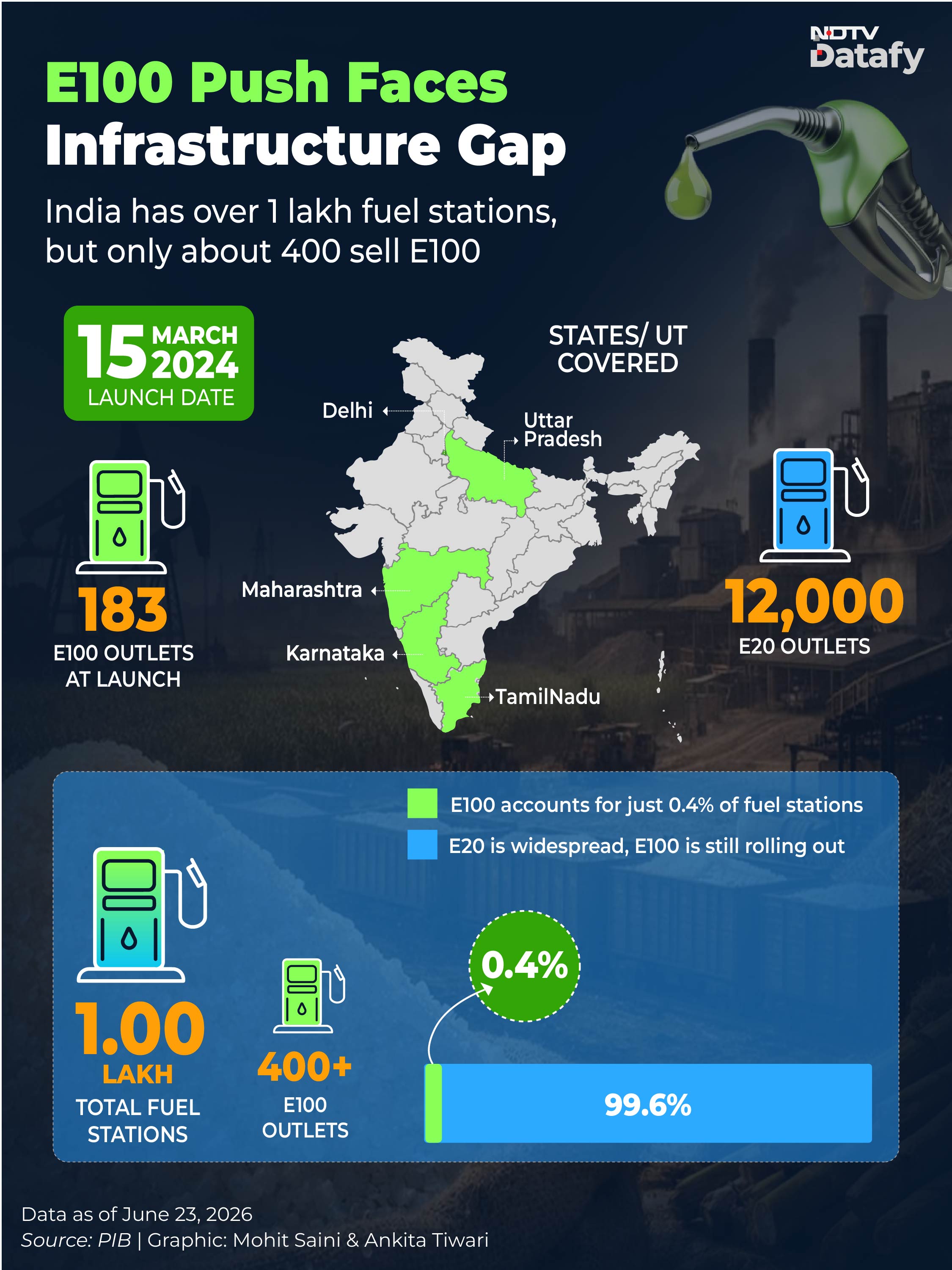
India has more than one lakh fuel stations, but E100 was launched at just 183 outlets in March 2024. Even after expansion, only around 400 outlets currently offer the fuel. That means 0.4 per cent of India's fuel retail network can dispense E100 today.
The government's own targets show how early the rollout still is. E100 availability is expected to expand to 500 stations by the end of 2026 and 5,000 stations by the end of 2027. While that represents rapid growth, even 5,000 stations would account for only about 5 per cent of India's current fuel retail network.
The gap becomes clearer when looking beyond fuel stations. Industry estimates show ethanol storage capacity of around 77.8 crore litres compared with production capacity of nearly 2,000 crore litres. The country also has around 313 blending depots that support the current ethanol programme. This infrastructure has been designed primarily for blending ethanol with petrol, not for distributing E100 across a nationwide retail network.
Geography presents another challenge. Ethanol production is concentrated in states such as Uttar Pradesh, Maharashtra, Karnataka and Bihar. Fuel demand, however, is concentrated in major consumption centres including Maharashtra, Uttar Pradesh, Tamil Nadu, Gujarat and the Delhi-NCR region. While Maharashtra and Uttar Pradesh are both producers and consumers, other large fuel markets depend on supplies transported over long distances.
The data shows that India has largely won the production battle. The next challenge is expanding storage capacity, strengthening distribution networks and increasing retail availability. Until that happens, E100 is likely to remain concentrated in select cities and transport corridors rather than becoming a fuel available across the country.
Track Latest News Live on NDTV.com and get news updates from India and around the world

