





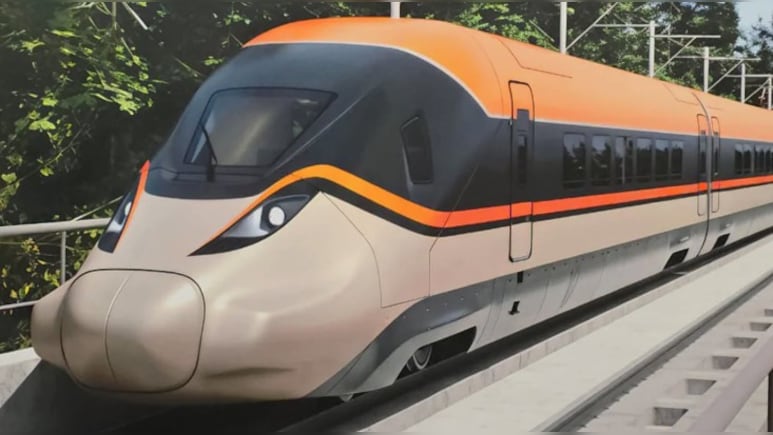
- Delhi-NCR will be a hub for four proposed bullet train corridors including Delhi-Varanasi-Siliguri route
- Delhi-Lucknow-Varanasi corridor to cover 813-865 km with speeds up to 320 kmph reducing travel times
- Delhi-Varanasi-Siliguri corridor to be India’s longest at 1,705 km, cutting travel time to six hours
After the Mumbai-Ahmedabad bullet train project, the Centre is now preparing to make the Delhi-NCR region a major hub for India's high-speed rail network. Plans are being drawn for four bullet train corridors originating from Delhi, with the proposed Delhi-Varanasi-Siliguri corridor being the most significant.
The Delhi-Varanasi-Siliguri route is among the seven high-speed rail corridors announced by the Union government in the Budget. These priority corridors are expected to involve an investment of nearly Rs 2 lakh crore.
Delhi-Lucknow-Varanasi Corridor
The proposed Delhi-Lucknow-Varanasi bullet train corridor is expected to significantly improve connectivity across Uttar Pradesh by linking major religious, political and industrial centres.
The route is proposed to pass through Noida, Jewar International Airport, Mathura, Agra, Firozabad, Etawah, Kannauj, Lucknow, Rae Bareli, Prayagraj, New Bhadohi and Varanasi. A separate 124-135 km high-speed link is also planned to connect Lucknow with Ayodhya.
The corridor is expected to be around 813-865 km long with 13 to 15 stations. Bullet trains will operate at speed of up to 320 kmph, reducing travel time between Delhi and Lucknow to about 2 hours 10 minutes, and Delhi to Varanasi to around 3 hours 50 minutes.
The National High Speed Rail Corporation Limited (NHSRCL) has already floated tenders for civil structure design work for the project.
Delhi-Varanasi-Siliguri Corridor
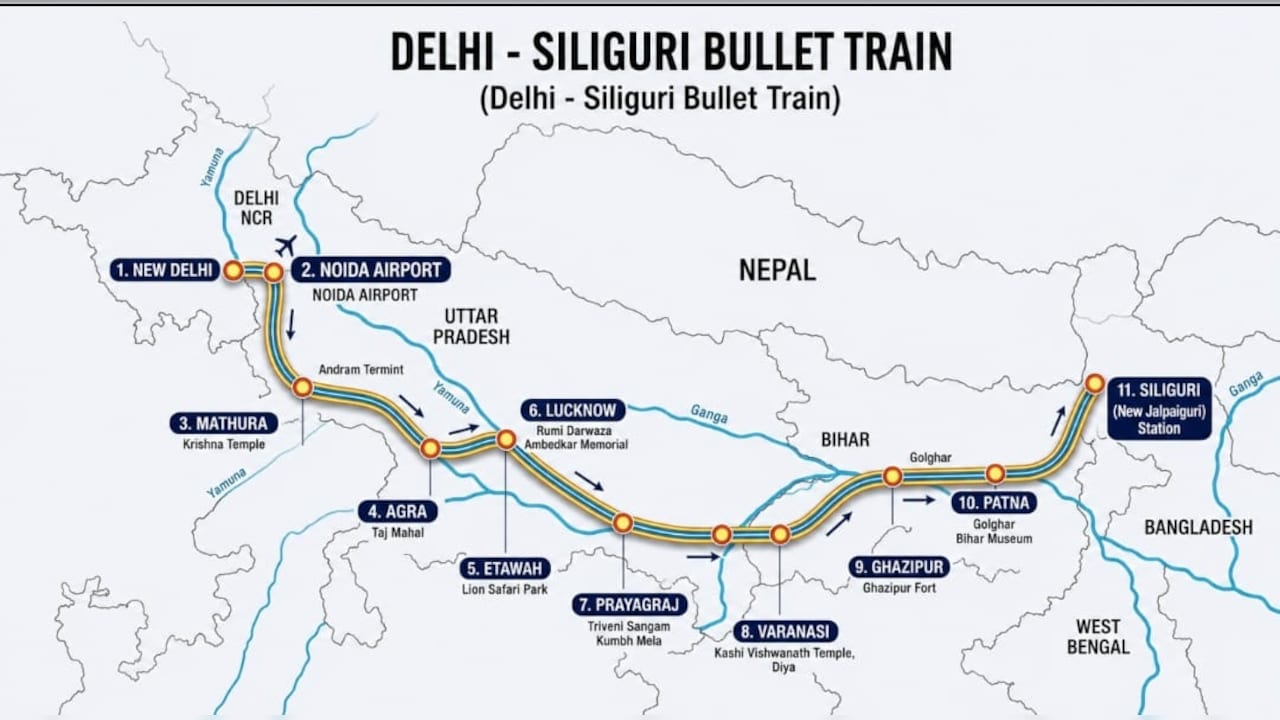
The Delhi-Varanasi-Siliguri bullet train is proposed to be India's longest high-speed rail corridor.
According to reports, the Delhi-Varanasi line will be extended to Siliguri, connecting northern India directly with eastern India and potentially the Northeast. There is also a proposal to extend the line further to Guwahati in Assam.
The proposed route will pass through Delhi, Noida, Mathura, Agra, Lucknow, Varanasi, Buxar, Patna, Begusarai, Khagaria, Katihar and New Jalpaiguri (Siliguri).
The corridor is expected to be approximately 1,705 km long and could reduce travel time between Delhi and Siliguri from nearly 20 hours to around six hours.
The Railway Ministry is currently carrying out surveys and feasibility studies for the project.
Delhi-Jaipur-Udaipur-Ahmedabad Corridor
Another proposed corridor will connect Delhi with Rajasthan and Gujarat through Jaipur, Udaipur and Ahmedabad. The line is expected to integrate with the under-construction Mumbai-Ahmedabad bullet train, enabling seamless high-speed travel from Delhi to Mumbai.
Proposed stations include Dwarka, Bijwasan, Gurugram, Manesar, Rewari, Behror (Neemrana), Shahpura, Jaipur, Kishangarh (Ajmer), Bijaynagar, Bhilwara, Chittorgarh, Udaipur, Dungarpur, Himmatnagar and Sabarmati (Ahmedabad).
The corridor will be around 886 km long with 14-15 stations and will connect the national capitals of Delhi, Rajasthan and Gujarat. While the Detailed Project Report (DPR) has been prepared, final financial approvals from the Centre and the concerned state governments are still awaited.
Delhi-Amritsar-Jammu Corridor
The proposed Delhi-Amritsar corridor will pass through Rohtak, Jind, Kaithal, Chandigarh, Mohali, Ludhiana and Jalandhar before reaching Amritsar. In the future, it may be extended from Jalandhar via Pathankot to Jammu and Katra, providing high-speed connectivity to the Vaishno Devi shrine.
The proposed corridor will be around 450-500 km long with 10-12 stations. Travel time between Delhi and Amritsar is expected to be reduced to around two hours.
The project is currently in the preliminary survey and route alignment stage.
Mumbai-Ahmedabad Bullet Train Timeline
India's first bullet train project between Mumbai and Ahmedabad is expected to begin operations on its first phase -- from Surat to Bilimora -- in 2027. The full Mumbai-Ahmedabad corridor is targeted for completion by 2029.
In contrast, none of the four proposed Delhi-based corridors has entered the construction phase yet, with all projects currently at various stages of surveys, approvals and design. The government plans to build approximately 250 km of high-speed rail track every year. India is also developing its first indigenous high-speed train, the B35, whose trials are expected to begin soon.
Track Latest News Live on NDTV.com and get news updates from India and around the world

