



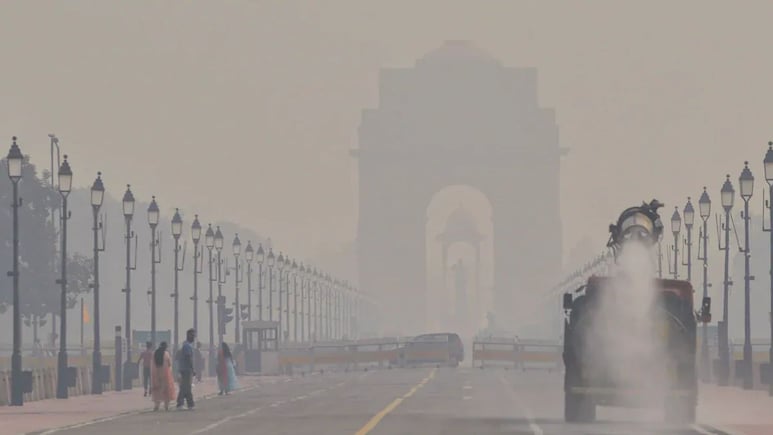
Delhi's struggle for basic essentials - clean water and clean air - is decades old. Today, the national capital is once again attempting to reclaim some breathable space. As part of this renewed effort, the Commission for Air Quality Management (CAQM) has announced its 2026 air-quality targets, laying out a detailed plan to curb pollution and push the city toward healthier living conditions.
What's the Plan?
According to Delhi's action plan for 2026, the city aims to achieve the following reductions:
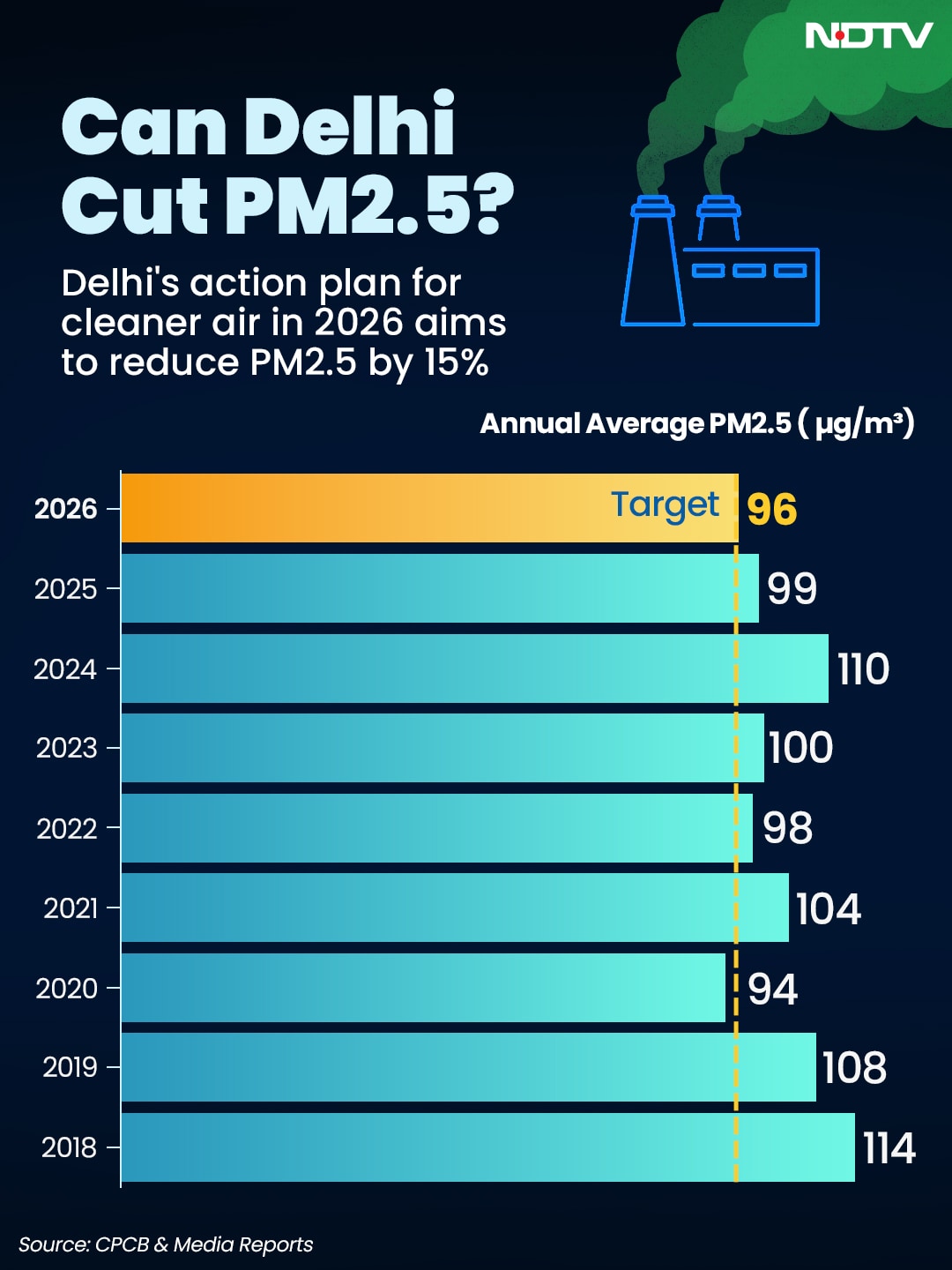
- 15% cut in PM2.5 levels
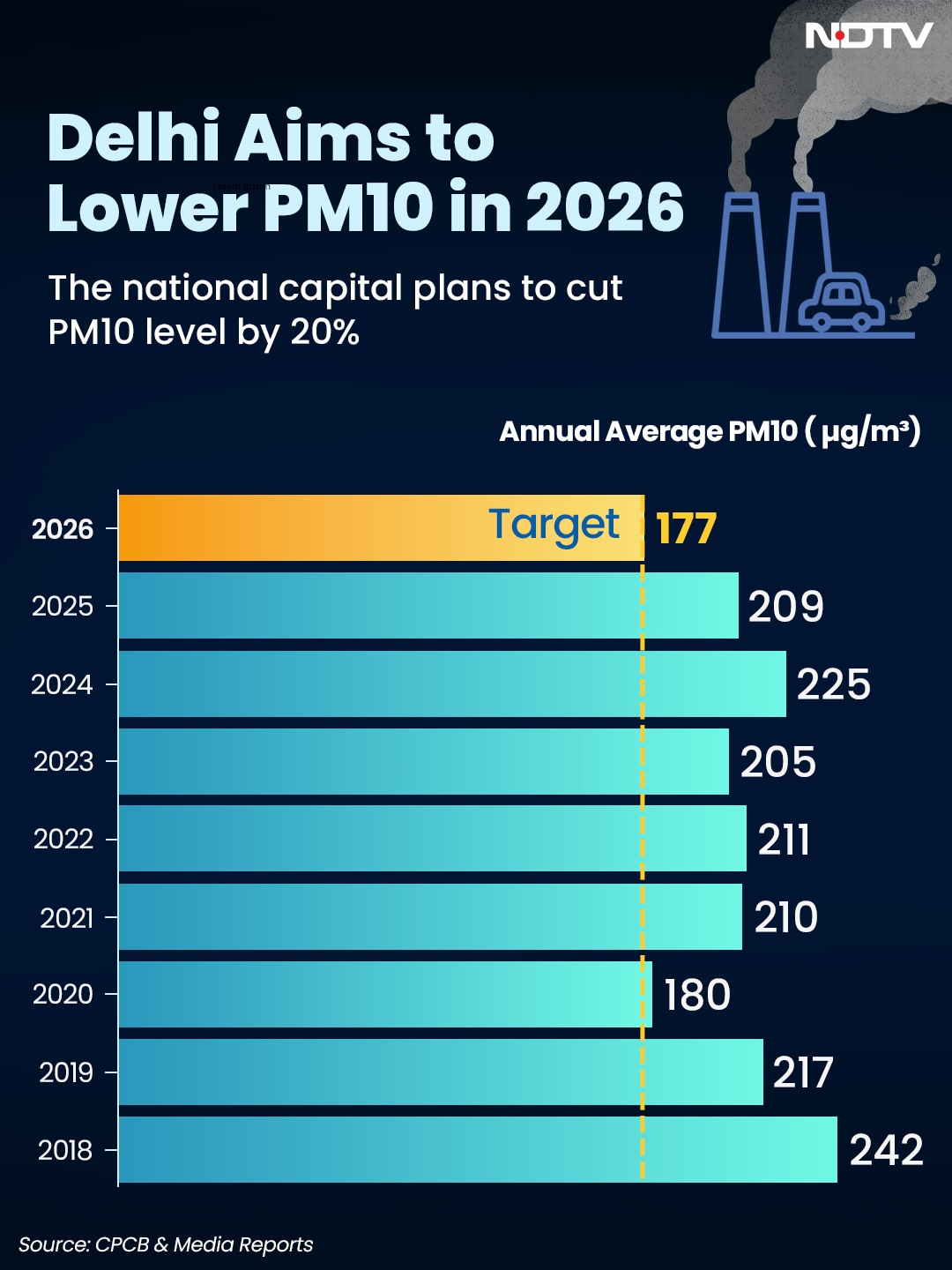
- 20% cut in PM10 levels
- 15% improvement in Delhi's annual average Air Quality Index (AQI)
These goals translate into bringing PM2.5 down to 96 µg/m³, PM10 to 177 µg/m³, and AQI to 177 for 2026.
Unlike older, broad pollution-control roadmaps, the new strategy assigns specific responsibilities to individual sectors, acknowledging that transport emissions, construction dust, biomass and waste burning, industrial operations, and small-scale manufacturing collectively feed Delhi's toxic air.
A key part of the plan is expanding air-quality monitoring infrastructure. The government intends to increase the number of Continuous Ambient Air Quality Monitoring Stations, aiming to reduce data gaps, strengthen enforcement, and ensure greater accountability among agencies responsible for controlling emissions.
How Bad Was It Earlier?
Delhi's air-quality journey shows slow but noticeable fluctuations over recent years. In 2018, the city recorded very high levels, PM2.5 at 114 µg/m³, PM10 at 242 µg/m³, and AQI at 225. These numbers showed that pollution was firmly in the "poor" to "very poor" range. By 2019, the levels had come down slightly, but the air was still unhealthy.
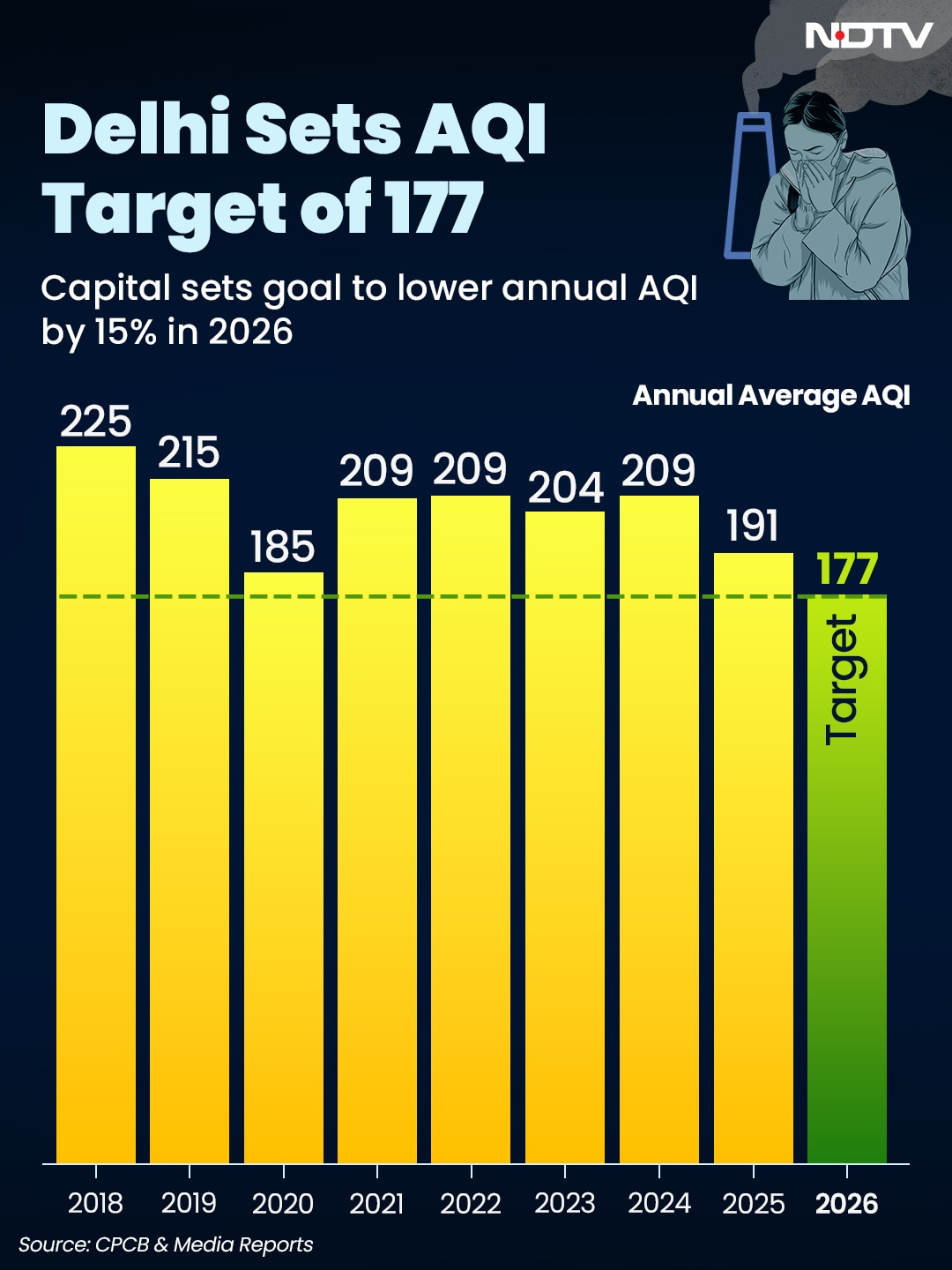
A major drop appeared in 2020, when PM2.5 fell to 94 µg/m³, and AQI improved to 185. This was largely due to reduced activity during the COVID-19 lockdowns. However, once normal activity resumed, pollution climbed again, with PM2.5 rising to 104 in 2021 and AQI returning to around 209 through 2021-2024. These years show that Delhi struggled to retain the cleaner air of 2020.
A real sign of improvement occurred in 2025, when AQI dipped to 191, and PM2.5 dropped to 99 µg/m³, indicating that pollution‑control measures may have begun to work more consistently.
Money Matters
The budgetary support for the CAQM has seen a steady climb from FY22 to FY27, signalling the government's growing commitment to tackling pollution
In FY22, the allocation was Rs 20 crore, which dipped slightly in FY23 to Rs 13 crore, but increased every year since then. It went up to Rs 16 crore in FY24, Rs 21 crore in FY25, and saw a sharper rise to Rs 31 crore in FY26. For FY27 (Budget estimate), the allocation is Rs 35 crore, the highest so far.
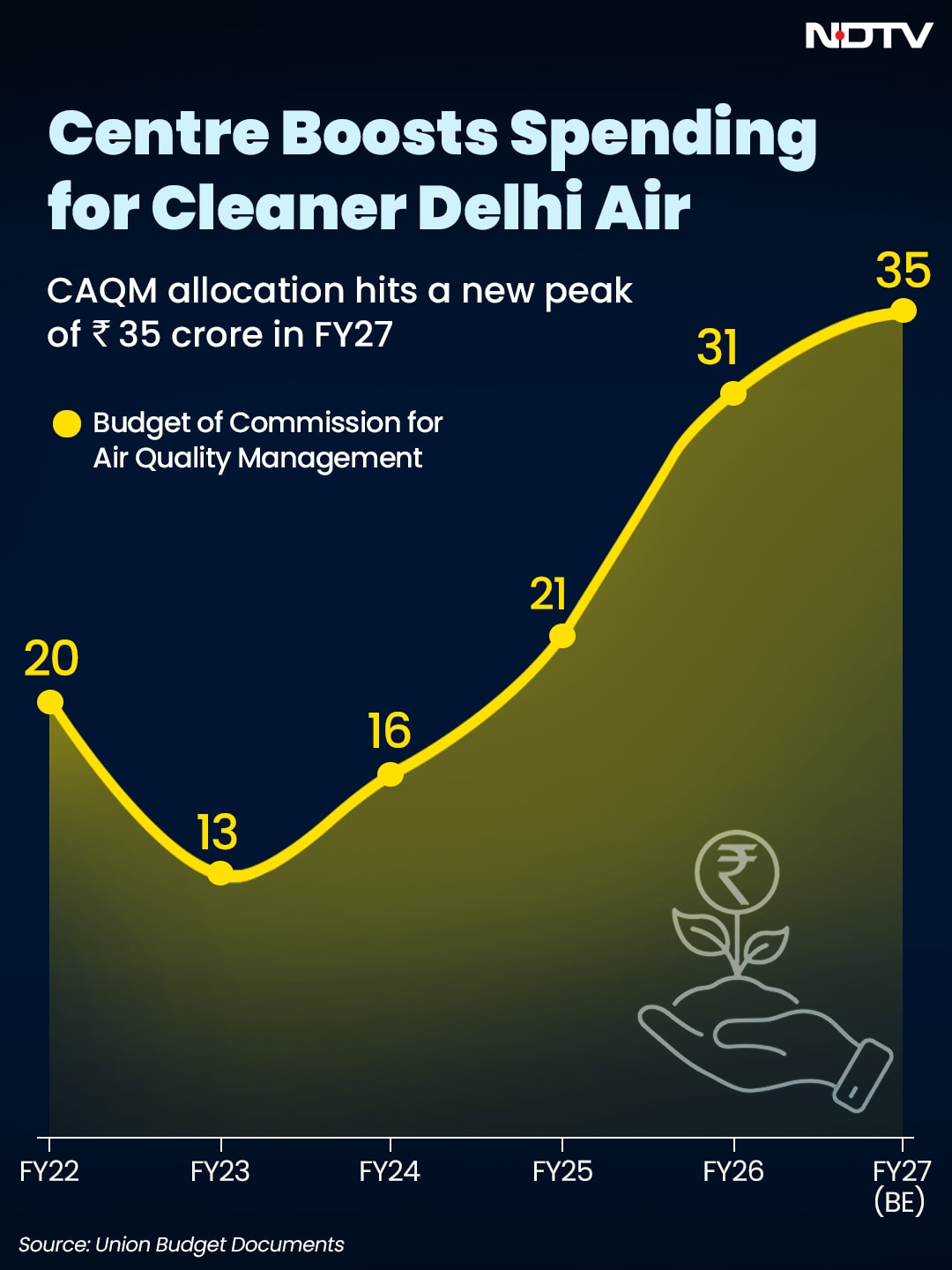
This upward trend indicates that the government is expanding financial support for monitoring, enforcement, and long-term pollution-reduction work by CAQM.
But Are the Targets Actually Healthy?
Delhi's 2026 goals mark progress, but by global standards, the air will still be hazardous.
The CAQM aims to bring PM2.5 down to 96 µg/m³, PM10 to 177 µg/m³, and AQI to 177, while the recommended levels by the World Health Organisation are a PM2.5 limit of 5 µg/m³ and PM10 at 15 µg/m³. This means that despite marginal improvement, Delhi's future air will still be nearly 20 times dirtier than the WHO's safe level.
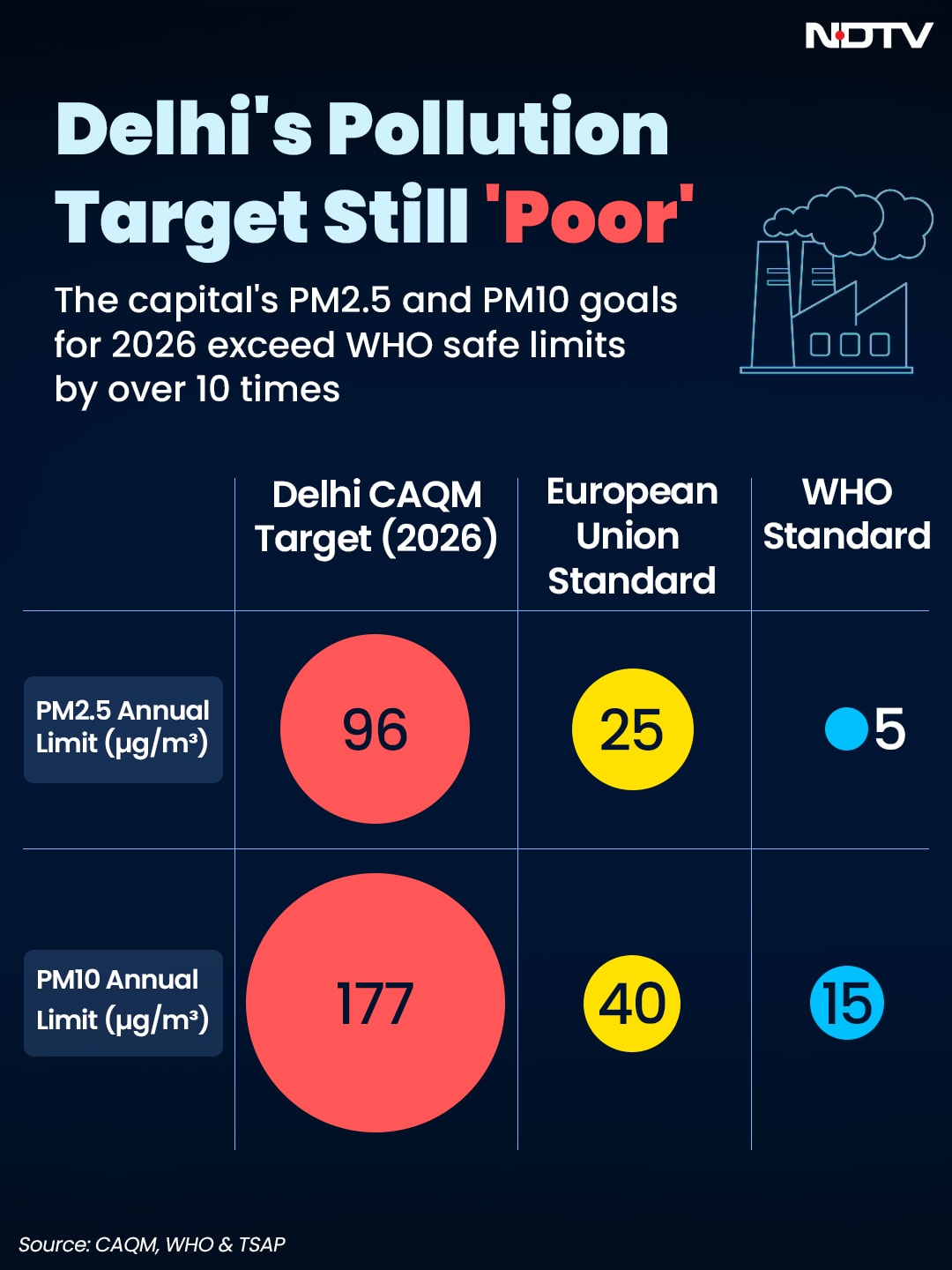
Under the US EPA system, Delhi's target AQI of 177 still counts as "Unhealthy," since anything above 150 signals health risks for the general population. European Union rules also treat PM2.5 above 25 µg/m³ and PM10 above 40 µg/m³ as failing to meet clean‑air standards, which means Delhi's 2026 air will remain several times dirtier than European limits as well. Even though the city is reducing pollution compared to its own past levels, globally, it will still be far from what is considered clean or safe air.
Track Latest News Live on NDTV.com and get news updates from India and around the world

