





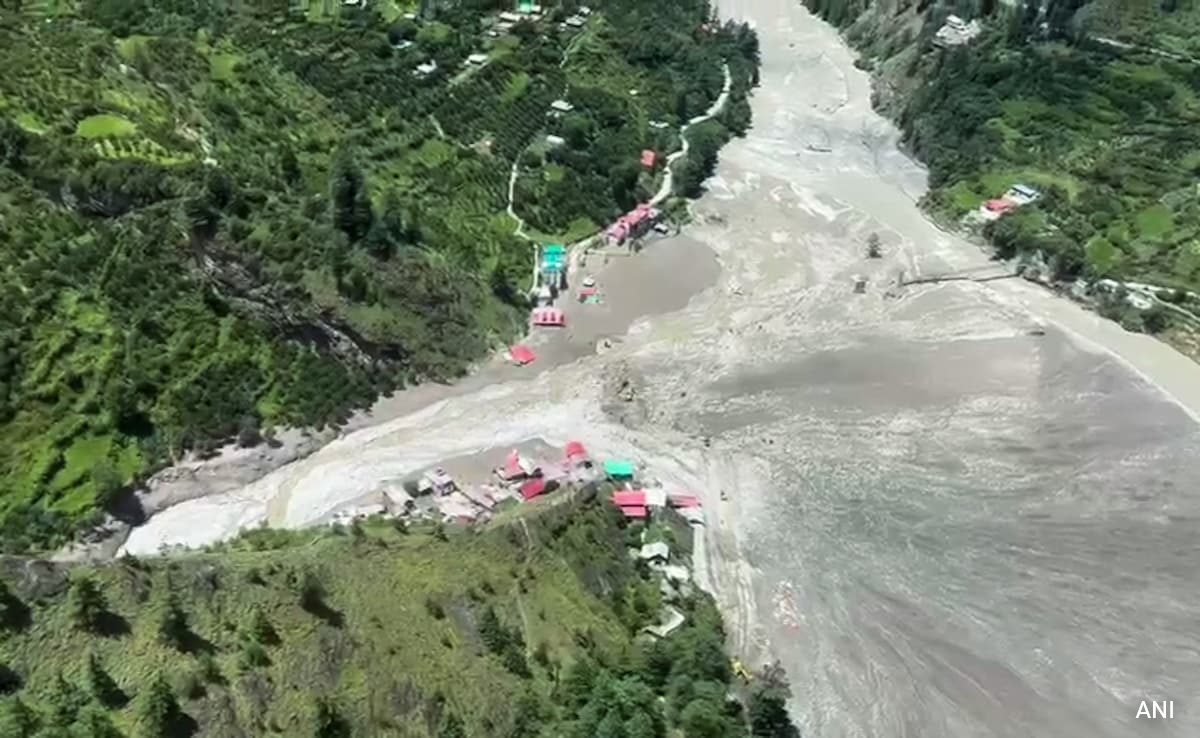
ISRO has identified a new possible cause of last year's flooding in Uttarkashi's Dharali. When a wall of water, mud and boulders tore through the village on August 5, 2025, the devastation was swift and shocking. Homes were smashed, hotels collapsed, and the bustling marketplace along the Khir Gad stream was buried under debris. In the immediate aftermath, the usual explanations came thick and fast: Was it a cloudburst, a glacial lake outburst flood (GLOF), or extreme monsoon rain?
Now, a detailed scientific investigation by scientists from the Indian Space Research Organisation (ISRO) has revealed a very different and far more unusual trigger. The Dharali flood, they say, was caused by the sudden collapse of an exposed ice sheet high above the village, a hidden and under-recognised hazard in a warming Himalaya.
What happened at Dharali?
Dharali sits on the banks of the Bhagirathi River, just below where a smaller glacier-fed stream, the Khir Gad, rushes down from the Srikanta Glacier. The village lies on a narrow valley floor, leaving little room for error when water comes charging down from above.
On August 5, residents captured terrifying videos of a sudden, violent surge, a short-lived but extremely powerful flow of water mixed with rocks, mud and ice. This was followed by hours of slower, muddy flow. The nature of the flood itself raised questions.
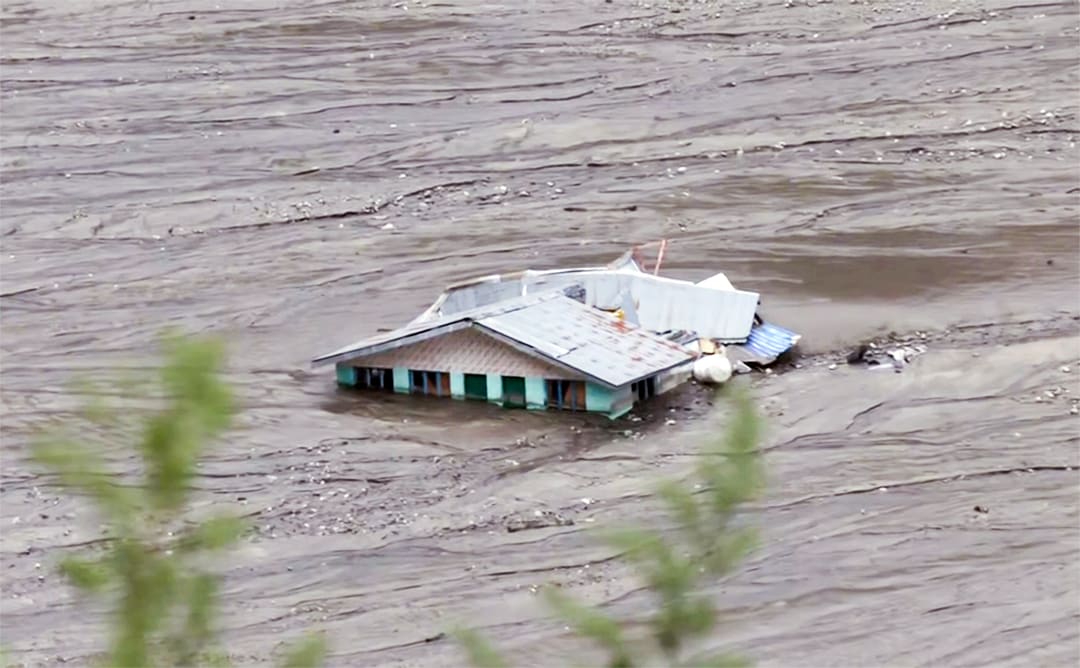
Cloudbursts usually bring prolonged, intense rainfall. GLOFs involve huge volumes of water released when a glacial lake bursts.
Dharali showed neither pattern.
Why it was not a cloudburst or a GLOF
ISRO scientists examined rainfall records from the India Meteorological Department and found that rain in and around Dharali in the days leading up to the disaster was light to moderate. There was no evidence of the kind of intense, localised downpour that defines a cloudburst.
They also carefully scanned satellite images of the upper catchment and confirmed that there were no glacial lakes above Dharali that could have burst. This ruled out a GLOF, a hazard already known in the Himalaya but not applicable here.
So what caused such a destructive surge?
The hidden culprit: An ice patch collapse
Using high-resolution satellite imagery, digital elevation models and even videos shot by villagers, the ISRO team traced the flood's origin to a steep slope just below the Srikanta Glacier, more than 5,200 metres above sea level.
Here lies what scientists call a "nivation zone", a hollow on a shaded mountain slope where snow and ice can survive year after year, even though it is not a full-fledged glacier. In July 2025, satellites detected something unusual in this zone: patches of bare ice exposed for the first time in at least 15 years.
Normally, these ice patches are protected by layers of snow and compacted ice. But rising temperatures and ongoing glacier thinning had stripped away this protective cover. The exposed ice became fragile. Sometime just before August 5, a large ice patch, spread over roughly a quarter of a square kilometre, suddenly collapsed. When it broke, gravity did the rest.
How a small collapse caused a big disaster
At first glance, the volume of ice involved, tens of thousands of cubic metres, may not sound catastrophic. But Dharali's geography turned this collapse into a deadly chain reaction.
The ice patch sat on a steep slope of about 30 degrees. Below it lay an almost continuous downhill chute dropping more than 2,500 metres over just nine kilometres, funnelled into the narrow Khir Gad valley. As the ice disintegrated, it released meltwater, ice blocks and debris that accelerated rapidly downhill.
Along the way, this fast-moving mass scraped loose rocks, soil and old landslide material, growing heavier and more destructive by the second. By the time it reached Dharali, it had transformed into a high-energy debris flood, brief, violent and devastating.
This explains why the flood arrived suddenly, peaked within seconds and then subsided, unlike a rain-fed flood that lingers.
A warning sign from a warming Himalaya
The ISRO study highlights something deeply worrying. Ice patch collapses like this have been documented in the Arctic and Greenland, but are rarely reported from the Himalaya. Dharali shows that such events are no longer theoretical.
As glaciers thin and snowlines retreat, more ice patches are being exposed in high-altitude hollows. These exposed ice bodies are unstable and can fail suddenly, especially during warm summers. Unlike glacial lakes, they are hard to spot on the ground and easy to overlook in hazard planning.
Crucially, the study shows that even relatively small ice failures can cause outsized damage when they occur above steep, confined valleys where villages, roads and pilgrimage routes lie directly in harm's way.
Can such disasters be predicted?
There is a silver lining. The exposed ice patches that later collapsed were visible in satellite images weeks before the flood. Scientists say that systematic monitoring of such features using satellites could provide early warning signals of rising risk.
However, cloud cover during the monsoon often blocks optical satellites. ISRO researchers argue for greater use of radar satellites, which can "see" through clouds, to keep watch over vulnerable Himalayan catchments.
The bigger picture
Dharali is not an isolated tragedy. It is part of a growing pattern of climate-linked disasters in the Himalaya, where warming temperatures are destabilising glaciers, slopes and frozen ground. The lesson from Dharali is clear: disaster science must look beyond traditional explanations like cloudbursts and glacial lakes. Sometimes, the danger lies in a quiet patch of ice, high above in the mountains, waiting to give way.
Track Latest News Live on NDTV.com and get news updates from India and around the world

