





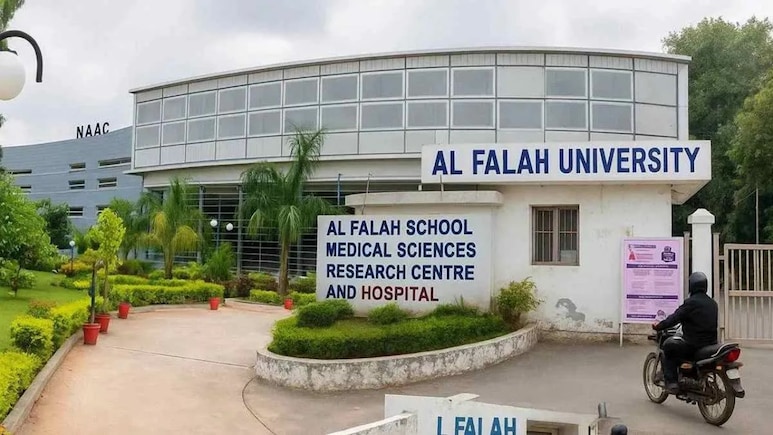
As investigators fanned out across the campus of Al-Falah University in the tense days following the Delhi Red Fort blast that left at least 15 dead, an uneasy silence settled over corridors that once hummed with routine chatter. Media channels flashed breaking headlines—“Terror accused worked here”—and within minutes, fear rippled through lecture halls and staff rooms alike. What had been ordinary academic days were abruptly overtaken by suspicion and anxiety, as the enormity of the allegations began to sink in.
For many on campus, the shock was deeply personal. The accused were not distant names but familiar faces of doctors and faculty members who had moved through the same corridors, taught in the same classrooms. The idea that their workplace could be linked, however indirectly, to a terror investigation left both students and faculty grappling with unease.
Months later, the immediate panic has faded, but its aftershocks remain. At the centre of the ongoing probe is Jawad Ahmed Siddiqui, who continues to remain in custody under provisions of the Prevention of Money Laundering Act, 2002. Muzammil Shakeel Ganai, Shaheen Saeed, Umar Mohammed (deceased bomber) worked at Al Falah.
Soon after, the Haryana government appointed senior IAS officer Amit Kumar Agrawal as administrator of Al-Falah University amid serious allegations of financial irregularities and an impending terror investigation. Meanwhile the university and Al Falah trust moved the Punjab and Haryana High court challenging the government's order for placing the university under a state administrator.
NDTV traces this aftermath on how this institution is still negotiating the weight of that moment and is trying to restore normalcy.
Rebuilding After Faculty Exit
According to sources privy to the matter, the university, an academic home to around 1700 students saw resignations of 80 teaching faculty members following the allegations.
Speaking to NDTV, a source said, “80 faculty members resigned and left the university. While resignations aren't entirely shocking at a private university, at Al Falah, this was due to the allegations”. They are among the odd 400-500 faculty members in Al Falah, and the resignations were mostly from the medical science unit, sources confirmed.
As of now, the university has started fresh recruitments looking for professors across the disciplines of biochemistry. General medicine, psychiatry, paediatrics. Assistant professors are being hired across the disciplines of anatomy, forensic medicine, dermatology among others. Other positions include senior residents, junior residents as well as tutors and Casualty Medical officers.
Moreover, sources also said that the new administration is also trying to clear the fees backlog and streamline the fee structure.
“The salary structure is being standardised. We have increased the pay for some positions as well,” a source said. Sources flagged multiple issues as well. “Apart from staff shortage, there are issues with the accounting books as well. The hiring process is being streamlined,” the source added.
“Classes weren't regular and the hiring process was a mess. Anybody could walk in and there was no fixed rate. Now, there is a proper committee for selection of staff and faculty. The shortage of teaching faculty burdened the existing faculty. However now with the recruitment in place, this has been eased to a certain degree”.
Between Fear And Routine
Sources said the university is trying its best to cope with the changing tides even as the counselling for MBBS and Engineering is just months away. “We are trying our best to streamline everything and be ready for counselling. For now, the focus is to give the best to the existing students. Faculty members, doctors leave and get new jobs but students have nowhere to go”.
When the news about the doctors working at Al Falah broke out, several students had returned home over uncertainty. The Enforcement Directorate meanwhile levelled hiring fake patients, misleading National Assessment and Accreditation Council (NAAC) and UGC accreditations as some of the allegations against the Al Falah trust and university chairman.
However classes never completely stopped at the university according to some students. A 3rd year MBBS student said, “yes there was disruption but the administration tried its best to bring an atmosphere of normalcy. Scheduled exams were held”.
Aadyut, another 2nd year MBBS student echoed similar sentiments. Asked if he and other students fear that it would affect their future prospects, he said, “we all plan to pass out with good marks and apply for post graduate studies in another, better college. The investigation didn't really interfere with our classes even at that time”.
Not everyone however is as optimistic as Aadyut. A 2nd year MBBS student said, “we have nowhere to go now. The uncertainty did affect some of us. Now the administration is trying to keep normalcy at its best. We just want to get done with our degree and leave”.
Parents of students studying at Al Falah too said that classes resumed well in time. “They had regular classes. The environment did become very negative and students feared for their future but time heals things and we can see that happening at Al Falah too. It was never the fault of the students and so the administration has been trying its best to not let them suffer even for a day,” said the parent of a second year MBBS student.
Track Latest News Live on NDTV.com and get news updates from India and around the world

