





A major political and legal showdown over fiscal federalism is brewing with Chief Ministers of Congress-ruled states preparing to move the Supreme Court of India against the newly passed Mines and Minerals Development and Regulation Amendment Act, sources have said.
Top Congress sources said Chief Ministers from Telangana Revanth Reddy, Karnataka Chief Minister DK Shivakumar and their Kerala counterpart VD Satheesan are joining forces to file a joint petition in the Supreme Court regarding this bill.
They also wish to challenge the constitutionality of the legislation passed during parliament's monsoon session.
Congress sources told NDTV that the party will hold a discussion with Jharkhand Chief Minister Hemant Soren to forge a broader coalition of mineral-rich states to challenge the Central law.
Congress sources said the party had vehemently opposed the bill in Parliament. The Congress alleges that the Central Government introduced the legislation without consulting state governments, viewing it as an attempt to strip states of their rights.
The core objection is not just the content of the bill itself, but the lack of consultation with opposition-ruled states, which Congress views as an attack on federalism.
The Congress aims to take the lead in this narrative, positioning itself as the primary defender of states' rights against the Centre. The party's strategy is to lead the legal fight while uniting other opposition-ruled states under its umbrella to challenge the law in the Supreme Court.
The Core Dispute
For the Centre, the objective of the legislation is to bring nationwide uniformity, predictability, and stability to the mining sector's fiscal framework. It aims to achieve this by restricting the states' powers to levy additional taxes, cesses, or duties on mineral rights and mineral-bearing lands without Central approval.
The new provisions effectively hand all powers to the Centre - which has raised the hackles of the state governments. The states have argued that the bill undermines fiscal federalism and erodes the constitutionally guaranteed revenue rights of states.
Critics have argued that restricting states' authority over mineral taxation counters recent judicial precedents reaffirming states' taxing powers -- effectively centralising economic control over natural resources.
The Opposition also criticised the Central government for passing the crucial legislation without detailed parliamentary debate or scrutiny by a Standing Committee.
The Bill
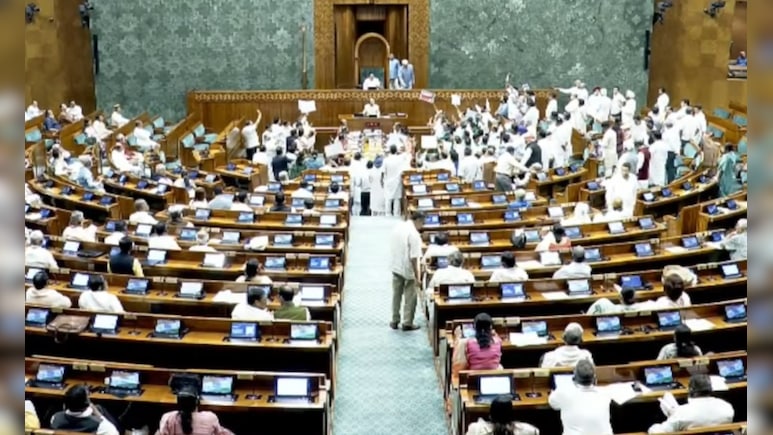
The Mines and Minerals Development and Regulation Amendment Bill cleared the Lok Sabha on August 12 and the Rajya Sabha on August 13 in just about 10 minutes. Despite Opposition protests, there was virtually no debate.
The strongest criticism came from the mineral-rich states of Jharkhand and BJP-ruled Odisha.
Replying to the debate in the Upper House, Mines Minister G Kishan Reddy had said the legislation does not seek to interfere with the autonomy or revenue rights of states, but aims to ensure uniform mineral rates across the country. The Centre, he said, was seeking to regulate major minerals such as coal, limestone, iron ore, copper and manganese, while states would continue to have powers over 49 minor minerals.
On Tuesday, Karnataka Deputy Chief Minister G Parameshwara urged the Centre to withdraw the amendment Act, objecting to its provisions "restricting" states' constitutional powers. He wrote to Prime Minister Narendra Modi and Reddy.
Kerala Chief Minister V D Satheesan had said the amendments to the MMDR Act are against federal principles as they seek to take away the rights and ownership of the states over their lands, and therefore, it would be strongly opposed.
When the mines bill was tabled in parliament, Jharkhand Chief Minister Hemant Soren had written a letter to Leader of Opposition Rahul Gandhi on August 13 asking him to oppose this bill. Soren argued that the legislation restricts states' fiscal and constitutional rights to tax mineral-bearing land.
Soren had also urged Prime Minister Modi to reconsider it, saying restrictions on state levies could significantly reduce the state's fiscal spaceand affect its ability to address the social and environmental costs of mining.
Track Latest News Live on NDTV.com and get news updates from India and around the world

