





The results of local body elections in Maharashtra last week – in which the BJP-led Mahayuti alliance dominated, winning 207 of 288 posts – underlined the size of the challenge facing the opposition, in particular Uddhav Thackeray and Sharad Pawar, as they plot a comeback.
Uddhav Thackeray's Shiv Sena UBT won just nine seats while Eknath Shinde's BJP-allied Shiv Sena won 53, delivering a second consecutive defeat to the former and proving it has pivoted the undivided Sena vote base – at the grassroots level – towards the BJP's Hindutva model.
And Sharad Pawar's Nationalist Congress Party – also a family-run party that split a year after the Sena, with Ajit Pawar walking out to ally with the BJP – won seven to his nephew's 37.
The BJP cantered to victory with 117 posts.
As in last year's Assembly election, in which Thackeray's Sena and Sharad Pawar's NCP won only 20 and 10 seats, respectively, and lost ground to their 'others'; Eknath Shinde and Ajit Pawar successfully derailed their former bosses' plans to boost the BJP's overall score.
Maharashtra, therefore, delivered quite a sobering 'black Sunday' for the opposition.
The results have been seen as a 'trailer' for the Mahayuti's win in next month's Brihanmumbai Municipal Corporation poll and a last warning to the opposition's long-term future, principally the Uddhav Thackeray-led Maha Vikas Aghadi, which includes the Congress and the NCP.
The BJP's Mahayuti balancing act
But dig a little deeper and there is another narrative – the BJP has consolidated its position of power, both within the state and, crucially before the Mumbai civic body election, the Mahayuti.
Its 117 seats is its best ever showing in Maharashtra municipal elections and, importantly, it has improved its urban vote share – from 11 to 30 per cent, a key jump before the BMC election.
Yes, the defeat of the opposition Maha Vikas Aghadi was only possible with help from Shinde and Ajit Pawar, but the results also indicate the Bharatiya Janata Party seems to have suppressed its 'allies' under its growing stature within the Mahayuti alliance and the state.
Shinde and Ajit Pawar have been useful to the BJP in breaking the Shiv Sena's stranglehold on Marathi politics in general, and in almost completely eliminating the MVA that was, till the time the Sena and NCP were undivided, proving to be a surprisingly strong opposition force.
But while the breakaway factions have triumphed over their former colleagues, they have not been allowed to outshine 'big brother', a fact underscored by the ruthlessness with which Shinde was removed as Chief Minister despite leading a stable government in his half-term.
And, going forward, senior journalist Ejaz Ahmed pointed out, this sweeping local body elections win will expand the BJP's hold on semi-urban and rural areas, strengthening its base before the BMC election and in the build-up to the 2029 federal and Assembly elections.
That a national party is dominant in Maharashtra again – decades after a regional identity was created, strengthened, and flourished, under Shiv Sena patriarch Bal Thackeray – is a big point.
What this means for the Thackerays (and Sharad Pawar)
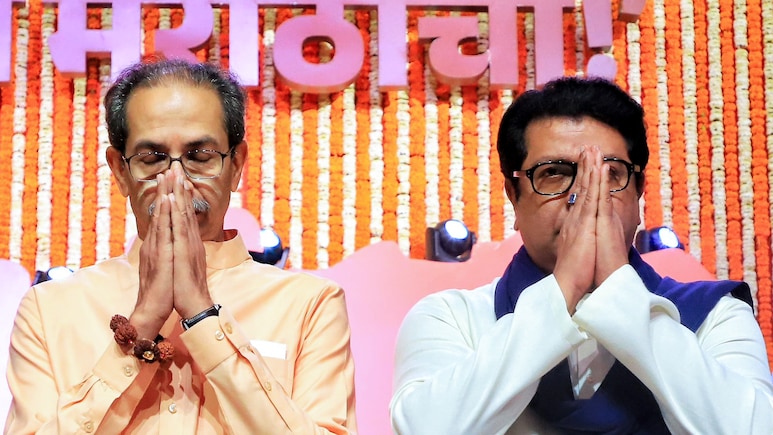
Widely regarded as the 'first family' in Mumbai political circles, cousins Uddhav and Raj Thackeray, driven apart by a 20-year family feud, reunited in June over the Marathi vs Hindi language row. They took a step closer to that comeback on Monday.
Sources said a seat-share deal had been agreed for the BMC election.
Sources within the Uddhav Thackeray-led Shiv Sena (UBT) said the Sena will contest 157 of the BMC's 227 seats and the Maharashtra Navnirman Sena led by his cousin, Raj, the other 70.
Should the deal whispered to NDTV hold, it will mark the first time in those 20 years the two biggest members of the clan will contest an election as allies instead of enemies.
The rumoured deal leaves Sharad Pawar's NCP without a solo share of seats.
Instead Pawar's NCP – a family-run party that split, like the Sena, after nephew Ajit Pawar walked out on uncle Sharad and allied with the BJP – will get 15 from Uddhav Thackeray's share.
This means that for Maharashtra politics' regional powerhouses – Uddhav Thackeray and Sharad Pawar – the BMC election is a potential watershed. A third straight defeat could be terminal for their futures, and hand control of their respective legacies to Eknath Shinde and Ajit Pawar.
And what about the Congress?
The Congress, meanwhile, does not figure in this arrangement at all, a circumstance that some believe underlines tension within the MVA, particularly after the Thackeray brothers reunited.
Indeed, on Sunday a comment by the Shiv Sena (UBT)'s Anand Dubey raised eyebrows; the party spokesperson dismissed the Congress as 'irrelevant' in the context of Mumbai politics. "There is no need to take the Congress seriously in Mumbai. For the past 30 years, they consistently lost the Brihanmumbai Municipal Corporation polls… so what miracle will they perform in 2026?"
This was after the Congress' Sachin Sawant said an 'ideological divide' – i.e., the Thackerays' reunion – meant the party will contest next month's election on its own. "We are going to fight against any party that creates conflict in the name of religion, caste, region, or language…"
Track Latest News Live on NDTV.com and get news updates from India and around the world

