





- BrahMos development shifted India from buyer to major defence exporter over 30 years
- The missile evolved from coastal defence to versatile land-attack and air-launched versions
- BrahMos flies at a very high speed with advanced evasion tech to defeat modern missile defences
The development journey of the BrahMos cruise missile has been a definitive blueprint of how India went from a traditional buyer of military hardware to a formidable defence exporter, and in the process reshaped the regional balance of power.
In an interview with NDTV, Atul D Rane, former Director General of BrahMos and CEO and MD of BrahMos Aerospace, highlighted the objective was to improve India's capabilities and transcend from a buyer-seller relationship with the joint venture partner, Russia, into a joint development programme.
"When BrahMos started approximately 30 years ago, the whole idea was for our own self-reliance," he said.
He agreed that the BrahMos of today is a vastly different machine from its initial coastal-defence avatar, which began with a highly specific mandate of creating a supersonic anti-ship missile. Over the decades, rigorous research and development (R&D) has expanded its operational envelope exponentially.
As the platform evolved, the Indian Army showed a lot of interest. "We moved into a land attack mode," Rane said.
The BrahMos advanced from homing in on radio-contrast targets to hitting "targets which do not show up on radar," and engineers introduced steep dive capability, extended the range and improved electronic countermeasures, all adding up to what Rane called "one of the jewels in the crown of the Indian Air Force, air-launched BrahMos."
A huge win of the BrahMos programme was also the development of its supply chain. In the defence sector, suppliers are usually relegated to the status of vendors, but the BrahMos project changed that outlook. "In BrahMos, we never used the word vendors. It has been an industry partnership," Rane said.
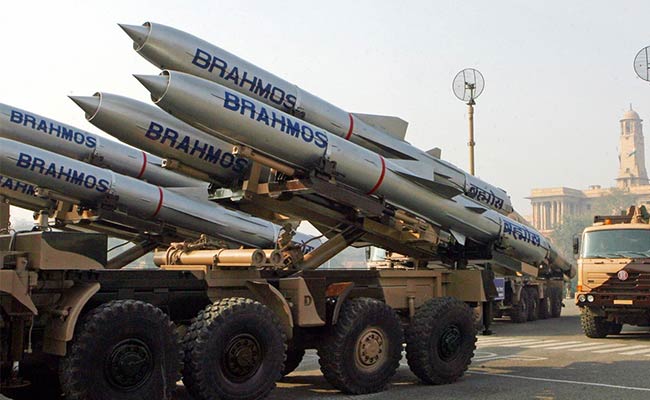
The partnership's footprint in the defence market raced ahead eventually. "Our contribution was only about 4 per cent in the early days. Over the years, slowly, we started moving into airframe, metallics, composite airframes, propulsion and onboard electronics. Today, it sits very close to about 82 per cent of producible items in our country," Rane said.
The very high speed of the BrahMos cruise missile - Mach 2.8 - gives the enemy little reaction time to intercept or take any defensive steps. Being a cruise missile, it flies mostly under the radar horizon and by the time a radar sees it, the enemy would not have much time left to escape. Combined with classified maneuvering capabilities at terminal stages, the BrahMos is designed to defeat the latest generation of surface-to-air missile systems.
The mastery of the Ramjet engine offers India a strategic leap forward as the world races toward hypersonic weaponry. While the West chose subsonic gas turbines during the Cold War, the then Soviet Union persisted with ramjets, a legacy that transformed into the modern BrahMos.
"The path to hypersonics is through the ramjet. You cannot move to hypersonics without understanding how a ramjet works," Rane said.
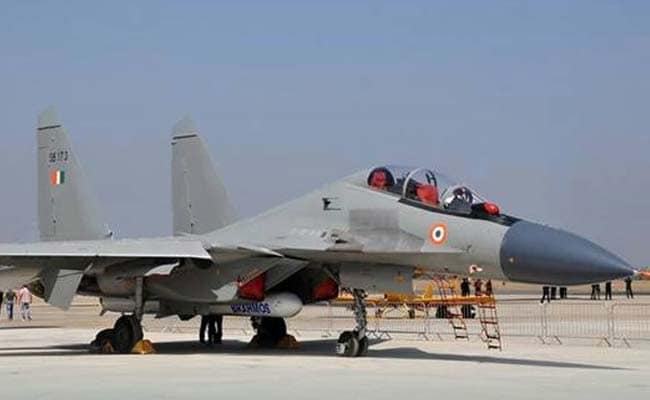
With the smaller BrahMos-NG in development for integration with Western aircraft platforms, the missile's trajectory is clear.
The world has started looking at this as a support partner for their requirements, Rane said, adding it was really a proud moment that the armed forces have shown their trust and reliance on a homegrown weapon.
Prime Minister Narendra Modi is on an official visit to Indonesia and is set to mark a significant upgrade in India's strategic partnership with the largest economy in Southeast Asia.
India's Ambassador to Indonesia, Sandeep Chakravorty, in an exclusive interview with NDTV earlier indicated that the two countries are preparing to move beyond discussions centred solely on the BrahMos cruise missile. "It will be BrahMos Plus," he said. "India has become a significant exporter of defence items. That lesson is very relevant for Indonesia."
India is developing institutional infrastructure to be a long-term arms supplier with lifecycle support systems and end-use monitoring. Further, it is procuring diplomatic strength to manage consequences when its weapons are used in the field by importing nations.
Track Latest News Live on NDTV.com and get news updates from India and around the world

