





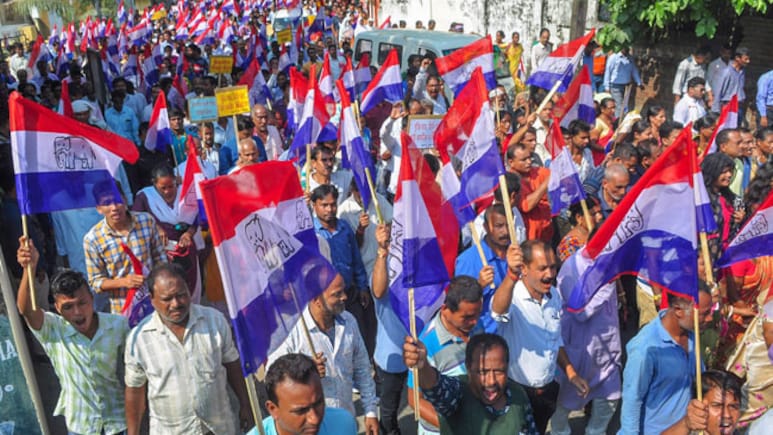
Assam in the late 1980s and early 1990s was a state under siege. Armed insurgents, economic disruption, and public fear brought the Asom Gana Parishad (AGP) government to its knees in 1990.
As the state gears up for the 2026 Assembly elections, the regional party is contesting under an alliance with the ruling BJP-led NDA.
Rise Of The AGP
The AGP was born out of the Assam Agitation, a popular six-year-long student-led movement against illegal immigration. They formed the state government in December 1985 under Prafulla Kumar Mahanta, the then youngest Chief Minister at 33.
While the party saw thumping support for implementing the Assam Accord, governing proved far more challenging than leading protests.
The Growing Threat Of ULFA
During this period, the United Liberation Front of Asom (ULFA), a separatist outfit founded in 1979, was expanding its armed network.
By the late 1980s, the group had intensified its operations, including kidnappings, extortion and targeted attacks on civilians and officials. ULFA also carried out killings of government personnel and civilians, and sabotaged railways, roads and communication networks.
Surrendra Paul Killing
The incident that perhaps proved the AGP government's inability to maintain law and order was the murder of Surrendra Paul, a tea planter and then chairman of the Appejay Surrendra group.
On April 9, 1990, Surrendra Paul was shot by suspected ULFA militants near Laipuli in Tinsukia while travelling by car. He was returning from Mohanbari airport when unidentified gunmen opened fire.
Paul was seriously wounded in the attack and died before reaching the hospital.
A Terrorist and Disruptive Activities (Prevention) Act case was registered. Several ULFA leaders were named as accused. In later years, courts acquitted some of the accused due to lack of evidence.
President's Rule
The AGP government struggled to contain the ULFA's activities, and the central government decided that law and order had deteriorated beyond the state's capacity.
In November 1990, the Centre acted to restore order in Assam. On November 28, it launched Operation Bajrang, sending the Army to break up ULFA camps and arrest militants.
The next day, the AGP government was removed, and President's Rule was imposed under Article 356.
ULFA was banned under the Unlawful Activities (Prevention) Act, and Assam was declared a disturbed area under Armed Forces Special Powers Act (AFSPA).
Elections were delayed until 1991. In June that year, the Congress won and Hiteswar Saikia became chief minister.
Track Latest News Live on NDTV.com and get news updates from India and around the world

