





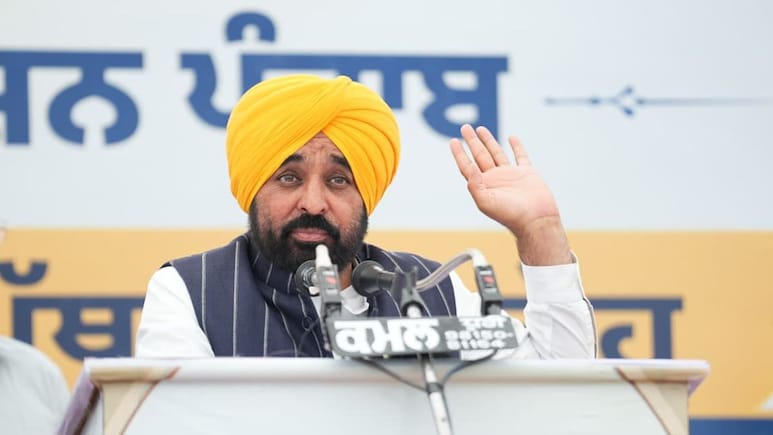
The Akal Takht's unprecedented action against Punjab Chief Minister Bhagwant Mann has triggered a major political churn in the state, with ramifications extending well beyond the ruling Aam Aadmi Party. While the immediate spotlight is on Mann and his confrontation with Sikh religious institutions, the controversy could also provide the Shiromani Akali Dal (SAD) and its leader Sukhbir Singh Badal a much-needed political breather at a time when they continue to grapple with the fallout of the sacrilege controversy.
The row centres around a controversial video in which a person is allegedly seen making objectionable gestures towards Sikh Gurus. While Mann and the Punjab government have maintained from day one that the video is manipulated and that the Chief Minister does not feature in it, the Akal Takht relied on forensic reports placed before it and concluded that Mann was present in the video and had disrespected Sikh religious sentiments. The verdict has since escalated into one of the most significant political and religious controversies faced by the AAP government.
For nearly a decade, the sacrilege issue has haunted the Akali Dal. Allegations surrounding incidents of desecration of Guru Granth Sahib and the subsequent police firing on protesters at Behbal Kalan and Kotkapura severely damaged the party's credibility among sections of the Sikh electorate. The issue contributed significantly to the Akali Dal's defeats in the 2017 and 2022 Assembly elections and reduced a once-dominant regional force to the margins of Punjab politics.
The crisis deepened further when Sukhbir Badal appeared before the Akal Takht and accepted religious punishment for mistakes committed during the SAD government's tenure. The images of a former Deputy Chief Minister seeking forgiveness became a powerful political symbol. The AAP repeatedly used those visuals to portray the Akalis as guilty in the eyes of the highest temporal authority of Sikhs.
However, the political narrative has now become considerably more complicated.
With the Akal Takht castigating Bhagwant Mann and declaring his conduct contrary to Sikh principles, the focus has shifted from the Akalis to the sitting Chief Minister. For the first time in years, the Akali Dal finds itself sharing the political burden of a religious controversy with a rival. The issue allows the SAD to argue that questions of respect for Sikh institutions are not confined to one party alone.
Yet, the development does not amount to a clean slate for the Akalis. The key difference lies in the nature of the allegations. Sukhbir Badal continues to face political accountability for decisions and events linked to the sacrilege and firing incidents, but those allegations remain rooted in administrative and political responsibility. In Mann's case, the controversy stems from a video that has generated an immediate and emotional reaction among Sikh groups. The presence of visual material has made the issue more direct and politically damaging, regardless of the competing claims over its authenticity.
At the same time, some observers believe the political environment today is very different from what the Akali Dal faced in 2015. Professor Harjeshwar Pal Singh, who closely tracks Punjab politics, argues that Mann has not faced the kind of public scrutiny or mass anger that engulfed the Akali leadership during the sacrilege controversy.
"Back in 2015, there was a lot of discontent against the Akali Dal and the sacrilege incidents only added to the rising anger among the masses. That's why Sukhbir Badal and his party had to face the public ire," he said.
According to Prof Singh, the AAP government moved quickly to control the narrative around the controversy. "The same is not happening in Mann's case. Mann and his government have managed the narrative very well by dismissing the video as fake from day one, which quelled the initial anger against him and his government," he added.
The irony is hard to miss. The AAP, which spent years attacking Sukhbir Badal using images of his apology before the Akal Takht, now finds its own tallest leader facing censure from the same institution. This has handed the Akali Dal a rare opportunity to reclaim some political ground and challenge the AAP's moral positioning on Sikh issues.
Whether that translates into electoral gains is another matter. The Akali Dal's core challenge remains rebuilding trust among voters who deserted it after 2015. The Mann controversy may ease some of the pressure on Sukhbir Badal and dilute the singular focus on the Akalis' past record, but it does not erase the memories that contributed to the party's decline.
For now, the biggest political beneficiary of the row may be the Akali Dal. But the party still has a long way to go before temporary relief can be converted into lasting political revival.
Track Latest News Live on NDTV.com and get news updates from India and around the world

