






Andhra Pradesh's ambitious capital city project has entered a decisive phase, with the state government formally launching the second round of land pooling for Amaravati. Notifications issued this week for Vaddamanu and Endrayi villages in Thullur mandal have given farmers 30 days to either submit objections or surrender land documents, setting the stage for tough negotiations on the ground.
While the current government's renewed commitment to Amaravati as the sole capital has revived cautious optimism, farmers say years of political uncertainty have fundamentally changed the terms of trust. After witnessing the capital project stall between 2019 and 2024 under the previous administration's three capital proposals, farmers are insisting that this time, promises must be backed by legal and financial guarantees.
Higher Compensation At Core Of Demands
During the first phase of land pooling in 2015, farmers were offered an annual annuity of Rs 30,000 per acre for dry land and Rs 50,000 per acre for wet land. Nearly a decade later, farmers say those figures are no longer viable.
"We are asking for at least Rs 60,000 per acre per year," said Srikanth Bhimana, a farmer from Vaddamanu village, speaking to NDTV. He said rising costs, loss of agricultural income, and years of uncertainty have forced farmers to reassess what they are willing to accept.
In addition to higher annuity payments, farmers are demanding 1,400 square yards of developed plots per acre, an increase from the 1,250 square yards allotted during the initial phase of pooling.
Fear Of Another Political U-Turn
The memory of stalled development continues to dominate discussions. Farmers say the absence of legal safeguards earlier left them exposed when the capital plan was put on hold. To prevent a repeat, farmers want Amaravati's status as the capital to be permanently secured through a parliamentary law approved by the Central Cabinet. They argue that only a central statute can protect the project from future political reversals.
They are also seeking enforceable development timelines. Although Municipal Administration Minister P. Narayana has assured that major development will be completed within three to four years, farmers want compensation clauses built into the agreement. If development is delayed, they are demanding Rs 5 lakh per acre for every year of delay.
Debt Burden Blocking Participation
A major practical hurdle for land pooling is farmer indebtedness. Many farmers have crop loans ranging between Rs 5 lakh and Rs 6 lakh, with banks and cooperative societies holding their land documents as collateral. Without access to these documents, farmers say they cannot participate in the pooling process even if they wish to. Their demand is clear. They want a complete waiver of agricultural loans before land pooling is finalised. Farmers argue that the government must resolve their debt burden if it expects cooperation.
Demand For Jobs And Social Infrastructure
Beyond compensation and plots, farmers say the success of Amaravati depends on employment generation. They are seeking concrete plans for IT hubs and non-polluting industries to ensure steady jobs for future generations.
"What is the use of residential plots if there are no jobs?" Bhimana asked. Farmers are also demanding firm commitments on hospitals, schools, and colleges within the capital region to secure their children's future.
What Is At Stake?
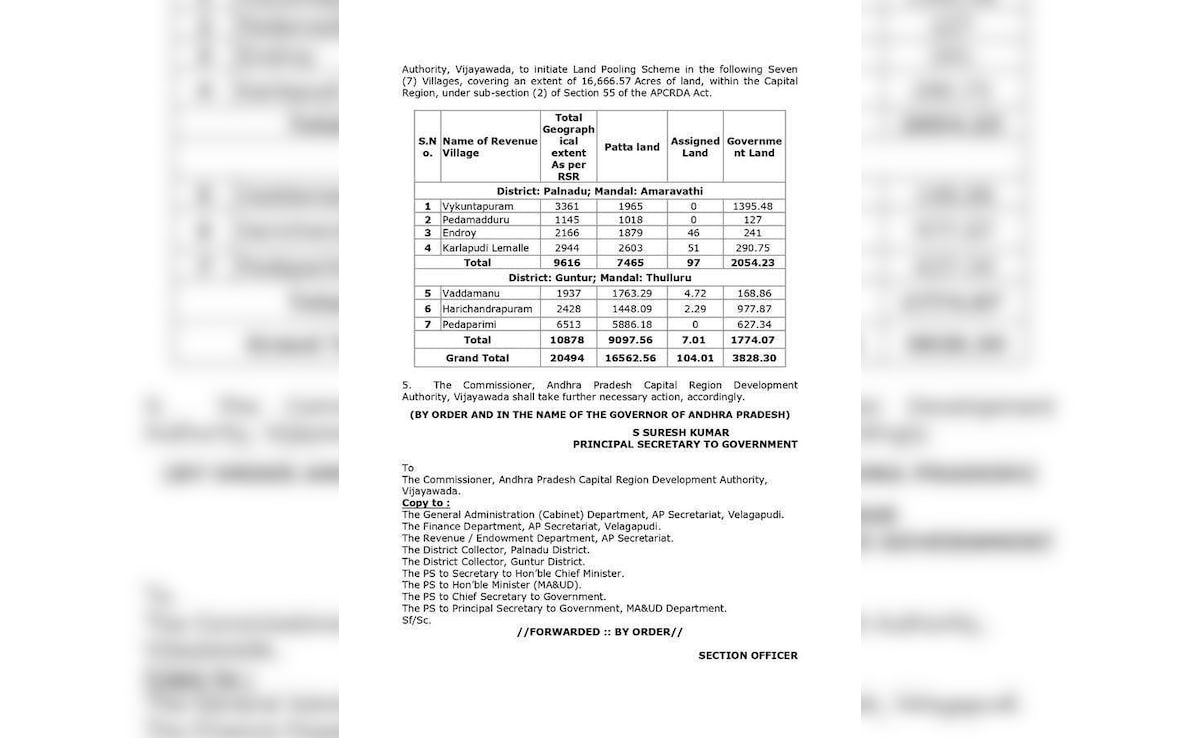
The second phase of Amaravati involves pooling nearly 20,500 acres, including more than 16,600 acres of private and assigned land and about 3,800 acres of government land. The area is crucial for planned infrastructure such as a sports city, inner ring road, and new railway connectivity.
While officials of the Capital Region Development Authority say consultations are ongoing, farmers claim discussions have slowed after their demands were forwarded to the Chief Minister.
With the 30-day objection window now open, the coming weeks will test the government's ability to balance urgency with trust-building. Farmers say they are not opposing development, but their message is unmistakable. Without firm legal backing, financial security, and time-bound guarantees, Amaravati's second phase could once again face resistance on the ground.
Track Latest News Live on NDTV.com and get news updates from India and around the world

