



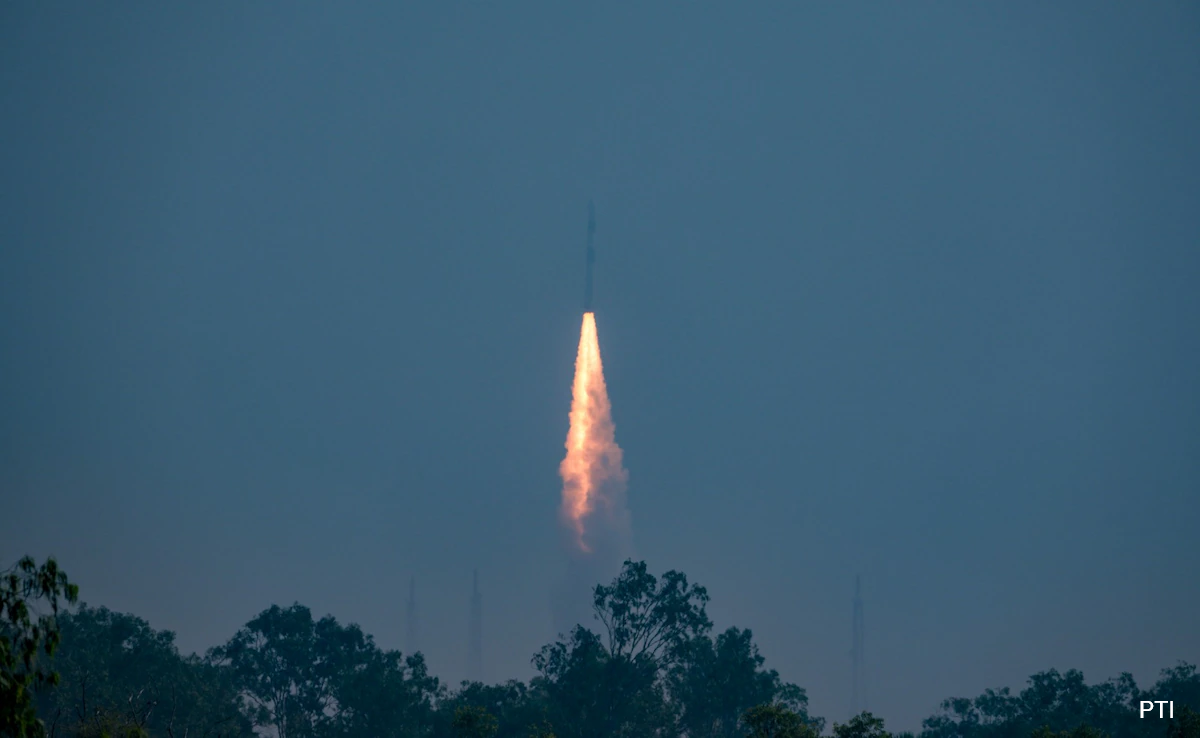
The Indian Space Research Organisation (ISRO) on Monday faced a major setback after its workhorse launch vehicle, the Polar Satellite Launch Vehicle (PSLV), carrying an Earth observation satellite and several commercial payloads, encountered an anomaly during the third stage of the flight.
The 44.4 metre-tall four-stage rocket lifted off as scheduled at 10.18 am from the spaceport in Andhra Pradesh's Sriharikota, in what was the space agency's first mission of 2026. While the first two stages performed within expected parameters, the vehicle experienced "disturbances" at the end of the third stage, the space agency said.

Photo Credit: PTI
"The PSLV is a four-stage vehicle with two solid stages and two liquid stages. The performance of the vehicle up to the end of the third stage was expected. Close to the end of the third stage, we are seeing more disturbance in the vehicle, and subsequently, there was a deviation observed in the flight path. We are analysing the data, and we shall come back at the earliest," ISRO chief V Narayanan said while addressing his team at the Mission Control Centre.
In 2025, the PSLV had a single launch which failed, also in the third stage.
The Satellites Lost In Space
The PSLV-C62 mission was intended to deploy the 1,696 kg EOS-N1 Earth observation satellite and 14 co-passenger satellites into sun-synchronous orbit and a KID Capsule into a re-entry trajectory.
It included the highly classified surveillance satellite named Anvesha, which was developed by the Defence Research and Development Organisation (DRDO) to provide cutting-edge imaging capabilities to India.
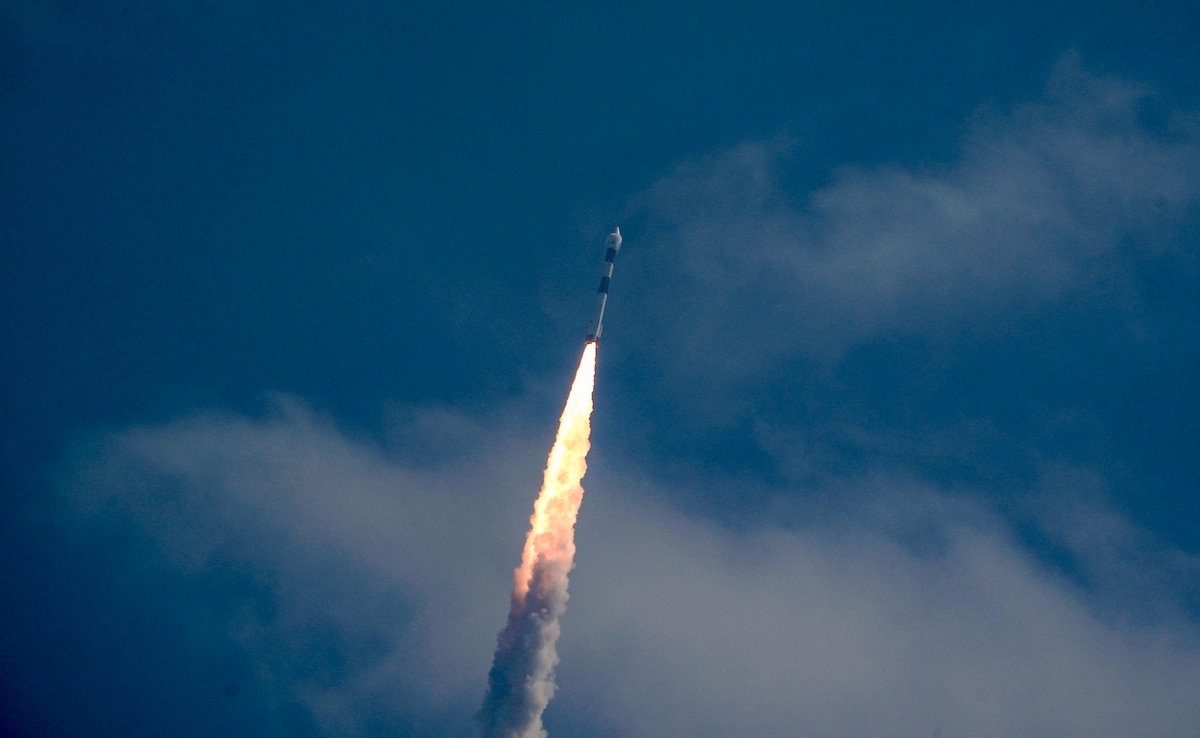
Photo Credit: PTI
It also included the signature of Hyderabad-based Dhruva Space. Satellites, CGUSAT and DSUSAT, a technology demonstration by university students, were among those that were unsuccessfully launched.
A day before the launch, Vishal Latha Balakumar, the Director of Space Missions at Dhruva Space, had told NDTV that he was confident about the launch.
"PSLV has always been reliable, and it continues to be. So, we are having a whole bunch of missions on them," he had said.
The launch also included MOI-1, which was built by Dhruva Space and another Hyderabad-based company, Takeme2Space, and would have enabled customers to run large AI models directly on the satellite.
Dhruva Space's Thybolt-3 and LACHIT were also lost in the mission.
AyulSat, a dedicated tanker satellite developed by Chennai-based space startup OrbitAid Aerospace, and Sanskarsat, a satellite made by students of Laxman Gyanpith in Gujarat, were also launched on the PSLV-C62 vehicle.
Munal, by Nepal's Antarikshya Pratishthan and India's Ministry of External Affairs, and KID Capsule, by Spain and France, were also the co-passenger satellites in the mission.
Brazil-based AlltoSpace also lost five satellites, including Edusat, which would have demonstrated Internet of Things (IoT) sensors; Uaisat, which would have collected data on agriculture; Galaxy Explorer, which would have measured radiation and connected to IoT sensors; Orbital Temple, which would have received the communications emitted by the antenna on the ground; and Aldebaran-1, which would have helped rescue fishing vessels in distress along the coast of Maranhao in Brazil.
Track Latest News Live on NDTV.com and get news updates from India and around the world

