





- Air India enhanced mental health support for crew after June 2025 Dreamliner crash
- A network of 265 psychologists now provides confidential therapy to employees and families
- Crash involved fuel control switches moving to "cutoff" seconds after liftoff
A day ahead of the first year since the crash of an Air India Boeing 787-8 Dreamliner in Ahmedabad, NDTV has accessed key details on steps taken by the Tata-owned airline to address mental health issues of crew members in addition to measures to enhance greater safety and efficiency across its widebody fleet.
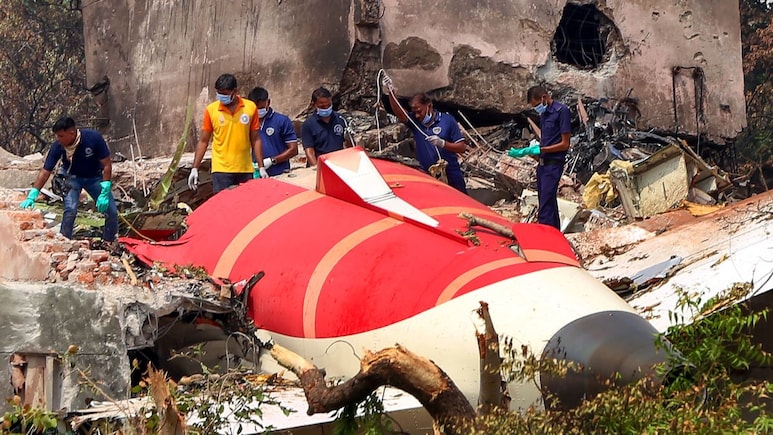
The Dreamliner that crashed on June 12, 2025 had just taken off from Ahmedabad for a flight to London when it lost altitude seconds into the flight. The crash killed 260.
The new details on Air India's focus on mental health comes at a time when investigators are looking closely at human factors which may have resulted in the crash. Public speculation heavily fueled by early leaks and Western media reports has pointed toward a potential pilot-induced event. Addressing this critical intersection of human performance and tragedy, Air India has heavily reinforced its training and psychological support structures.
This includes a comprehensive training and mental health framework integrated under its Human Factors Charter designed to be "proactive, preventive, and non-punitive." While the Human Factors Charter began prior to the crash of AI-172, the focus on mental health issues has intensified dramatically over the last year.
In its post-crash response, the airline said it "strengthened its mental health programme through a comprehensive wellness initiative, delivering tailored psychological support based on employee exposure and needs."
According to details accessed by NDTV, this enhanced framework included deploying a "network of 265 psychologists to provide large-scale, accessible mental health support, complemented by confidential therapy and psychiatry access for employees and their families."
The programme includes immediate interventions, such as "home counselling, structured follow-up sessions, to help employees process stress and restore emotional balance, reaching more than 900 cabin crew."
The debate surrounding the crash itself centres on a highly specific mechanical event. The initial probe revealed that just seconds after liftoff, both of the aircraft's engine fuel control switches transitioned from the "RUN" to the "CUTOFF" position within a second of each other, instantly starving the engines of fuel.
The Aircraft Accident Investigation Bureau (AAIB) has been navigating two fiercely conflicting theories regarding this transition.
Speculation that one of the pilots, inadvertently or otherwise, physically flipped the switches. This theory was amplified by a snippet from the Cockpit Voice Recorder (CVR) where one pilot is heard asking, "Why did you cut off the fuel?" The other replied: "I did not do so."
The second is the systemic failure angle, which is backed strongly by India's pilot community, including the Federation of Indian Pilots (FIP) and points to a catastrophic electrical or software issue that may have resulted in a cascading failure resulting in fuel-flow being cut off to both engines.
With the final report reportedly delayed due to ongoing technical engine analysis in the US, the AAIB's interim tracking and preliminary findings have remained strictly neutral. The AAIB has explicitly pushed back against a definitive pilot-blame narrative, clarifying that the investigation has not established that either pilot physically flipped the switches.
The bureau is currently examining several complex technical variables, including a past, non-mandatory FAA advisory regarding potential flaws in the locking mechanism of Boeing fuel-control switch modules, as well as a deferred maintenance item involving the aircraft's "core network."
Against the backdrop of the ongoing investigation, Air India has maintained that its foundational operations remain unchanged, stating that it "continues to operate to the highest standards of safety across all its aircraft and flight operations, in full compliance with regulatory requirements and global aviation best practices."

In Brief: Steps Air India Has Taken
Air India said it continues to operate to the highest standards of safety across all its aircraft and flight operations, in full compliance with regulatory requirements and global aviation best practices. There have been no changes to Air India's core safety protocols or airworthiness practices, which remain robust, well-established and continuously monitored, the airline said.
Since the Ahmedabad crash, Air India said it has been able to take a "safety pause" to regroup and reorganise and take some of these steps:
Complete detailed inspections of Boeing 787-8 and 787-9 aircraft under the oversight of DGCA. No issues were found during these inspections. Inspect the fuel control switch mechanism of Boeing 737 and 787-8 aircraft, with no findings.
Additional ground time also enabled accelerated upgrades to improve aircraft reliability and enhance delay and disruption management. Fleet reliability enhancement programme accelerated.
Air India has been progressively strengthening the day-to-day operational performance of its widebody fleet (B787 and B777), with a clear shift towards long-term improvements in consistency and efficiency. Fleet reliability enhancement programmes are structured initiatives aimed at improving how consistently an airline's fleet operates daily - reducing technical interruptions, delays and cancellations.
The scope of Air India's reliability enhancement programme for widebody aircraft with target completion by FY 2027 has expanded over the last year, reflecting a deeper effort to identify and address opportunities to improve operational performance across the fleet over time.
On the B787 fleet, execution has strengthened significantly - the progress of initial programmes has increased from nearly 75 per cent to 87 per cent in the last one year, while the number of reliability programmes has expanded from 36 to 45, with overall completion level having increased from 48 per cent to 65 per cent in the last year.
Track Latest News Live on NDTV.com and get news updates from India and around the world

