





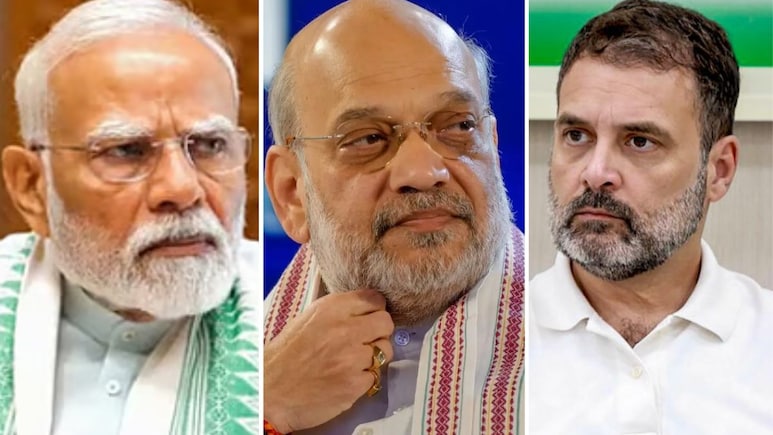
- PM Modi and Rahul Gandhi met for 88 minutes to discuss the appointment of the Chief Information Commissioner
- Rahul Gandhi submitted written objections to all proposed appointments, sources have said
- The commission currently has eight vacancies
An 88-minute meeting between Prime Minister Narendra Modi and Leader of the Opposition Rahul Gandhi today set speculation soaring in the corridors of parliament, which is currently meeting for the Winter Session. While it was known that the leaders would meet to discuss the candidates for the Chief Information Commissioner, the meeting was expected to be anything but long.
Under the rules, the Prime Minister, one Union minister nominated by the Prime Minister, and the Leader of the Opposition are expected to take a call on the crucial top rungs of the Information Commission, Election Commission and the Vigilance department.
This time, the senior minister who attended was Amit Shah. Gandhi had reached the Prime Minister's Office at 1 pm and the meeting started at 1.07 pm, sources said. But as the clock ticked on, eyebrows were raised and the MPs started discussing the other possible agendas of the meeting.
After 88 minutes, when Rahul Gandhi emerged, it was revealed that the discussion was not just about the appointment of a Chief Information Commissioner, but also eight Information Commissioners, and a Vigilance Commissioner.
Sources said Gandhi has expressed his objection to all the appointments, and has submitted his objection in writing. His dissent is understood to highlight both representational concerns and disagreements over the selection criteria.
Objections from the Opposition leaders who participated ae usually expected in such meetings. Previously, whether it was Mallikarjun Kharge or Rahul Gandhi who attended these meetings as Opposition representatives, they have raised objections, sources said.
Rahul Gandhi Flagged Representation Gaps: Sources
The Leader of the Opposition is learnt to have argued that communities constituting almost 90 per cent of India's population were "practically missing" from the proposed list for positions that oversee transparency and accountability.
According to Congress sources, Rahul Gandhi used the meeting to raise strong objections over what he called the "near-total absence" of candidates from Dalit, Adivasi, OBC/EBC and minority communities in the shortlist placed before the committee.
Sources said Gandhi had formally sought caste-wise data of applicants for these posts. He is learnt to have pointed out that less than 7 per cent of the applicant pool came from Bahujan communities.
The LoP is understood to have told the panel that this level of participation raised deeper questions about inclusion in institutions tasked with protecting citizens' right to information. Congress sources said he also flagged the structural barriers that restrict marginalised groups from entering oversight bodies that shape accountability frameworks.
While the government has not commented on the caste-breakup of applicants or candidates, officials indicated the selection process was at an "advanced stage".
All Agog In Parliament
The discussion in the Parliament corridors, meanwhile, was intense about what transpired at the 88-minute meeting.
There are currently 8 vacant posts in the Central Information Commission or CIC, including that of the Chief Information Commissioner. The officials are the ones who decide on complaints and appeals filed by RTI applicants and release information.
Till mid-September, Hiralal Samariya served as India's Chief Information Commissioner. Since his retirement on September 13, the position has been vacant. Only two Information Commissioners -- Anandi Ramalingam and Vinod Kumar Tiwari - are handling the work. According to the CIC's website, it has a pending caseload of 30,838.
Final appointments are expected to be announced shortly.
Under Section 12(3) of the Right to Information Act, the Prime Minister is the Chairman of the Selection Committee, which also includes the Leader of the Opposition and a Union Minister nominated by the Prime Minister, to select and recommend names for the appointment of the Chief Information Commissioner and Information Commissioners.
Track Latest News Live on NDTV.com and get news updates from India and around the world

