





- Uttarakhand's Harela festival faces protests over felling 3,000+ trees for road project
- Environmentalists claim tree cutting harms wildlife and local microclimate in sensitive area
- NHAI states project follows expert mitigation measures, including for elephant corridors
Uttarakhand's annual Harela festival, which celebrates trees and greenery, is under a cloud of protest this year.
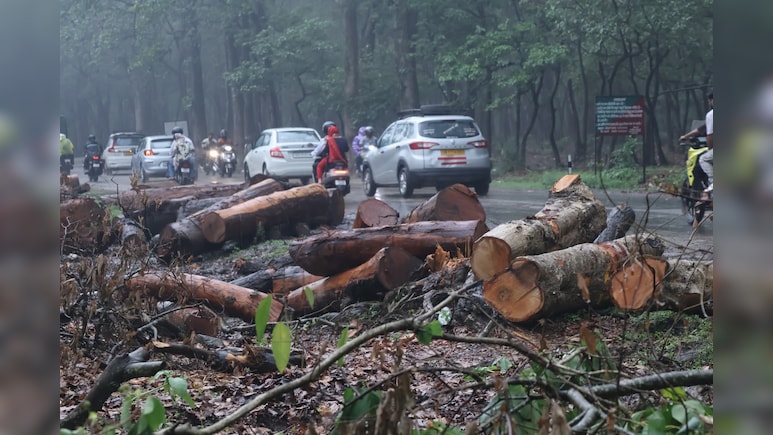
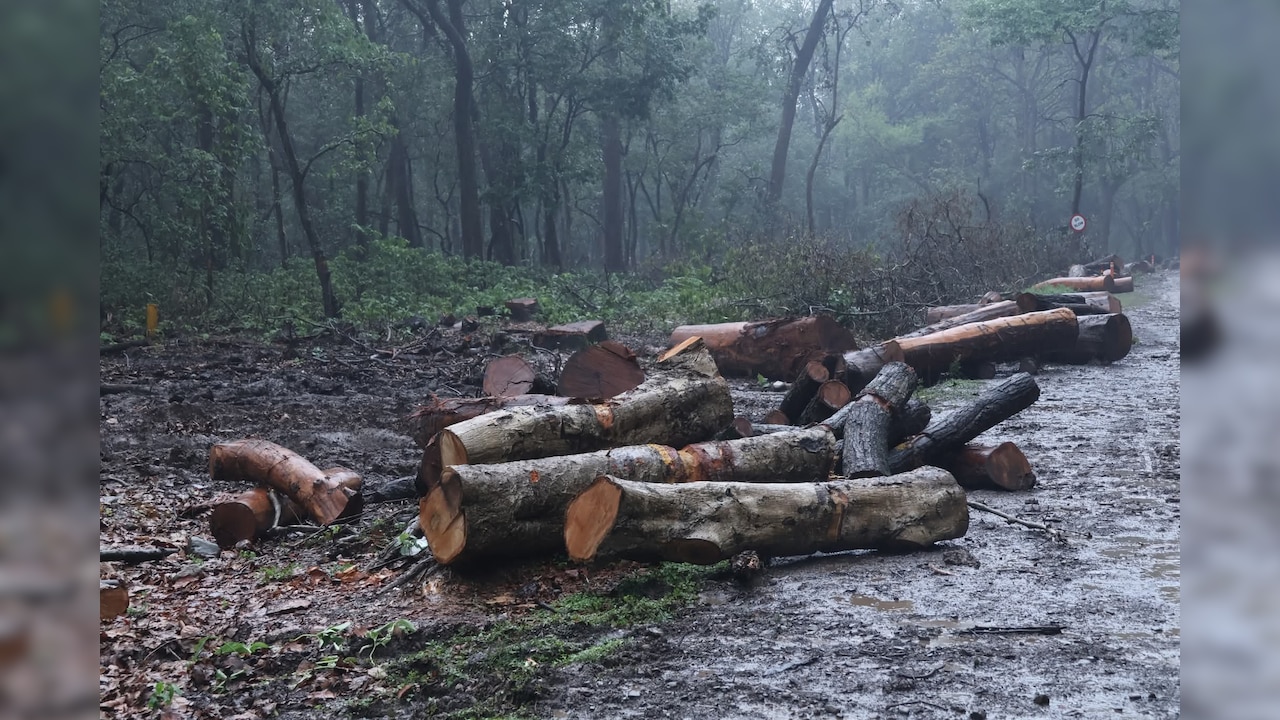
In a week when the state should be seeing tree plantation drives, environmentalists are protesting the felling of more than 3,000 trees for a road expansion project.
They are observing "Black Harela" instead.
Along the stretch near 'Saat Mod', felled trees lie scattered as workers continue to axe more to make way for the project.
Environmentalists argue that the area is already ecologically sensitive. They say large-scale felling will not only reduce green cover but also adversely affect local wildlife diversity and the area's microclimate.
On Thursday, dozens of protesters dressed in black marked the festival as 'Black Harela' to protest the destruction of green cover.
"Does the government want to turn this place into a desert or a concrete jungle? Even the person operating the saw rests in the shade of these very trees when tired," said an environment activist at a protest on Thursday.
Protesters allege that the tree felling is being carried out "without adequate ecological assessment". They point out that an Environment Assessment Plan is made for every project to compensate for environmental damage caused during construction.
"Our demand is that the government ensure its strict implementation," they said.
The National Highways Authority of India (NHAI), which is executing the Bhaniyawala-Jollygrant-Rishikesh Four/Six Lane Project, has maintained that the project is being executed "in accordance with mitigation measures recommended by experts, particularly in view of elephant corridors along the stretch".
The approximately 20-kilometer-long project is being built at an estimated cost of Rs 743 crore under the Hybrid Annuity Mode (HAM).
It aims to strengthen connectivity between Dehradun, Jollygrant Airport and Rishikesh, while providing better infrastructure for tourism, the Char Dham Yatra, and the state's growing transport needs.
Authorities say several key engineering modifications have been made in the project design to minimize environmental damage.
While the standard Right of Way (ROW) for a national highway is 60 meters, it has been reduced to just 23 meters in forest areas. Officials say this will significantly reduce tree felling without compromising highway safety standards.
In addition, based on a scientific assessment by the Forest Research Institute (FRI), 754 trees have been identified as suitable for transplantation. These will be transplanted during the monsoon season.
According to Forest Department records, 29 wildlife deaths in road accidents were recorded in the last five years on the existing two-lane road under the Rishikesh and Barkot forest ranges.
Special elephant underpasses, including an approximately 3.5 km long elevated structure, are being developed on the proposed highway for safe passage of elephants. Officials say this will make wildlife movement safer and help reduce wildlife accidents on the busy route.
(with Inputs From Ashish Dobhal)
Track Latest News Live on NDTV.com and get news updates from India and around the world

