

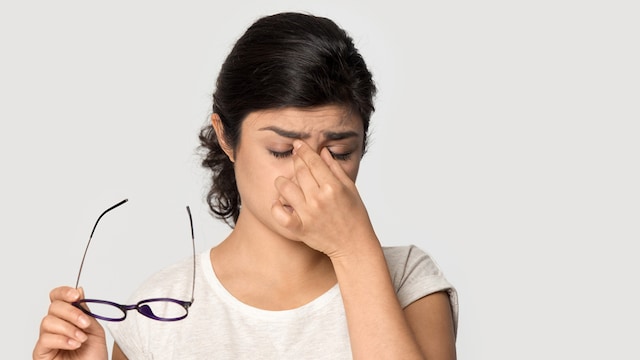
Most women expect menopause to bring hot flashes, mood shifts, and disrupted sleep. Few expect it to show up in their vision. However, estrogen and androgen receptors sit directly in the lacrimal gland, cornea, lens, retina, and optic nerve. When hormone levels fall during perimenopause and menopause, these tissues feel the impact. Because they rely on hormonal signalling for structural maintenance, tear production, antioxidant protection, and blood flow regulation, the systemic drop in hormones directly affects your eye health.
Here is how menopause impacts your vision, and what you can do about it:
1. Dry Eye: The Most Common Complaint
Estrogen and androgens support tear production and the vital oil layer secreted by the eyelids that keeps tears from evaporating too fast. As levels decline, tear quantity and quality drop.
The Sign: Burning, grittiness, and counterintuitively, watery eyes. Excessive tearing is often the eye's overcorrection for an unstable tear film. Heavy screen time, which reduces your blink rate, makes this significantly worse.
2. Blurred and Fluctuating Vision
Reduced oil production and shifting hormones can temporarily alter the cornea's shape and elasticity, changing how light refracts.
The Sign: Many women find their glasses prescription shifting for the first time in years, or contact lenses suddenly feeling uncomfortable. While some of this stabilises post-menopause, persistent blurriness requires a fresh refraction from your eye doctor.
3. Glaucoma Risk Moves Upward
This is the connection most women have never heard of. Estrogen helps regulate intraocular pressure (IOP) and supports healthy blood flow to the optic nerve. Several studies link postmenopausal status, particularly early menopause, to higher intraocular pressure and an increased risk of open-angle glaucoma.
The Sign: Because glaucoma develops silently with no symptoms until damage is advanced, routine checks are essential.
4. Cataracts, Earlier Than Expected
Estrogen has a natural antioxidant-like protective effect on the eye's crystalline lens. Its decline leaves the lens more vulnerable to oxidative stress, and cataract risk rises measurably after menopause.
The Sign: Night glare, halos around lights, and colours appearing faded are early warning signs.
5. The Retina Isn't Exempt
Estrogen receptors are also present in the macula, the area responsible for sharp central vision. Research associates early menopause with a higher risk of age-related macular degeneration (AMD).
The Action: Routine retinal screening in your 40s and 50s is critical, well beyond standard pressure checks
What This Means Practically
Menopause doesn't automatically cause eye disease on its own. Rather, the loss of hormonal support coincides with the age when cataract, glaucoma, and AMD risks naturally climb, compounding the effect. This is precisely why eye care deserves the same attention during menopause as bone density or heart health. It is rarely part of that conversation, but it should be.
Your Menopausal Eye Care Checklist:
- Eye Pressure (IOP): Check at every visit from perimenopause onward, not just when symptoms arise.
- Optic Nerve Evaluation: Request a direct exam or OCT (optical coherence tomography) of the nerve fibre layer, especially if you have a family history of glaucoma.
- Dilated Retinal Exam: Essential for screening early AMD changes.
- Corneal and Tear Film Assessment: Evaluate tear break-up time if dryness is persistent.
- Updated Refraction: Don't assume an old prescription still fits if vision feels hazy.
- Lens Check: Flag night-driving difficulties, glare, or halos early.
- Frequency: Schedule an annual comprehensive eye exam from perimenopause onward.
Red Flag Note: If vision loss is sudden, affects one eye more than the other, or is accompanied by a new blind spot, do not chalk it up to menopause. See an ophthalmologist promptly.
Disclaimer: The opinions expressed within this article are the personal opinions of the author. NDTV is not responsible for the accuracy, completeness, suitability, or validity of any information on this article. All information is provided on an as-is basis. The information, facts or opinions appearing in the article do not reflect the views of NDTV and NDTV does not assume any responsibility or liability for the same.