- Walking for 10-15 minutes after meals helps slow glucose spikes and aids digestion
- Post-meal walking boosts metabolism, burns calories, and reduces belly fat storage
- It alleviates bloating and gas by improving digestive function and physical movement
The visible deposition of fat around the belly area that expands the waistline is one of the hardest to lose through dietary interventions. Belly fat is a major health concern that affects a significant portion of the Indian population, which needs to be controlled, as it increases the risk of chronic diseases such as obesity, diabetes, and heart disease. While overall lifestyle choices dictate the deposition of fat around the belly, there is a simple habit that requires no equipment that can help you.
One such habit that is backed by science, as per the Scientific Reports research, is walking 10 minutes after consuming a meal. The findings indicate that a normal-paced walk after every meal can result in a slower glucose spike spread across the next two hours after consuming the meal.
The simple practice of walking after meals has a positive impact on blood glucose, which in turn affects the deposition of fat storage around the belly area. The mechanism behind these positive effects is that walking has the ability to improve metabolism, burn calories, prevent fat storage, and support insulin sensitivity.
5 Health Benefits Of Walking 10 Minutes After Meals
1. Boosts Digestion
Digestive function and its pace play a role in fat storage around the stomach area. If, after eating, you want to give your body the best chance of digesting the food without fat storage around the belly, then walking is strongly advised. The physical movement also helps reduce bloating, which is a common problem that can be triggered by food combinations and the timing of eating meals.
2. Controls Blood Sugar Levels
The research published in the International Journal of General Medicine confirms that even an immediate walk after a meal can be effective when it comes to weight loss. But waiting for 10 minutes can help the food move into the digestive system before starting the physical movement for better absorption in the body. This habit is ideal for diabetics and those diagnosed with prediabetes, as it can control blood sugar spikes after eating.
3. Helps Burn Belly Fat
When you consume a meal, the body works to break down the nutrients and extract the benefits they can provide. The release of fats and how they are stored affects the deposition of belly fat, which is what needs to be avoided. A walk after meals also keeps the metabolism active to help the body break down the food consumed.
4. Reduces Bloating And Gas
Right after eating a meal, digestive issues such as bloating and gas are common. A walk after meals can serve as a gentle physical activity that can reduce the discomfort that these issues cause. While the varying effects of digestive issues may require further medical intervention, minor or momentary experiences of bloating or gas can benefit from physical movement that can be comfortably performed.
5. Improves Heart Health
This effect has been researched and published in the BMC Cardiovascular Disorders Journal wherein walking after meals supports blood circulation throughout the body. It can even reduce the risk of metabolic diseases that can affect belly fat. The amount of belly fat that you have needs to be effectively utilised by the body to make sure the fat doesn't turn into problematic diseases with multiple health complications.
Also Read: 7 Exercises That Help To Improve Circulation In Hands And Fingers
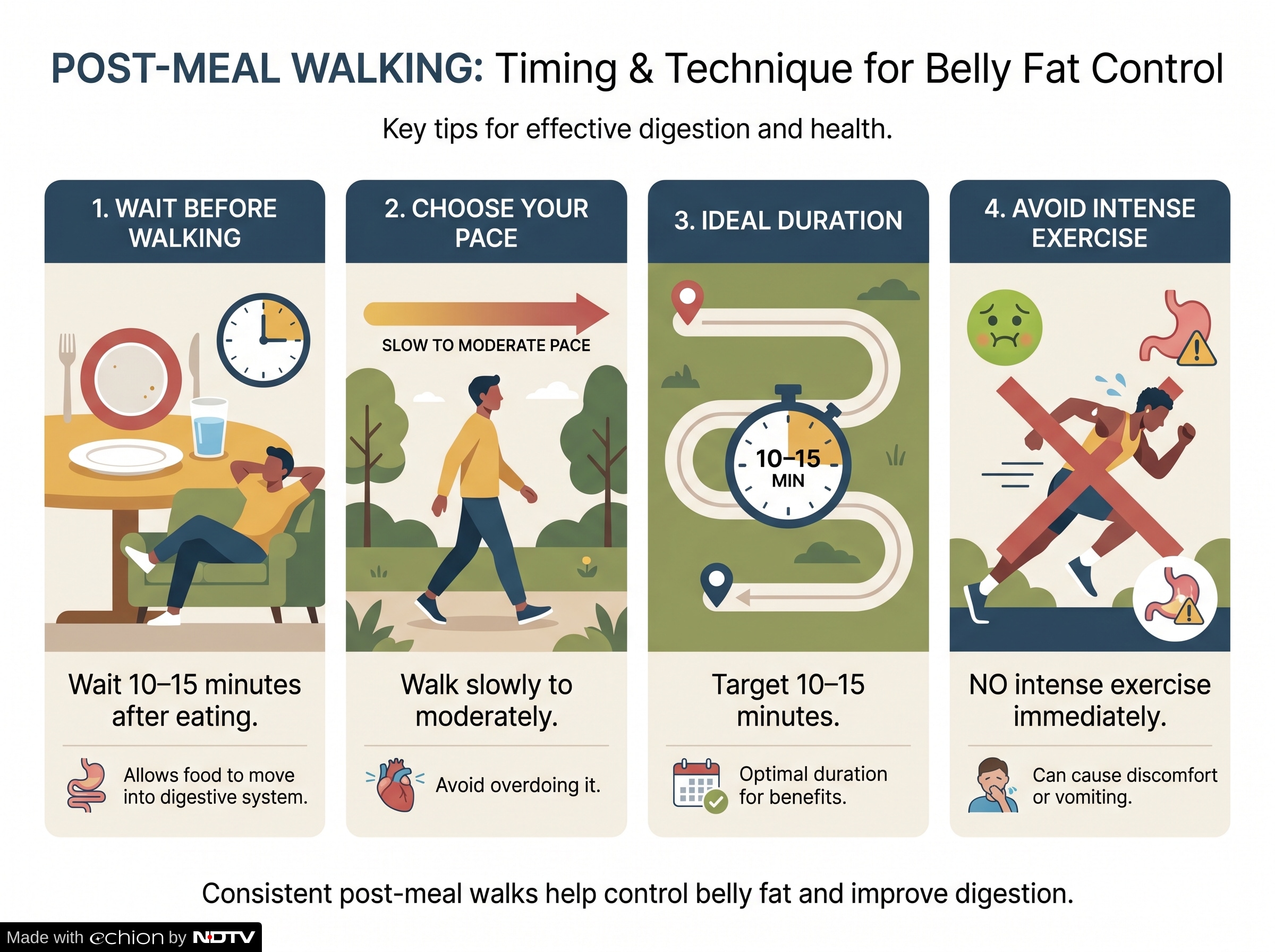
When And How To Walk After Meals
Tapasya Mundhra, Clinical Dietitian and Holistic Nutritionist, explains, "Walking after meals helps prevent blood sugar spikes and improves metabolism, which may reduce fat storage over time."
You need to follow simple tips to make sure that your post-meal walk controls the amount of belly fat. Here is what you need to know:
- Wait 10-15 minutes after eating to make sure the food moves into the digestive system.
- Walk at a slow to moderate pace to make sure you don't overdo your post-meal walk.
- The ideal duration should be 10-15 minutes.
- You need to avoid intense exercise immediately after eating, as it can make you throw up.
Who Should Try This Habit?
This habit should be a staple in the daily routine of individuals who meet the following criteria:
- People with belly fat concerns need to tweak their lifestyle and dietary choices to reduce it visibly.
- Office workers and those with a sedentary lifestyle need to follow this habit.
- People with blood sugar issues should definitely make post-meal walking a staple.
- Those struggling with digestion problems should introduce post-meal walking for better relief.
Also Read: Poor Recovery After Workouts: Sports Medicine Expert Tells What The Body May Be Saying
How Long Before You See Results?
The results on your belly can be seen in varying degrees, as multiple factors affect how much belly fat you can lose and the pace of losing it.
- The initial benefits can be seen within 1-2 weeks.
- While visible changes in belly fat can be noticed within 4-6 weeks with consistency.
- The habit works best with a balanced diet and daily hydration, as belly fat is stubborn to tackle once it develops.
Tips To Maximise Belly Fat Loss
You can lose belly fat by following scientifically proven methods that can help you do so. Here is how:
- Combine it with high-protein meals for maximum impact on belly fat.
- Avoid sugar-heavy foods that can cause glucose spikes and lead to fat storage in the belly area.
- Stay consistent after every major meal to see visible results, but your overall lifestyle and dietary choices can influence it.
- You need to add a daily step goal of at least 7,000-10,000 to see positive effects visibly.
Taking a walk after consuming a meal is a small habit that has a big impact on the body. The consistency matters more than the intensity with which you practise it. You just need to start doing this today to avoid belly fat altogether. If you do have it, then you need to consult a nutritionist or dietician to make sure you take the right approach.
Disclaimer: This content including advice provides generic information only. It is in no way a substitute for a qualified medical opinion. Always consult a specialist or your own doctor for more information. NDTV does not claim responsibility for this information.