

)
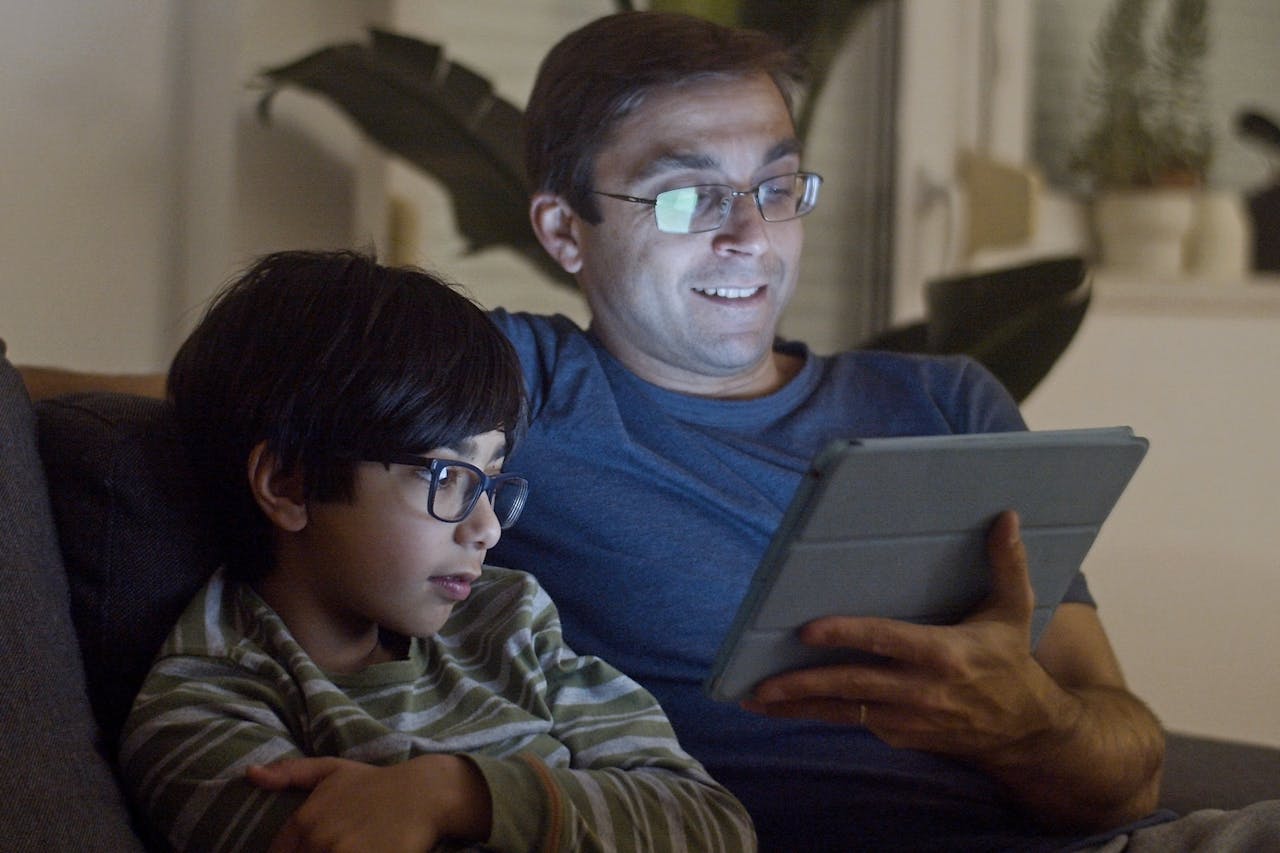
Watching TV while having snacks and playing games on a tablet may appear as a normal evening routine for a child. However, the screen could do more than simply shift their physical location. It could affect the amount of attention the child pays to the food, the rate at which they eat and how they know that they are full.
It would be too simplistic to claim, "screen time makes children overeat". There is evidence that the context of the screen usage is important. This includes not only the type of screen usage but also the food that is accessible to the child.
When attention shifts away from the plate
Typical eating includes different stimuli: hunger prior to the meal, food taste and texture while consuming food, and feelings of satiety which develop during the meal. In case a child is engaged with a programme or a game, part of their attention is shifted from food to the screen.
Thus, it becomes easier for them to eat automatically without being hungry. Children can continue snacking because the programme is ongoing, not due to their feeling of hunger.
Nevertheless, there is more to the scientifically proven effect than this common explanation states. A systematic review and meta-analysis of controlled trials performed on children and adolescents showed no significant impact of eating while watching television on increasing immediate calorie consumption in laboratory setting. Moreover, the authors found that a considerable number of reviewed studies had moderate or high risk of bias.
It does not mean that eating with screens is safe. It means that the impact of this phenomenon is dependent on the context and behaviour of an individual.
The bigger issue may come after the snack
Of the more intriguing results was the outcome after the screen-time eating occasion.
According to a systematic review and meta-analysis of experimental studies done in 2025, the television watching during meals was observed to have small effects on food consumption when the television was considered alone. More importantly, the television watching resulted in increased intake during the next meal occasion while there were no statistical significant results for the effects on immediate intake.
This suggests that there is a possibility that distraction does not only make the child consume more during that exact period. It is possible that the distraction might prevent the food intake from being stored in memory.
A systematic review done on adult population in 2026 reported similar results regarding intake during a following meal occasion while the results for immediate intake were inconclusive. Passive distractions like watching television were found to increase intake compared to some distractions.
Children may thus be very vulnerable in cases where the screen time usage is constantly associated with their meals and snacks.
Food advertisements add another layer
Screen content is important as well.
Children are not guaranteed to be exposed to a food-neutral environment when using screens such as video games and televisions. Food ads, branded content, influencer videos, and scenes involving highly palatable foods can all serve as food cues.
In a systematic review of the impact of screen use during meals, 27 out of 35 studies demonstrated increased food consumption in connection to ads or food cues. The authors also noted that the research regarding mobile phones and tablets was less robust compared to the research involving television.
This implies that a child does not eat due to distraction alone. They are also continuously exposed to cues that elicit an interest in food, especially high-energy snacks.
Also Read: Your Child May Be Overweight, But Are They Getting Enough Nutrition? Here's What You Should Know
Why the type of snack matters
Compare the scenario of a child who watches 30 minutes of cartoons with a bowl of biscuits on the side with a child who consumes an intended snack at the dining table.
In this case, there may be no distinct start and end time for eating. The snack remains available all through, and the child keeps taking small bites without realizing the amount they have already eaten.
The size of portions may affect the food consumption of children. According to a 2025 systematic review, the size of portions was associated with increased daily energy intake in children, while its association with adiposity was inconsistent across the studies.
This explains why the screen + highly palatable snack + portion size is a more critical factor than screen alone.
It can become a learned routine
Behavioural conditioning is another issue.
If the child is given snacks such as chips, biscuits, sugared beverages or sweets every time they sit down in front of the television set, then the mind begins to make connections between the two activities. In effect, just sitting down and being on screen could start making the child expect snacks, regardless of whether the child feels physically hungry.
It becomes "I'm eating because I'm in front of the screen" rather than "I'm eating because I'm hungry".
Additionally, it could also become difficult for the parents to determine how much snacking is going on, especially with the child moving from one screen to the next.
The solution is not to ban every screen
The objective should not be to ensure an immediate screen-free experience in all family meals. Instead, it would be better to try to segregate food eating from screen activities as much as possible.
Food and regular snacking should take place at the table, with food being provided in portions and not in packets alongside the child. Water could serve as the primary drink while healthy snacks like fruit, yoghurt, nuts as appropriate, or others could substitute for the constant consumption of heavily processed snacks.
Most importantly, parents should refrain from using food as a default reward for screen activity.
Some studies have also found that screen intervention strategies in preschool children may bring about moderate benefits in terms of BMI, even if the effect on screen time or dietary behaviours themselves has been inconsistent. This further emphasizes that screen behaviour itself is but one component of a broader behavioural context.
Also Read: Screen Time, Gaming And Smartphones: Are They Fuelling India's Child Obesity Crisis?
Look at the whole routine, not just the screen
This issue is even more worrying when it goes together with erratic meal times, lack of sleep, low levels of physical exercise and high availability of calorie-rich foods. As indicated in the systematic review of 2026 on the food environment associated with obesity and overweight among children, issues like food availability at home and its accessibility were important and not any single behaviour.
The lesson that parents can get from this issue is that not all children who eat food while watching TV will overeat. The greater emphasis should be on how screens affect children's eating and create a situation where snacking gets easier.
Setting clear boundaries for children regarding when and where they should eat helps them re-establish links between food and the state of hunger.
(By Dr. Radhakrishna Hegde S, HOD and Lead consultant - Paediatrics, Aster Whitefield Hospital, Bengaluru)
Disclaimer: The opinions expressed within this article are the personal opinions of the author. NDTV is not responsible for the accuracy, completeness, suitability, or validity of any information on this article. All information is provided on an as-is basis. The information, facts or opinions appearing in the article do not reflect the views of NDTV and NDTV does not assume any responsibility or liability for the same.