


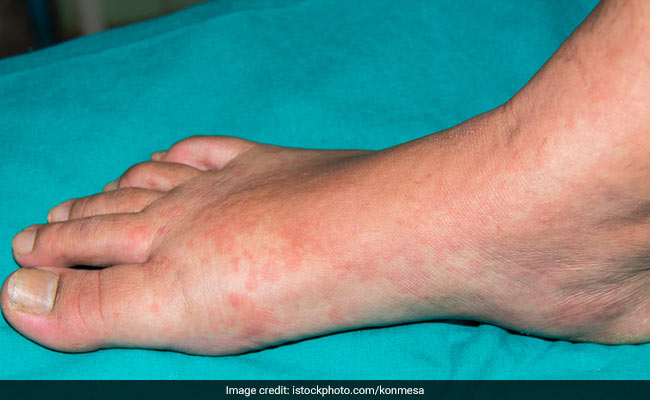
Cold induced hives, technically called 'cold urticaria' is a condition which leads to the formation of red welts on the skin when it is exposed to a cold stimulus. These itchy welts appear on the hands or legs and make the affected area swollen as well. The condition triggers when the skin is suddenly exposed to cold temperatures. In most people, cold-induced hives are like temporary allergic reactions, but there are others who regularly experience these hives after every few months.
Simply put, cold induced hives refer to the body's reaction to cold stimulus like jumping into and getting out of ice-cold water. Experts say that hives are created by mast cells.
The symptoms of cold induced hives are as follows:
Symptoms of hives can range from mild to severe, and include redness, itchy skin, swollen lips and mouth and large welts. The most severe reaction is anaphylaxis, a condition which causes difficulty in breathing, loss of consciousness and even death.

Causes of cold induced hives
Apart from exposure to extremely low seasonal temperatures, cold induced hives can be caused by falling in or swimming in cold water, drinking cold drinks, eating cold foods, touching cold objects or evaporation of water from the skin.
To diagnose if a person is suffering from cold urticaria, doctors conduct a cold stimulation time test which involves putting an ice pack on the skin. The person is suffering from the condition if the skin exposed to the ice packs becomes red, itchy or inflamed.
 Photo Credit: iStock
Treatment of cold-induced hives
- The best and the simplest way to avoid cold urticaria is avoiding trigger situations and anything cold.
- Other preventive measures include staying warm, where people can avoid taking long walks during the chilly winter season and be covered as much as possible during winter.
- One must also look for other triggers like certain fabrics which can cause skin irritability, fabric softeners, soaps, etc.
- Some medications might also lead to such allergic reactions on the skin. Doctors often suggest glucocorticoid steroids to provide a relief from hives.
Also read: What Are The Various Skin Changes Caused By Smoking?