

A dog bite may look like a small injury, but when rabies is a possibility, what you do in the first few minutes can be life-saving. Rabies is a viral infection that affects the central nervous system and is almost invariably fatal once clinical symptoms appear. Yet rabies deaths are preventable when exposure is managed promptly with wound care and appropriate post-exposure prophylaxis (PEP), including the rabies vaccine. Globally, dogs are responsible for about 99% of human rabies cases.
The risk is particularly relevant in India. According to the World Health Organization (WHO), an estimated 9.1 million animal bites occur in India each year, with more than three-quarters caused by dogs. An estimate published in 2024 put annual human rabies deaths in India at 5,726, although the true burden can be difficult to measure.
World Rabies Day, observed on September 28, is therefore an important reminder: do not wait for symptoms after a potentially risky animal bite or scratch. Rabies prevention begins immediately after exposure.
What should you do immediately after a dog bite or scratch?
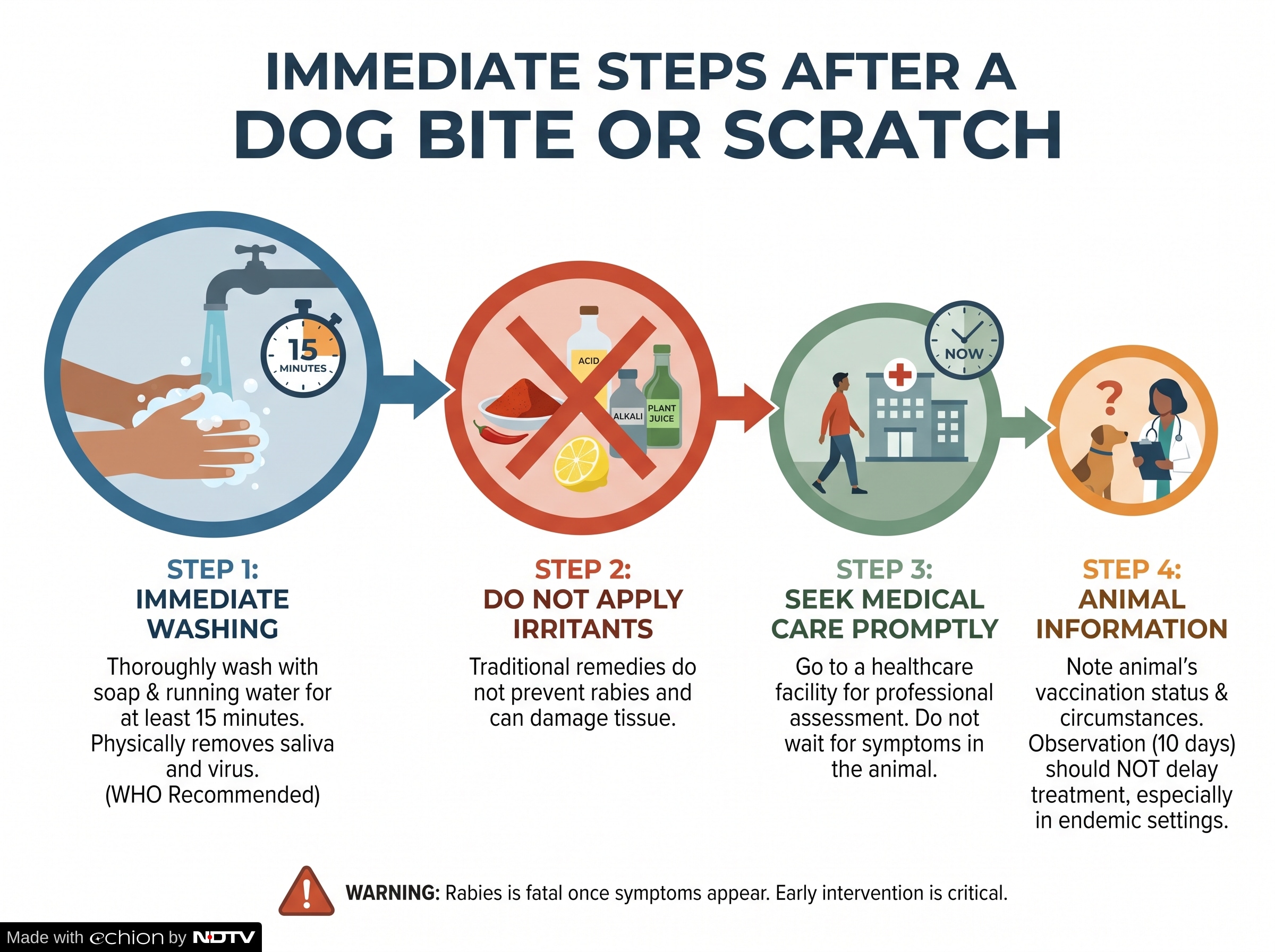
The first step is thorough wound washing, before worrying about anything else. WHO recommends washing and flushing the wound with soap and running water for at least 15 minutes. If available, an iodine-containing or other virucidal preparation can be applied after washing.
Step 1: Wash the wound for 15 minutes
Hold the affected area under running water and wash it thoroughly with soap. Do not merely wipe the wound or rinse it briefly. Even if the wound appears superficial, washing helps physically remove saliva and reduce the amount of virus at the exposure site.
Step 2: Do not apply irritants
Do not put chilli powder, plant juices, acids, alkalis or other potentially harmful substances on the wound. These traditional remedies do not prevent rabies and can damage tissue.
Step 3: Seek medical care promptly
Go to a healthcare facility or an appropriate anti-rabies clinic for a professional assessment. Do not wait for the dog to develop symptoms before seeking medical advice. If the animal is available, information about its vaccination status and circumstances of the bite can help clinicians assess the exposure.
A healthy dog may be observed for 10 days under veterinary/public-health supervision, but observation of the animal should not delay PEP when it is indicated, particularly in rabies-endemic settings.
Also Read: Within How Many Hours Should You Get A Rabies Vaccine After A Dog Bite?
Does every dog bite require a rabies injection?
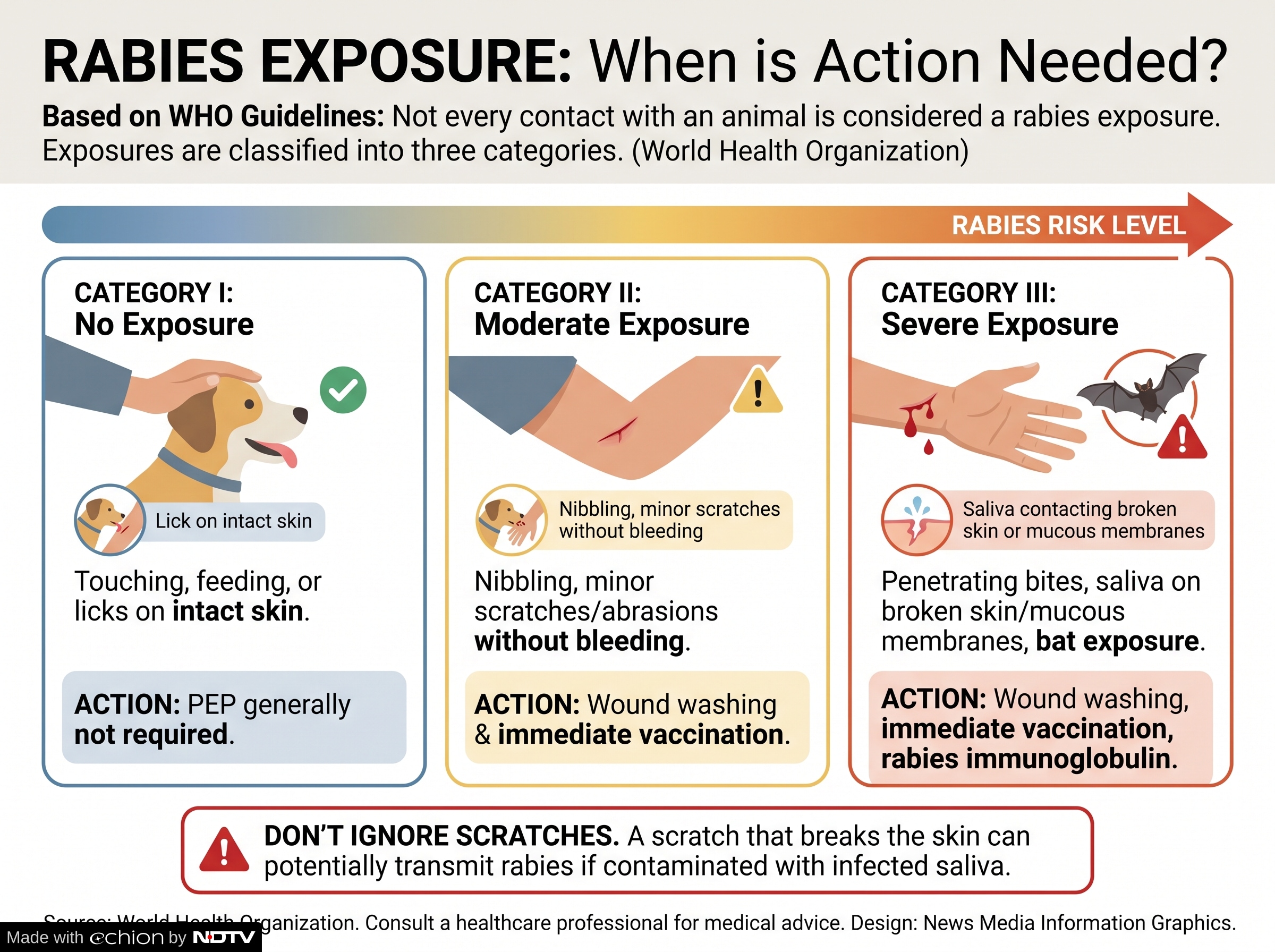
Not every contact with an animal is considered a rabies exposure. WHO classifies exposures into three categories.
- Category I: Touching or feeding an animal, or a lick on intact skin. This is not considered a rabies exposure and PEP is generally not required.
- Category II: Nibbling of uncovered skin or minor scratches or abrasions without bleeding. This requires wound washing and immediate rabies vaccination.
- Category III: One or more bites or scratches that penetrate the skin, saliva contacting broken skin or mucous membranes, or certain direct exposures to bats. This requires wound washing, immediate vaccination and rabies immunoglobulin or an appropriate rabies monoclonal antibody when indicated.
This is why a scratch should not automatically be dismissed as harmless. A scratch that breaks the skin can potentially transmit rabies if contaminated with infected saliva.
When is rabies immunoglobulin needed?
Rabies immunoglobulin (RIG) provides immediate, temporary antibodies while the vaccine-induced immune response develops.
For a person who has not previously received rabies vaccination, WHO recommends RIG for Category III exposures, alongside the rabies vaccine. It should be infiltrated into and around the wound as appropriate by a trained healthcare professional.
RIG is not routinely required for Category II exposures. People who have previously completed an appropriate rabies vaccination course also generally do not require RIG after a new exposure.
The exact PEP regimen can vary according to the exposure, previous vaccination and the route of vaccine administration. WHO-supported intradermal regimens include vaccine given at two sites on days 0, 3 and 7, while intramuscular regimens are also used. Therefore, patients should follow the schedule prescribed by the treating anti-rabies clinic rather than trying to construct a vaccination schedule themselves.
Can rabies vaccine be taken during pregnancy or childhood?
Rabies PEP should not be withheld because a person is pregnant, breastfeeding, very young or older.
WHO states that rabies PEP can be safely given to infants, pregnant women and immunocompromised people when indicated. People with certain immune conditions may require modified vaccination schedules and medical monitoring.
What about tetanus and infection?
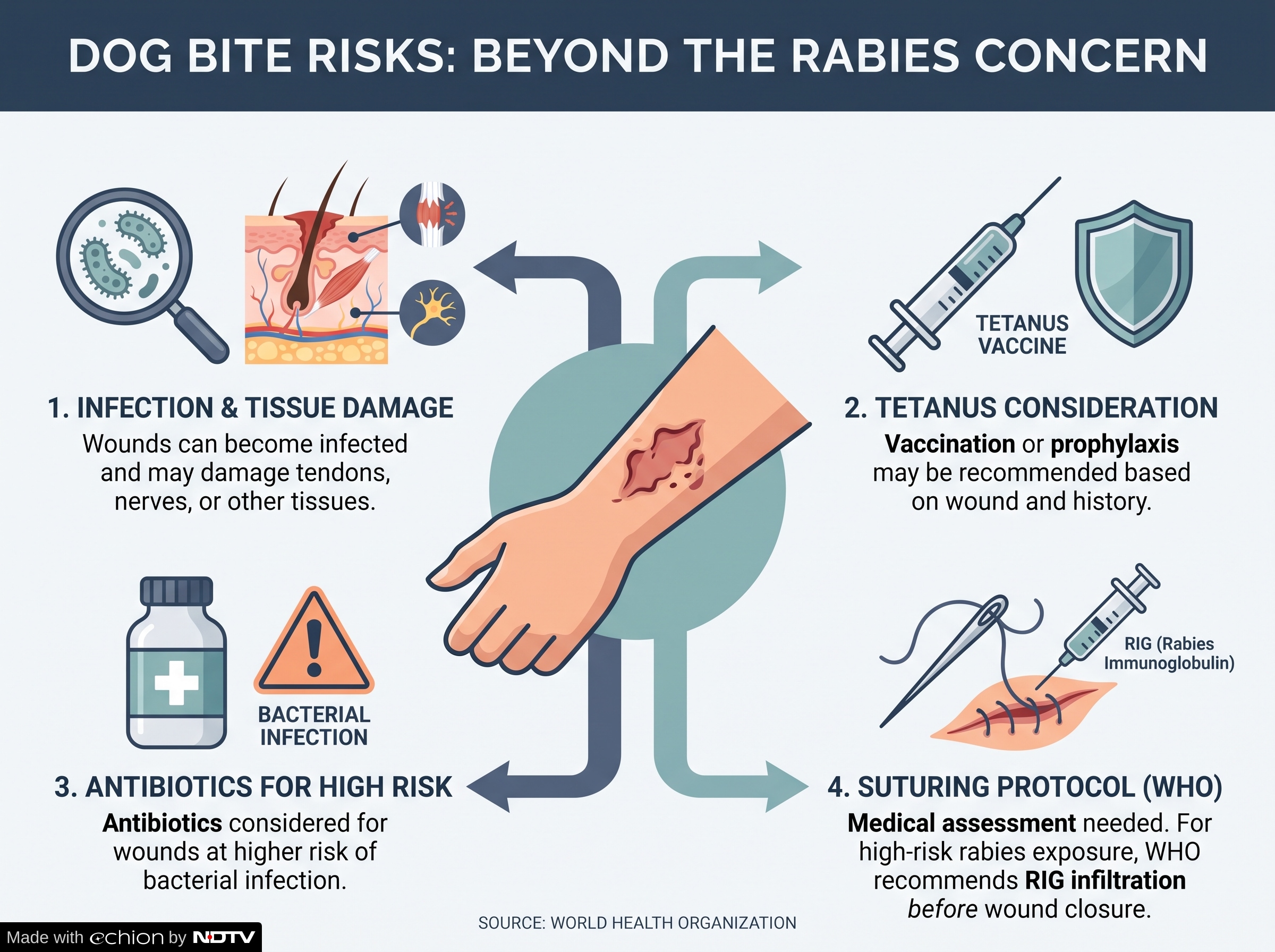
A dog bite is not only a rabies concern. Bite wounds can also become infected and may damage tendons, nerves or other tissues.
A healthcare professional may therefore recommend tetanus vaccination or prophylaxis, depending on the wound and vaccination history. Antibiotics may also be considered for wounds at higher risk of bacterial infection.
Whether a wound should be stitched also needs medical assessment. When suturing is necessary for a high-risk rabies exposure, WHO recommends appropriate wound management, including infiltration of RIG before wound closure where indicated.
What if the dog looks healthy?
A healthy-looking dog does not automatically mean there is no risk. Where appropriate, a dog that has bitten someone may be confined and observed for 10 days under veterinary/public-health supervision. However, the decision about PEP should be made by a healthcare professional based on the exposure, animal history, local rabies epidemiology and whether reliable observation is possible.
Most importantly, do not wait for symptoms in the person bitten. Once rabies symptoms appear, the disease is almost invariably fatal.
Also Read: Vaccinating Dogs, Not Just People, May Prevent Rabies Deaths In India: Lancet Study
Preventing rabies starts with dogs
Human rabies prevention cannot depend only on treating people after bites. WHO and India's National Action Plan for dog-mediated Rabies Elimination emphasise a One Health approach combining human PEP, public awareness, surveillance and sustained vaccination of dogs. India's National Action Plan aims to eliminate dog-mediated human rabies by 2030 and calls for sustained mass dog vaccination, access to pre- and post-exposure prophylaxis and public education. In addition, the government of India's National Rabies Control Programme (NRCP), which maps cases and offers easier access to the Abhayrab rabies vaccine, is also a resource people can use.
A dog bite or scratch should never be treated casually when rabies is possible. Wash the wound with soap and running water for at least 15 minutes, avoid harmful home remedies and seek medical care immediately.
Whether you need rabies vaccine, rabies immunoglobulin, tetanus protection or antibiotics depends on the nature of the exposure and your medical and vaccination history. The key message on World Rabies Day is simple: rabies is preventable, but prevention depends on acting before symptoms begin.
Disclaimer: This content including advice provides generic information only. It is in no way a substitute for a qualified medical opinion. Always consult a specialist or your own doctor for more information. NDTV does not claim responsibility for this information.