

)
The story of organ donation in India is often told through statistics, but the real heart of the matter lies in the selfless decisions made by families in their darkest hours. One such case involves 43-year old Rajesh Prasad, where he slipped and fell from a ladder. This personal tragedy of Prasad's family turned into a lifeline for five others. After being declared brain-dead following a accident, Prasad's family consented to donate his organs through the National Organ and Tissue Transplant Organisation (NOTTO). His heart was flown via a "green corridor" via a traffic-free route coordinated by the police to reach a patient in record time. This single act of bravery is the bridge between a tragic end and a new beginning. But for every Prasad, there are thousands still waiting. Today, 82,285 Indians are on the official waitlist, hoping for a similar miracle.
The Numbers: Why The Wait Is So Long
According to the latest NOTTO data, the gap between organ demand and supply is a major public health challenge. While India has become a global leader in medical tourism, Indian citizens face a long road to recovery. Here are the three main areas where the gap is evident:
- The kidney crisis exists, wherein over 60,000 people are waiting for a kidney. This is largely due to the rise in diabetes and hypertension across India.
- The liver gap exists where more than 18,000 patients need a liver transplant.
- Heart and lung organs are in short supply, where nearly 2,500 people are fighting for every breath, waiting for a donor.
While India performed nearly 20,000 transplants in 2025, the number of new patients joining the list is growing faster than the number of donors.
The "One Nation, One Policy" initiative aims to make organ transplantation fair for everyone. The Indian government has recently simplified the rules to ensure that a patient's location or age doesn't stop them from getting help. Under the "One Nation, One Policy" initiative, these changes have been implemented:
- No more age bars as previously; people over 65 struggled to get on the death donor list. Now, there is no upper age limit, as everyone has a right to register.
- No state-only rules, as previously, you used to have to be a resident of a specific state to get an organ there. That location-specific rule is gone, and now India has one unified national pool.
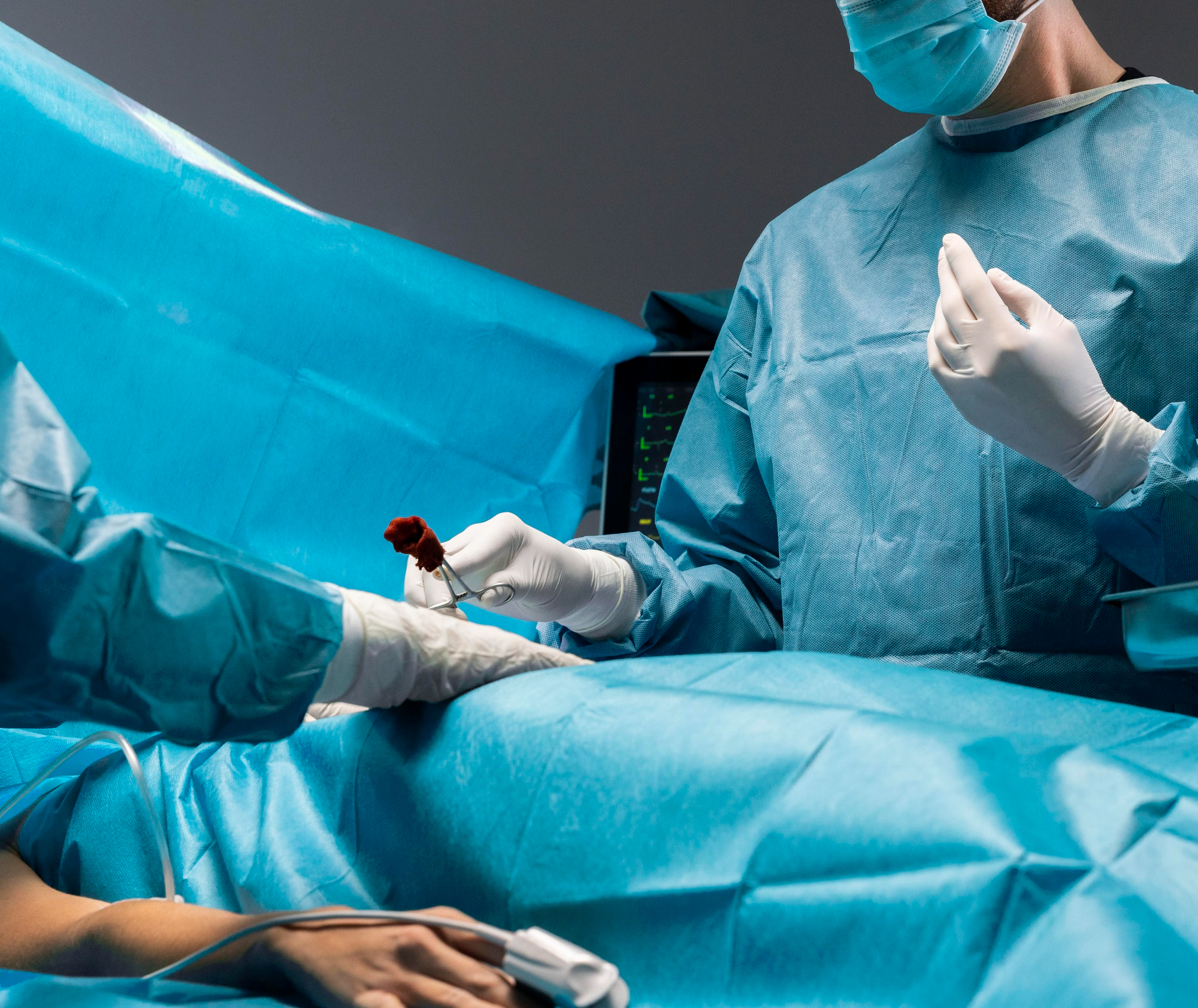
Organ transplantation surgery
Photo Credit: Freepik
Living vs. Donors Who Have Died: The Big Shift Needed
In India, most transplants are living donations, where a brave family member gives a kidney or a part of their liver. While this is noble, it puts a physical strain on a healthy person.
The real goal is to increase death donations (donations after brain death). A single donor who has died can save up to 8 lives by donating the heart, two lungs, two kidneys, liver, pancreas, and intestines. They can also improve the lives of 75 others through bone, skin, and cornea (eye) donations.
Also Read: 10-Month-Old Infant Declared Brain Dead Becomes Kerala's Youngest Organ Donor
Logistics Of Hope: How The System Works
When a family agrees to donate, the NOTTO digital registry springs into action. It automatically finds the best match based on blood group, urgency, and geography.
To ensure the organ reaches the recipient while it's still 'viable', the police often create green corridors. In cities like Mumbai, Delhi, and Chennai, these corridors have allowed hearts to travel 20 km in under 15 minutes. If you or a loved one ever needs information on this process, the government provides a helpline number.
Also Read: New Digital Push: Gujarat Develops Software To Make Organ Transplants More Efficient
Breaking The Myths
Many families hesitate because of myths. Some fear it will delay funeral rites or that the body will be disrespected. In reality, these steps are ensured:
- Dignity first, as the doctors treat the donor with the highest surgical respect; there is no visible disfigurement for the funeral.
- No cost, as there is no cost to the donor's family for the organ retrieval process.
- All religions support it, as major religious bodies in India view organ donation as a mahadan (the ultimate gift).
Your Turn To Save A Life
Pledging your organs is now as simple as linking your Aadhaar. You can register your wish in less than two minutes at the NOTTO website or call the 24x7 helpline: 1800-11-4770.
By signing up, you aren't just filling out a form; you are offering hope to the 82,000 Indians currently caught in the waiting game. Let's move from a culture of hesitation to a culture of giving.
Disclaimer: This content, including advice, provides generic information only. It is in no way a substitute for a qualified medical opinion. Always consult a specialist or your own doctor for more information. NDTV does not claim responsibility for this information.