

)
Cancer vaccines have long carried a tantalising promise: instead of broadly attacking cancer cells, could treatment train the immune system to recognise and destroy the specific cancer threatening a patient? That idea has taken a major step forward with positive results from a large Phase 3 trial of a personalised mRNA-based cancer therapy developed by Moderna and Merck.
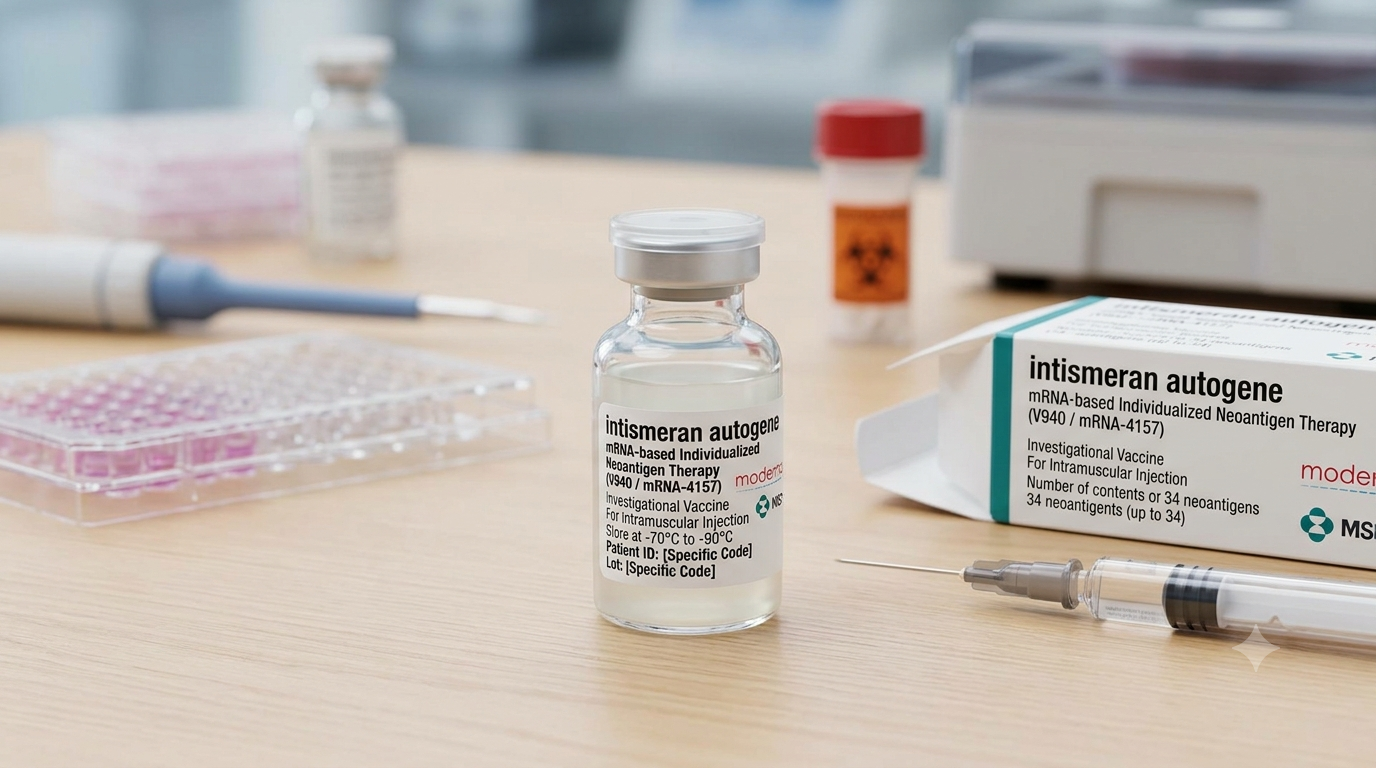
On August 19, 2026, the companies announced that their investigational therapy, intismeran autogene, also known as V940 or mRNA-4157, met the primary endpoint of recurrence-free survival and a key secondary endpoint of distant metastasis-free survival in patients with completely resected, high-risk melanoma.
The trial tested the personalised cancer vaccine alongside pembrolizumab, an established immunotherapy, against pembrolizumab alone. It included 1,137 people with completely resected stage IIB-IV melanoma, making this a much larger test than the earlier Phase 2b study that first generated excitement around the approach.
So, what exactly is a neoantigen cancer vaccine, how does it work, and could this approach eventually change cancer treatment?
What Is A Neoantigen Cancer Vaccine?
Unlike vaccines used to prevent infections, cancer vaccines are therapeutic: they are designed to help the immune system recognise and attack cancer cells.
The Moderna-Merck approach is more personalised. A tumour's genetic material is analysed to identify mutations that are present in the cancer but not in normal cells. Some of these mutations can produce abnormal proteins or protein fragments called neoantigens.
These neoantigens can act like molecular "flags" that distinguish cancer cells from healthy cells.
The vaccine uses mRNA to provide instructions related to selected tumour-specific neoantigens. The aim is to stimulate the patient's immune system, particularly T cells, to recognise those targets and mount an anti-tumour response.
The National Cancer Institute describes personalised neoantigen vaccines as treatments designed to teach immune cells such as T cells to specifically recognise tumour cells.
In other words, this isn't a one-size-fits-all cancer vaccine. The treatment is designed around the individual patient's tumour.
How Does The Moderna-Merck Vaccine Work?
The therapy starts with the patient's tumour.
After surgery removes the melanoma, the tumour is genetically analysed to identify mutations that could serve as targets. An individualised mRNA vaccine is then manufactured to encode selected neoantigens from that person's tumour.
Once administered, the mRNA provides instructions that allow cells to produce the relevant antigens. The immune system can then learn to recognise these targets and generate tumour-specific T-cell responses.
The vaccine is being combined with pembrolizumab, a PD-1 immune checkpoint inhibitor. Pembrolizumab works differently: it helps restore the ability of immune cells to detect and attack cancer by blocking the PD-1 pathway.
The idea is therefore to combine two complementary strategies:
- The vaccine: teaches the immune system what to look for.
- Pembrolizumab: helps remove one of the brakes that can prevent immune cells from attacking cancer.
What Did The Phase 3 Melanoma Trial Find?
The Phase 3 INTerpath-001 trial enrolled 1,137 patients with completely resected stage IIB-IV cutaneous melanoma. Participants were randomly assigned in a 2:1 ratio to receive either intismeran autogene plus pembrolizumab or pembrolizumab alone.
The combination met its primary endpoint of recurrence-free survival (RFS). It also met the key secondary endpoint of distant metastasis-free survival (DMFS). The companies described the improvements as statistically significant and clinically meaningful compared with pembrolizumab alone.
Importantly, the current announcement provides topline results, rather than the complete dataset. Overall survival and some other outcomes remain under follow-up, and the companies have said detailed findings will be presented at a future medical meeting.
That distinction matters. A positive Phase 3 trial is a major milestone, but it does not automatically mean that the vaccine is approved or available to patients.
Earlier Data Had Already Raised Hopes
The Phase 3 findings build on results from the randomised Phase 2b KEYNOTE-942 trial.
That study included 157 patients with high-risk stage III/IV melanoma following complete surgical removal of their cancer. Patients received either the personalised vaccine plus pembrolizumab or pembrolizumab alone.
Five-year follow-up presented in 2026 showed that the combination reduced the risk of recurrence or death by 49% compared with pembrolizumab alone. The risk of distant metastasis or death was reduced by 59%.
These results were important because they suggested that the benefit could persist several years after treatment.
However, the Phase 3 trial is particularly significant because it tests the approach in a much larger population and provides the kind of evidence needed to determine whether the earlier signal can be reproduced.
Why Melanoma Is An Important Testing Ground
Melanoma is an aggressive skin cancer and is particularly relevant to immunotherapy research because melanoma cells can carry a relatively high number of mutations, potentially creating more targets for the immune system.
Globally, around 330,000 new melanoma cases and nearly 60,000 deaths were estimated in 2022, according to the International Agency for Research on Cancer.
The treatment is being investigated in patients whose melanoma has been completely removed surgically. This is important because the objective here is not simply to shrink an existing tumour. It is to reduce the risk of the cancer returning or spreading after surgery.
Pembrolizumab is already an established adjuvant treatment for certain patients with completely resected melanoma, including stage IIB, IIC and III disease.
The personalised vaccine is therefore being tested as an addition to an existing immunotherapy strategy rather than as a replacement for it.
Could This Work For Other Cancers?
Possibly, but that remains an important research question.
The Moderna-Merck programme is already being studied beyond melanoma. Clinical trials are investigating intismeran autogene in cancers including non-small cell lung cancer, renal cell carcinoma and bladder cancer, among others.
The underlying concept is attractive because every tumour accumulates genetic changes, and some of these may provide targets for personalised immune responses.
But cancers differ substantially in their biology, mutation patterns, immune environment and ability to evade immune detection. A treatment that works in melanoma cannot automatically be assumed to work equally well in lung, kidney, bladder or other cancers.
Is The Cancer Vaccine Available Yet?
No. Intismeran autogene remains an investigational therapy. The latest announcement concerns positive topline Phase 3 results, not regulatory approval. The companies will need to submit comprehensive data to regulators and undergo the relevant review process before the treatment could become routinely available.
There are also practical questions around personalised cancer vaccines. Because the treatment is created around an individual tumour, manufacturing speed, quality control, cost and access will be important considerations if the approach eventually reaches clinical practice.
The Moderna-Merck melanoma vaccine represents an important development in the search for more personalised cancer treatments. Its significance lies not simply in the fact that it uses mRNA technology, but in what the mRNA is being used to do: create an individualised immune target based on mutations found in a patient's own tumour.
The Phase 3 INTerpath-001 results suggest that adding this personalised approach to pembrolizumab can improve the time patients remain free from recurrence and distant spread after surgery.
But it is still too early to call this a universal "cancer vaccine". The full Phase 3 data, including longer-term outcomes such as overall survival, regulatory review and results in other cancers will determine how transformative the technology ultimately becomes. For now, however, personalised neoantigen vaccination has moved another significant step from an intriguing research concept towards a potential new tool in cancer care.
Disclaimer: This content including advice provides generic information only. It is in no way a substitute for a qualified medical opinion. Always consult a specialist or your own doctor for more information. NDTV does not claim responsibility for this information.