

)
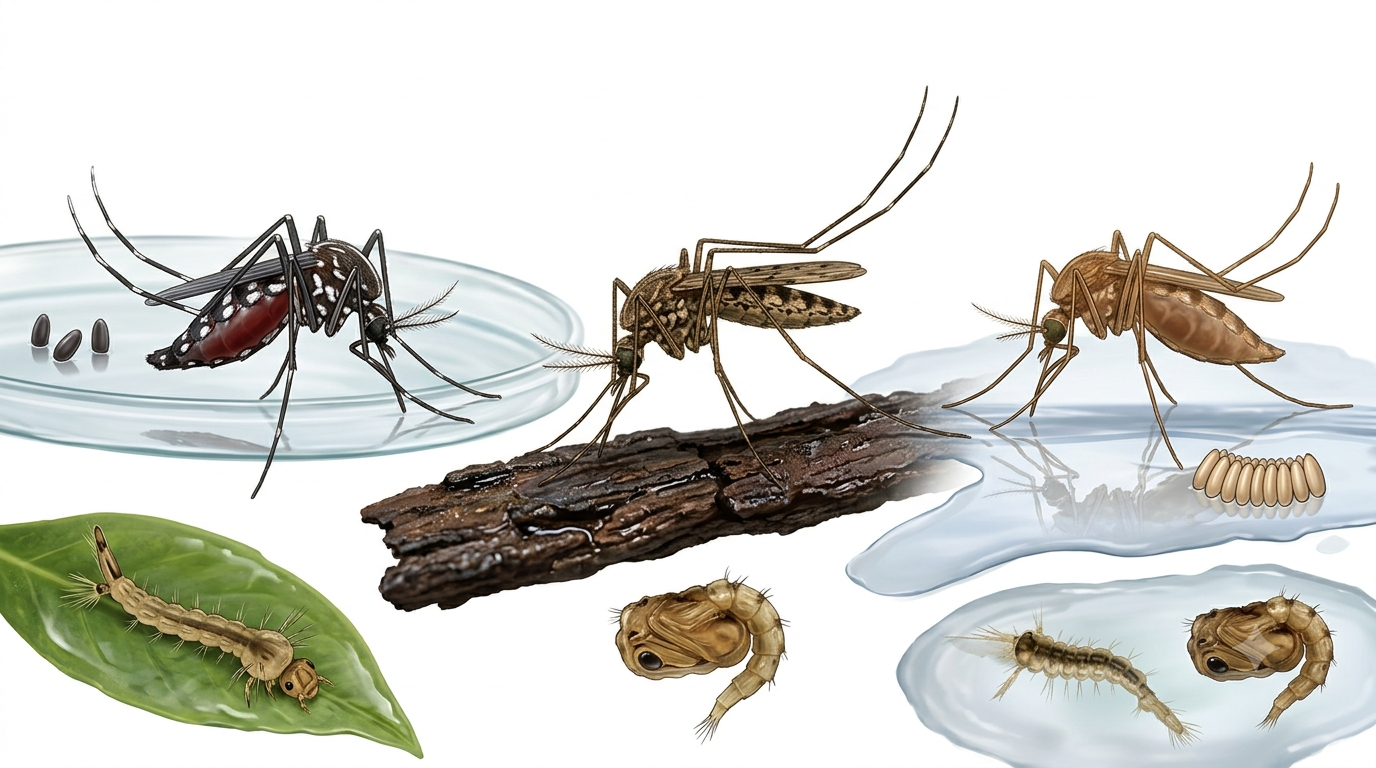
That mosquito buzzing around your home may look like every other mosquito, but medically, they are not all the same. Different mosquito species can transmit different viruses, parasites and other pathogens, and knowing the difference is particularly important in India, where several mosquito-borne diseases circulate. Observed every year on August 20, World Mosquito Day commemorates Sir Ronald Ross, the British physician who demonstrated in 1897 that mosquitoes transmit malaria. His discovery transformed our understanding of malaria and helped establish mosquitoes as important disease vectors.
There are more than 3,500 recognised mosquito species worldwide, but only a fraction can transmit pathogens that cause disease in humans. In India, three mosquito groups are particularly important from a public-health perspective: Aedes, Anopheles and Culex. They differ not only in the diseases they can transmit but also in their preferred breeding environments and biting patterns.
Here is what you need to know about the mosquitoes behind some of India's most important mosquito-borne diseases.
Aedes Mosquitoes: Dengue, Chikungunya And More
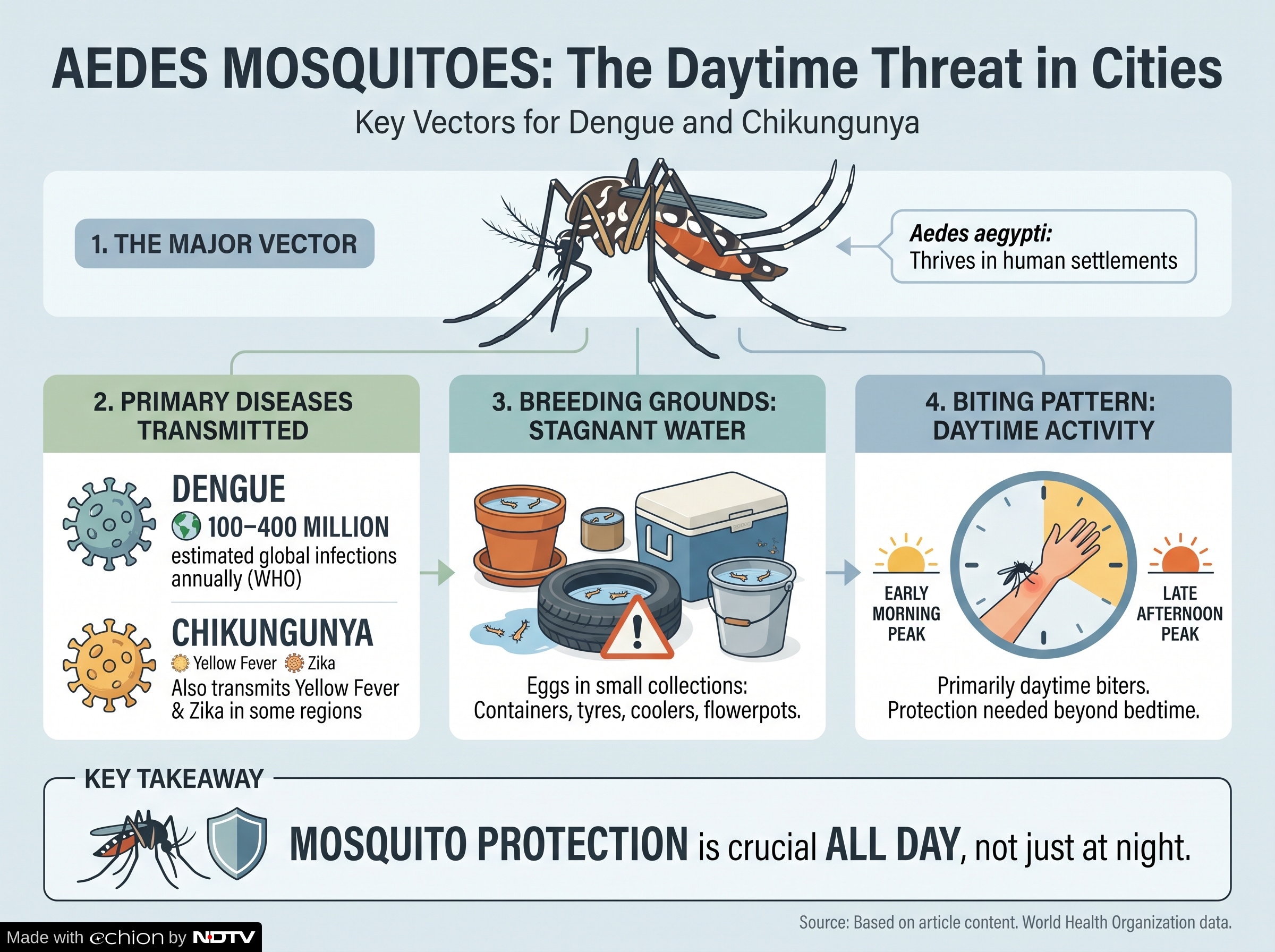
When it comes to mosquito-borne diseases in India's cities, Aedes aegypti is one of the most important species to know. It is a major vector of dengue and also transmits chikungunya. Aedes mosquitoes can also transmit diseases such as yellow fever and Zika in parts of the world where these infections circulate.
One reason Aedes mosquitoes are difficult to control is their ability to thrive around human settlements. They can lay eggs in small collections of stagnant water, including containers, discarded tyres, flowerpots, coolers and other water-holding objects.
And unlike mosquitoes that are predominantly active at night, Aedes mosquitoes are primarily daytime biters. Their biting activity commonly increases during the early morning and around the hours before sunset. That means mosquito protection should not be limited to bedtime.
Dengue is a particularly significant global health concern. The World Health Organization estimates that 100-400 million dengue infections occur every year, although many infections are mild or asymptomatic.
- Mosquito to remember: Aedes aegypti
- Major diseases: Dengue and chikungunya
- Biting pattern: Mainly during the daytime
Anopheles: The Malaria Mosquito
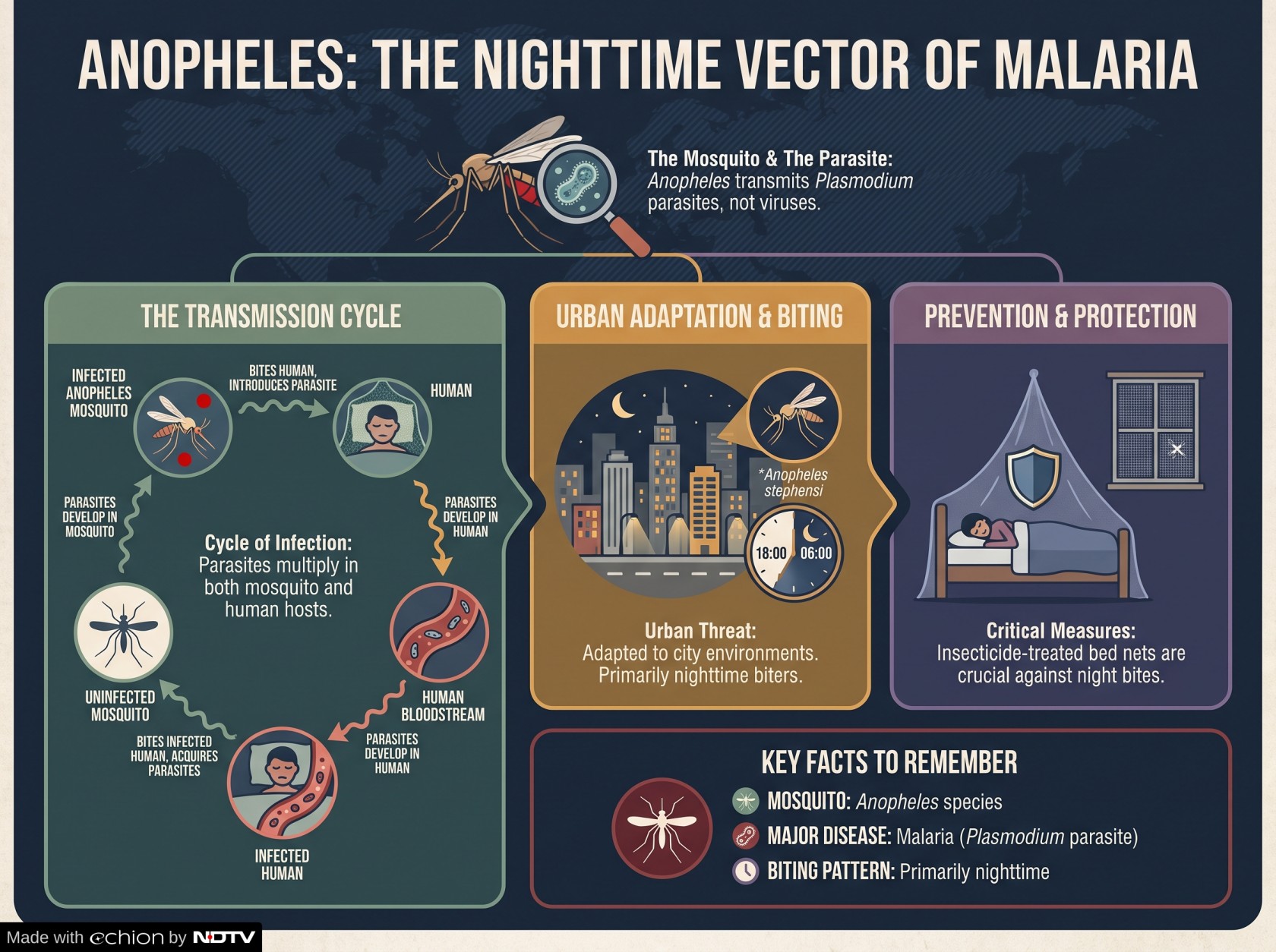
If Aedes is strongly associated with dengue, Anopheles is the mosquito group most closely associated with malaria. Malaria is different from dengue and chikungunya because it is caused by Plasmodium parasites, rather than a virus. Humans become infected when an infected female Anopheles mosquito bites them and introduces the parasite into the bloodstream.
The mosquito itself becomes infected after biting someone who has malaria parasites in their blood. The parasite develops inside the mosquito before it can be transmitted to another person through a subsequent bite. Several Anopheles species can transmit malaria in India. One particularly important species is Anopheles stephensi, which is well adapted to urban environments and has been associated with malaria transmission in cities.
Anopheles mosquitoes generally bite from evening through the night, which makes measures such as insecticide-treated bed nets particularly relevant in malaria-endemic areas.
- Mosquito to remember: Anopheles species
- Major disease: Malaria
- Biting pattern: Primarily nighttime
Culex: Japanese Encephalitis And Filariasis
The third major mosquito group to know is Culex.
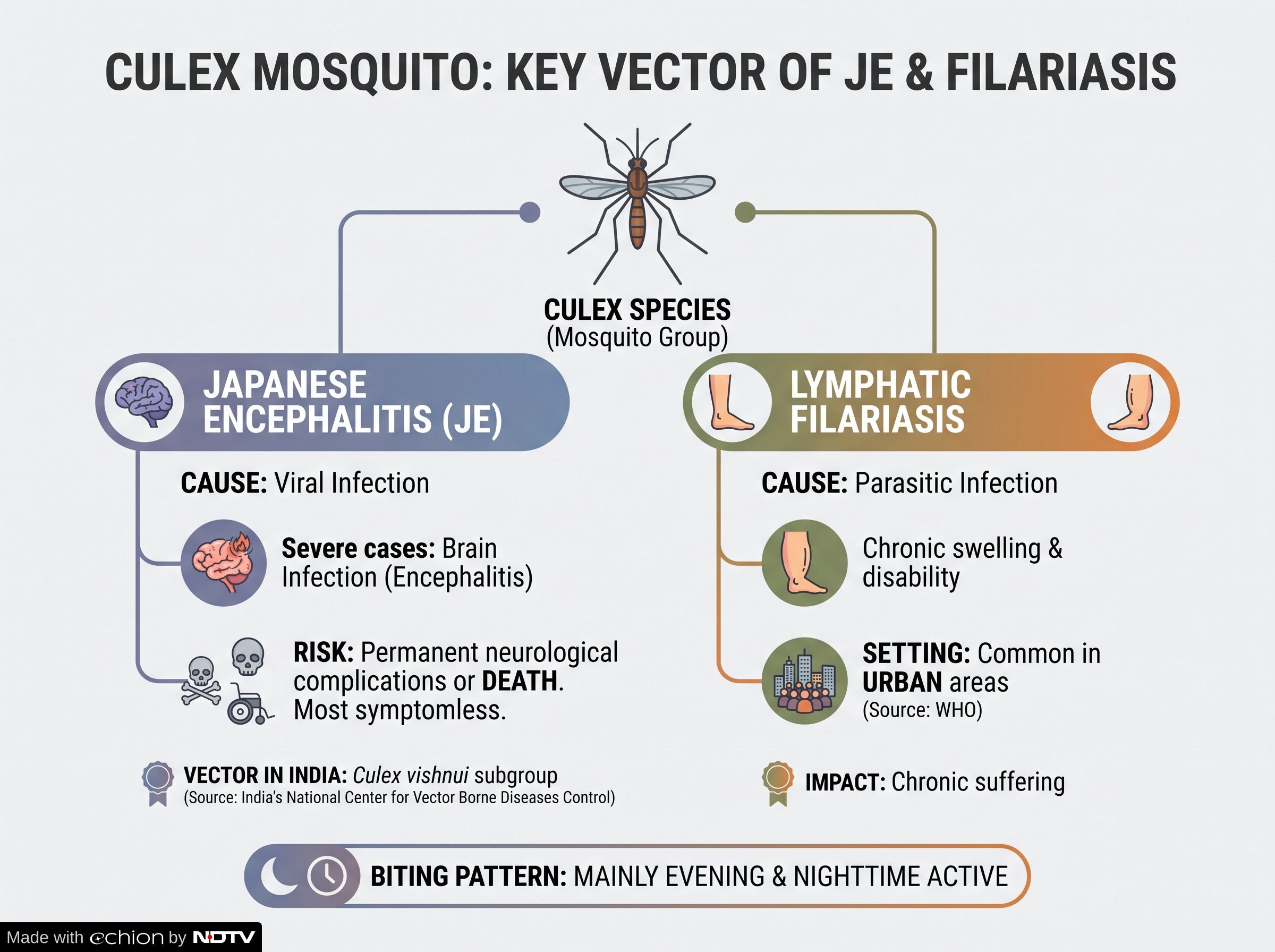
In India, Culex mosquitoes are particularly important in the transmission of Japanese encephalitis (JE). India's National Center for Vector Borne Diseases Control identifies several Culex species as vectors of JE, including mosquitoes belonging to the Culex vishnui subgroup.
Japanese encephalitis is caused by a virus that can infect the brain. Most people infected with the virus do not develop symptoms, but a small proportion develop severe disease, including encephalitis, which can result in permanent neurological complications or death.
Culex mosquitoes are also involved in the transmission of lymphatic filariasis, a parasitic infection that can cause chronic swelling and disability. WHO notes that Culex mosquitoes are important vectors of lymphatic filariasis in several regions, particularly in urban settings. Culex mosquitoes are generally more active during the evening and night.
- Mosquito to remember: Culex species
- Major diseases: Japanese encephalitis and lymphatic filariasis
- Biting pattern: Mainly evening and nighttime
One Mosquito Doesn't Mean One Disease
It is tempting to think of mosquitoes as neatly divided into categories, Aedes equals dengue, Anopheles equals malaria and Culex equals Japanese encephalitis.
But biology is more complicated. A single mosquito genus can contain multiple species, and their ability to transmit a particular pathogen depends on the species, geography, environment and whether the mosquito has acquired the pathogen in the first place.
A mosquito bite also does not automatically mean disease transmission.
The mosquito must be capable of carrying that particular pathogen and must first become infected before it can transmit it to another person. Many mosquito species simply bite humans without transmitting a major disease.
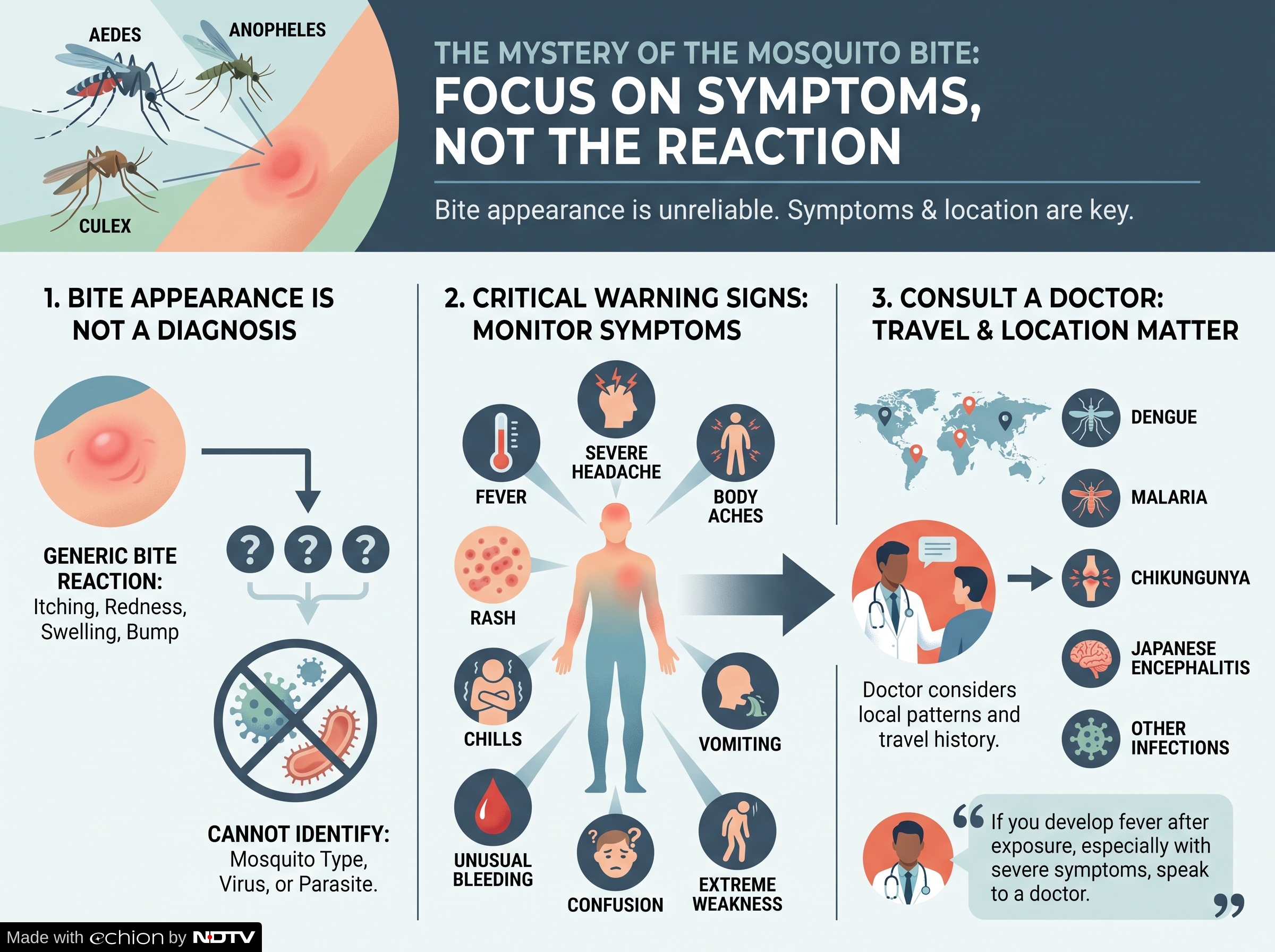
Can You Tell Which Mosquito Bit You?
Not from the bite. A mosquito bite may cause itching, redness, swelling or a small raised bump, but the appearance of the bite cannot reliably tell you whether it came from an Aedes, Anopheles or Culex mosquito.
It also cannot tell you whether that mosquito was carrying a virus or parasite.
This is why symptoms and local disease patterns are more useful than trying to identify the culprit from a skin reaction. If you develop a fever after mosquito exposure, particularly alongside severe headache, body aches, rash, chills, vomiting, unusual bleeding, confusion or extreme weakness, speak to a doctor. Depending on your symptoms and where you live or have travelled, a doctor may consider testing for dengue, malaria, chikungunya, Japanese encephalitis or another infection.
Why Knowing Their Habits Matters
Knowing when and where mosquitoes bite can help you protect yourself more effectively.
For Aedes, controlling breeding sites around homes is particularly important. These mosquitoes can reproduce in surprisingly small amounts of stagnant water. India's National Center for Vector Borne Diseases Control recommends eliminating mosquito breeding sites, covering stored water and regularly checking potential breeding containers.
For Anopheles, nighttime protection is particularly important because of their nocturnal biting behaviour. WHO recommends measures including insecticide-treated mosquito nets and indoor residual spraying as important malaria-control interventions in appropriate settings.
For diseases such as Japanese encephalitis, mosquito control is combined with other public-health measures, including vaccination in populations and areas where vaccination is recommended.
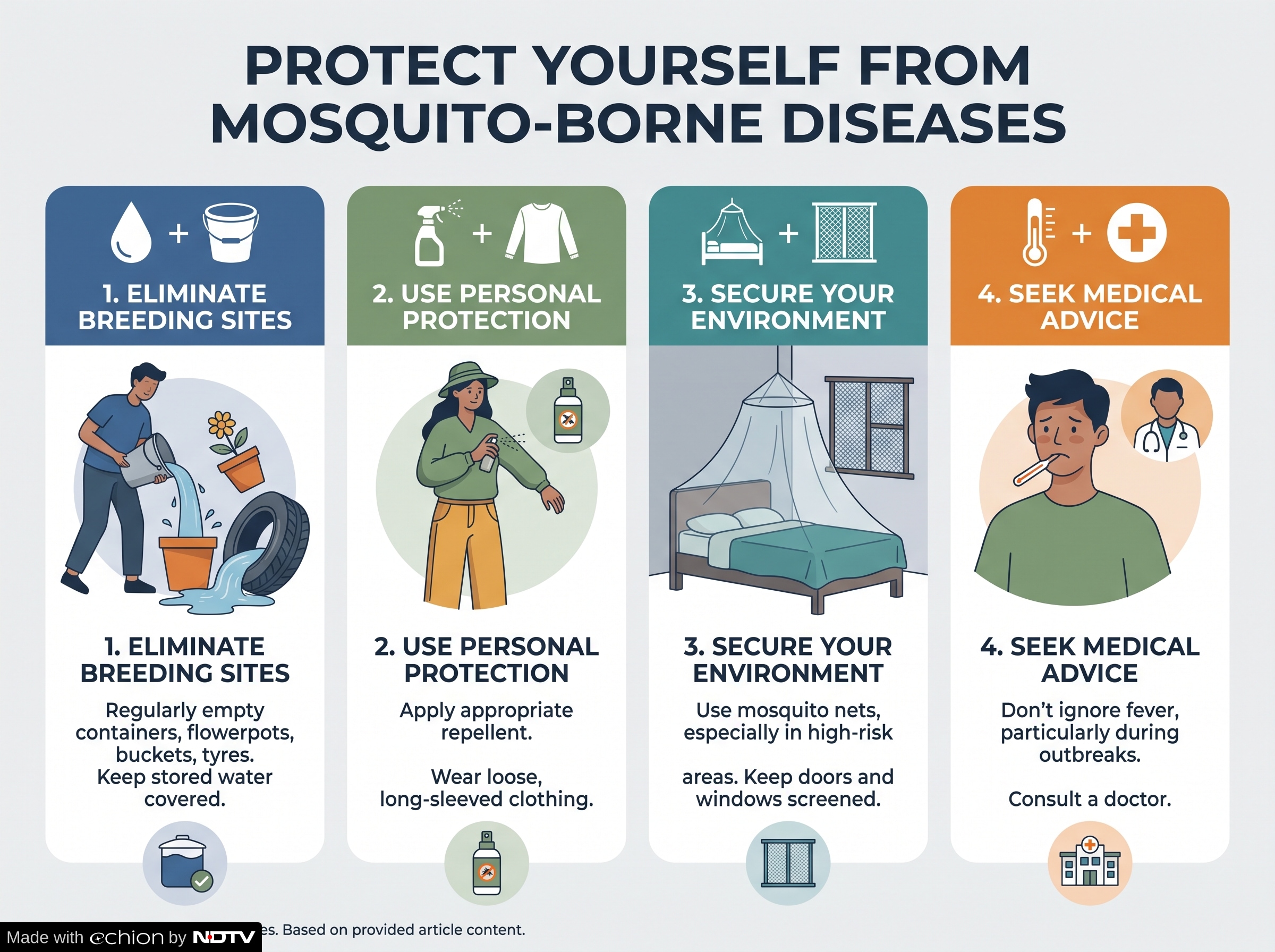
How To Protect Yourself From Mosquito-Borne Diseases
You don't need to know exactly which mosquito is buzzing around you to reduce your risk.
A few simple measures can make a difference:
- Get rid of stagnant water: Empty water from coolers, flowerpots, buckets, tyres and containers regularly.
- Keep stored water covered: This prevents mosquitoes from laying eggs.
- Use mosquito repellents: Apply an appropriate repellent to exposed skin according to the product instructions.
- Cover up: Wear loose, long-sleeved clothing when mosquito exposure is likely.
- Use mosquito nets: Particularly important when sleeping in areas where malaria or other nighttime mosquito-borne diseases circulate.
- Use screens: Keep doors and windows screened where possible.
- Don't ignore fever: Seek medical advice if fever develops, particularly during a local outbreak.
Mosquito control is not simply about killing adult mosquitoes. Stopping breeding is one of the most important ways to reduce the next generation of mosquitoes. Mosquitoes may look deceptively similar, but Aedes, Anopheles and Culex play very different roles in disease transmission.
The lesson on World Mosquito Day is not to panic every time you hear a mosquito buzzing. It is to understand that mosquito-borne diseases are preventable, and knowing mosquito behaviour can help us prevent them better.
From emptying that forgotten cooler to using a mosquito net at night, small actions can reduce the opportunities mosquitoes have to breed and bite.
Disclaimer: This content including advice provides generic information only. It is in no way a substitute for a qualified medical opinion. Always consult a specialist or your own doctor for more information. NDTV does not claim responsibility for this information.