

)
Losing the ability to speak can be one of the most devastating consequences of neurological diseases such as amyotrophic lateral sclerosis (ALS). A person may remain able to think, understand and form sentences, but progressive damage to the nervous system can make it increasingly difficult or impossible to turn those thoughts into spoken words. A new Neuralink demonstration has offered a glimpse of how brain-computer interfaces could potentially bridge that gap.
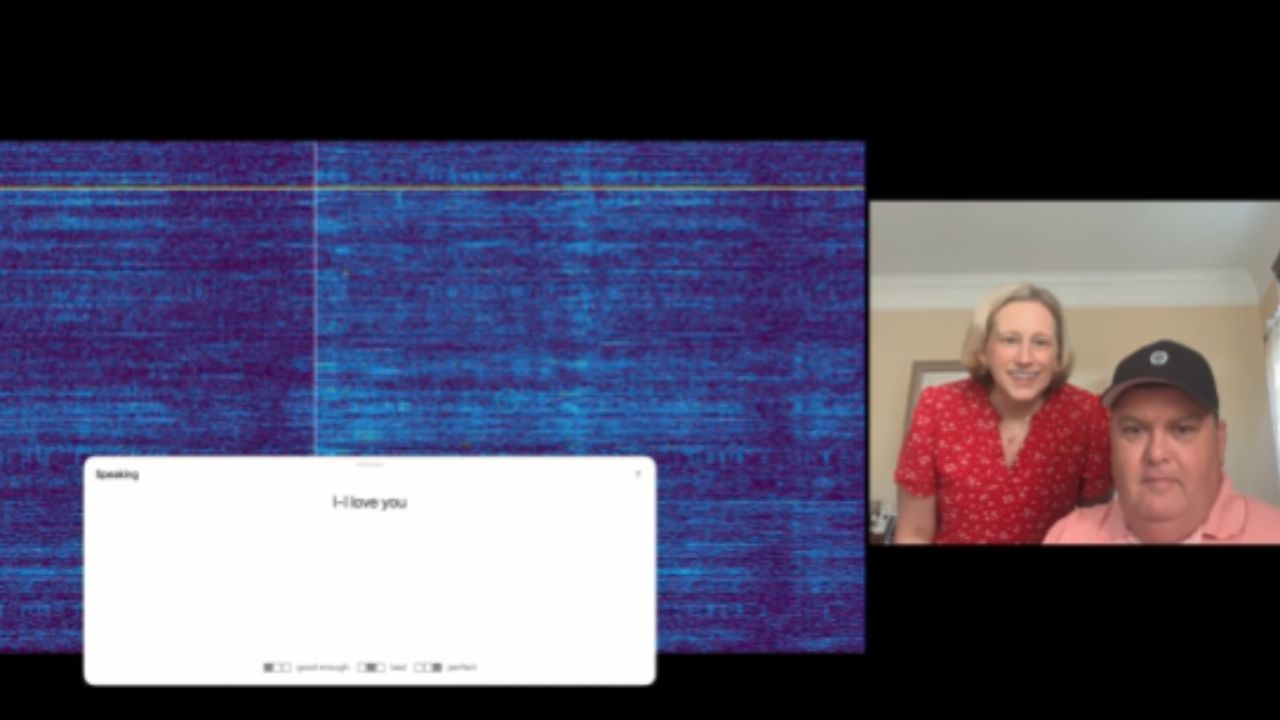
Neuralink, the brain-computer interface company co-founded by Elon Musk, has shared a video showing a clinical-trial participant using its experimental brain implant to communicate with his partner. In the emotional demonstration, the participant uses the system to produce the words "I love you" without speaking them aloud. The development has renewed interest in whether brain signals can eventually be translated directly into speech for people who have lost their ability to communicate.
What Happened In The Latest Neuralink Demonstration?
Neuralink released a short video showing a speech-impaired clinical-trial participant communicating through its brain-computer interface. The demonstration followed an earlier Neuralink update involving Kenneth Shock, an ALS patient who received the N1 implant and demonstrated thought-to-speech communication earlier this year.
In the newer demonstration, the participant's intended speech was decoded by the implanted system and converted into audible words.
Through the VOICE trial, Terry is using his Neuralink implant to help fine-tune a brain-to-voice interface for himself and others who can't speak. He trained the algorithm first by miming speech as best he could, then by simply thinking the words and hearing them come out in his… pic.twitter.com/IBmgDgNz1c
— Neuralink (@neuralink) September 18, 2026
What is Neuralink?
Neuralink is developing an implanted brain-computer interface (BCI) designed to create a direct communication pathway between the brain and digital devices.
Its N1 implant records electrical activity generated by neurons. Extremely thin electrode threads are placed in brain tissue to capture neural signals associated with intended movements or communication. Software then analyses these patterns and translates them into commands that a computer can understand.
Neuralink has previously demonstrated participants using brain signals to control computer cursors and interact with digital devices. Its VOICE programme is specifically investigating whether the same basic principle can be used to help people with severe speech impairment communicate through text or speech.
How Does The Neuralink Brain Implant Work?
The basic pathway can be understood as:
Brain signals - N1 implant - decoding software - words - synthetic speech
Normally, producing speech involves coordinated activity across the brain, followed by signals travelling to muscles controlling the tongue, lips, jaw and voice box. Neurological conditions can disrupt this pathway even when a person's ability to formulate language remains intact.
A BCI attempts to bypass the damaged pathway. Neuralink's system records activity from the brain and uses algorithms to identify patterns associated with intended speech. During training, the system learns how an individual's neural activity corresponds to particular speech patterns.
Can Neuralink Restore Speech?
The technology may eventually provide an alternative communication pathway for people with severe speech impairment caused by conditions such as ALS, stroke or spinal cord injury. Neuralink's own VOICE trial is recruiting people with severe speech impairment and impaired upper-limb function associated with ALS, primary lateral sclerosis, spinal cord injury and stroke.
But "restore speech" does not currently mean restoring the biological ability to speak through the mouth. Instead, the technology aims to translate intended speech into text or computer-generated audible speech.
Neuralink's system remains investigational and is being studied in clinical trials. However, the latest demonstration is significant. For people who have lost their voice, being able to express emotions, preferences and personal messages independently can have a major impact on everyday life.
At the same time, major questions remain around surgical risks, long-term implant performance, accuracy, training requirements, regulatory approval and the privacy and security of neural data. These issues will need to be addressed before implanted BCIs can become widely available.
Disclaimer: This content including advice provides generic information only. It is in no way a substitute for a qualified medical opinion. Always consult a specialist or your own doctor for more information. NDTV does not claim responsibility for this information.