

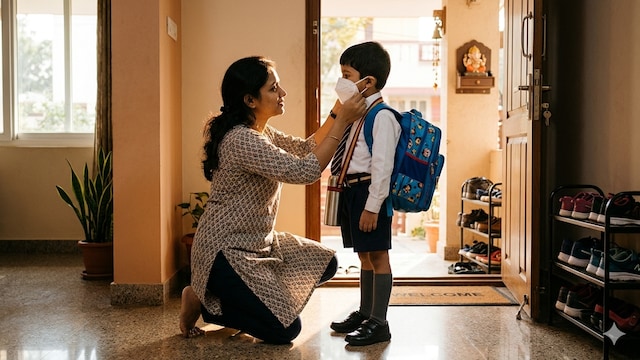
Delhi's Air Quality Index (AQI) remains in the 'very poor' category. The overall AQI for the national capital climbed to 319 on Thursday morning. This 'very poor' level indicates that air pollution has reached hazardous levels, which can cause widespread respiratory distress and various health concerns. At this level, the air contains dense concentrations of microscopic particulate matter (PM2.5 and PM10) and toxic gases that can bypass the body's natural defences, entering deep into the lungs and bloodstream. As the Diwali break ends today, children are returning to school amid these poor air conditions. Exposure to pollutants can harm developing lungs and trigger symptoms such as cough, blocked nose, shortness of breath, and a scratchy throat. Children face heightened respiratory risks due to their faster breathing rates. Here are some precautions that parents should follow to minimise their children's exposure to toxic smog.
Air pollution: 7 Precautions for School-Going Children
1. Equip them with well-fitted N95 masks.
Provide your child with a well-fitted N95 or N99 mask. Do not choose cloth or surgical masks, as these cannot filter out fine PM2.5 particles. Ensure the mask forms a snug seal over the nose and chin for commutes, outdoor walks, and open school corridors.
2. Check hybrid or online class directives.
Under Stage III of the Graded Response Action Plan (GRAP), the Directorate of Education (DoE) frequently mandates hybrid or online classes for primary students up to Class 5. Check your school's latest circulars and opt for remote learning if your child has respiratory sensitivities.
READ | Doctor-Approved Daily Routine To Strengthen Your Lungs Amid Rising Pollution Levels
3. Minimise morning commute exposure.
Pollutant levels tend to peak in the early morning hours due to lower temperatures and trapped smog. To minimise exposure while travelling in a car or school bus, keep the windows rolled up. Set the car's air conditioning to recirculation mode, but remember to occasionally allow brief bursts of fresh air to prevent a buildup of carbon dioxide.
4. Confirm suspension of outdoor school activities.
Ensure the school has moved morning assemblies, physical education (PT), and sports practice indoors. Heavy exertion outdoors forces children to inhale deeper and take in significantly higher volumes of pollutants.
5. Focus on hydration and antioxidant-rich foods
Send a full water bottle and remind your child to sip water throughout the day to keep airways moist and help flush out inhaled irritants. Include foods rich in Vitamin C, Vitamin E, and omega-3 fatty acids such as citrus fruits, nuts, and jaggery to help combat airway inflammation.
READ | Heavy Chest In The Morning Amid High AQI: Why It Happens And How To Get Relief
6. Practice post-school hygiene
Have your child wash their face, hands, and eyes with clean water as soon as they return home to remove settled particulate matter. Changing out of school uniforms right away also prevents trapped pollutants from spreading indoors.
7. Watch out for symptoms and keep medication ready
Watch closely for warning signs like persistent coughing, wheezing, chest tightness, or unusual fatigue, and keep them home to consult a doctor if symptoms appear.
If your child has asthma, allergies, or bronchitis, ensure their rescue inhaler and spacer are packed in their school bag with clear instructions for the school nurse.
READ | Delhi AQI: Is Toxic Air Making You Tired? Impact Of Air Pollution On Energy, Sleep And Concentration
Additionally, it is important to keep your home safe by using air purifiers, keeping doors and windows shut, and using air-purifying plants.
Disclaimer: This content including advice provides generic information only. It is in no way a substitute for a qualified medical opinion. Always consult a specialist or your own doctor for more information. NDTV does not claim responsibility for this information.