

)
Imagine sitting down after a long workday, looking forward to that steaming cup of homemade chai, only to remember your recent health checkup report. You've been diagnosed with grade-1 fatty liver disease. Suddenly, every sip feels like a test. You catch yourself staring at the saucepan, wondering if the chai that I am about to drink is actually going to impact your gut health in a negative manner. The good news is that you don't have to give up your favourite daily ritual. The short answer is yes, you can safely drink chai with grade-1 fatty liver, but you need to tweak how you make it. Black tea itself is actually full of healthy antioxidants that support your liver, but the extra sugar and heavy cream people often pour into it can hold your body back from healing.
What Happens To Your Liver With Grade-1 Fatty Liver?
Grade-1 fatty liver is known in medical terms as mild simple hepatic steatosis, which is the earliest stage of extra fat building up in liver cells. Think of your liver as your body's main filter and metabolic engine. When extra fat starts settling in, it's like dust clogging up a clean filter. Fortunately, grade 1 is completely reversible with simple everyday lifestyle adjustments.
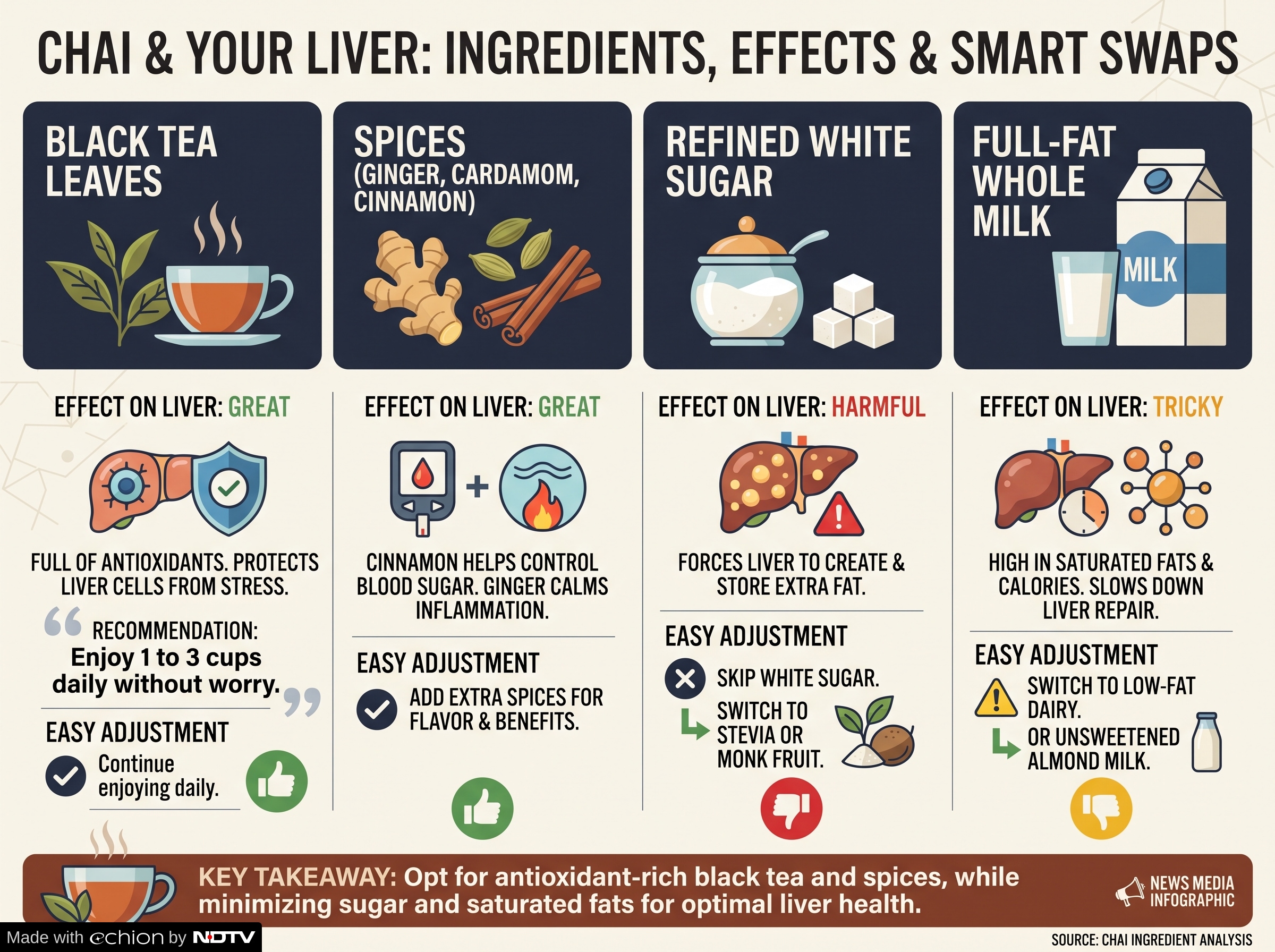
When you brew black tea leaves (Camellia sinensis), they release powerful natural plant compounds called polyphenols. These antioxidants act like a natural cleanup crew, protecting your liver cells from stress and inflammation.
Dr Ananya Mukherjee, MD (Gastroenterology and Hepatology), explains, "Black tea on its own is not the culprit in fatty liver disease, in fact, its natural antioxidants can actively support cellular defence against lipid accumulation. The real risk lies in how the tea is brewed. Adding refined sugars, condensed milk, or heavy dairy turns an otherwise therapeutic botanical into a high-glycaemic burden that accelerates hepatic fat storage."
Breaking Down Your Cup: What Helps vs What Hurts
If you've ever watched a pot of chai simmer on the stove, you know it's a mix of several ingredients. Let's look at how each part of your mug affects your liver health:
Why Sweet Tea Triggers Liver Fat
Picture this common scenario: You order a large milk tea at a local cafe or brew a sweet cup at home while cooking dinner, dumping in two heavy spoonfuls of white sugar.
When you consume refined white sugar, your body breaks it down into glucose and fructose. Fructose goes straight to your liver for processing. When your liver receives a big burst of fructose all at once, it can't burn it all for energy right away. Instead, it turns that excess sugar directly into fat droplets through a process called de novo lipogenesis. Over time, those fat droplets store themselves right inside your liver cells.
This means that sweet tea can actively worsen simple hepatic steatosis, making sugar the single most important ingredient to eliminate from your daily cup.
How to Upgrade a Simple, Liver-Friendly Chai at Home
Reversing grade-1 fatty liver doesn't mean drinking bland water for the rest of your life. You can make a delicious, rich cup of liver-friendly chai at home by making a few effortless updates:
- Drop the White Sugar: Cut out refined white sugar, brown sugar, and condensed milk. If you miss the sweet taste, use pure stevia or monk fruit drops instead.
- Double Down on Fresh Spices: Crush extra fresh ginger root, green cardamom pods, cloves, and Ceylon cinnamon into your water. These kitchen spices add huge flavor while helping improve your metabolism.
- Switch Your Milk Choice: Swap out full-cream milk for skim milk, low-fat milk, or unsweetened plant alternatives like almond, soy, or oat milk.
- Change How You Brew: Steep your tea leaves and aromatic spices in boiling water first to extract all the healthy antioxidants. Add just a light splash of milk toward the very end rather than boiling milk and sugar together for extended periods.
By making these quick updates, you can keep enjoying your comforting cup of morning chai every day while keeping your liver on the fast track to a full recovery.
Also Read: Why Eating Protein Alone Isn't Enough: Doctor Explains How Gut Health Impacts Muscle Recovery
Disclaimer: This content including advice provides generic information only. It is in no way a substitute for a qualified medical opinion. Always consult a specialist or your own doctor for more information. NDTV does not claim responsibility for this information.