

)
Work deadlines, long commutes, household responsibilities, social media notifications and personal commitments keep the brain occupied almost throughout the day. Modern lifestyle rarely gives the mind a chance to slow down. Even after work is over, many people continue thinking about unfinished tasks, upcoming meetings, bills, family responsibilities or things that happened during the day. This constant mental activity can make it difficult to switch from a busy daytime routine to a calm state at night. When the mind remains alert, falling asleep may take longer, even when the body feels tired.
Regular physical activity can be one way to help the body and mind move into a more relaxed state. Exercise can release physical tension, improve mood and help reduce some of the stress that builds up during the day. However, a bedtime routine does not necessarily need to be an intense workout. Gentle movements may be more suitable close to bedtime because they can help the body unwind without making it feel stimulated. Spending a few minutes moving and focusing on breathing can also create a clear break between responsibilities and bedtime. Here are some exercises that may help calm the mind before sleep.
Exercises Before Bed To Relax Your Mind
1. Child's Pose
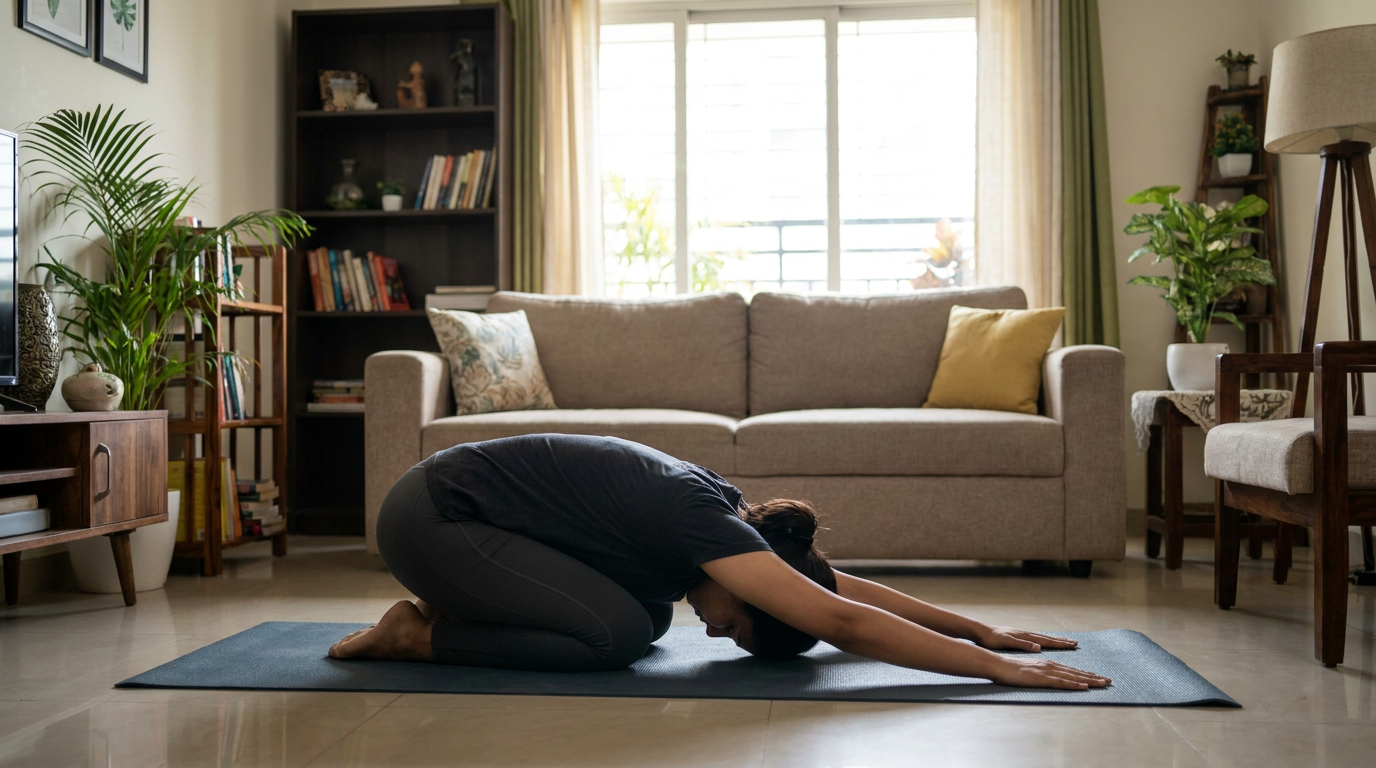
This is a gentle yoga pose that can help relax the back, shoulders and hips. Kneel comfortably on the floor and sit back towards your heels and slowly lower your upper body forward. Rest your forehead on the floor or a cushion if needed. Keep your arms extended forward or relaxed beside your body. Breathe slowly and stay in the position for a few breaths. Avoid forcing the stretch, especially if you have knee or back problems.
2. Legs-Up-The-Wall Pose
Legs-Up-The-Wall Pose requires you to lie on your back with your legs resting vertically against a wall. It is a simple position that allows the body to remain still while you focus on slow breathing. Stay in the position for several minutes if it feels comfortable. A cushion under the head or lower back can provide additional support. Come out of the position slowly.
3. Cat-Cow Stretch
Cat-Cow is a gentle movement that can help loosen the spine and release tension after a long day of sitting. Start on your hands and knees. Slowly round your back while lowering your head, then gently arch your back while lifting your chest. Move slowly and coordinate the movement with your breathing. There is no need to perform it quickly or force yourself into a deep stretch.
4. Seated Forward Bend
A Seated Forward Bend can give a stretch to the back and legs. Sit with your legs extended in front of you and slowly lean forward from your hips. Do not worry about touching your toes. Keep your knees slightly bent if that feels comfortable. Focus on slow breathing and allow your body to relax into the position without pushing beyond its natural range.
5. Supine Spinal Twist
This can help gently stretch the back and hips. Lie on your back with your knees bent. Slowly allow both knees to fall towards one side while keeping your shoulders comfortably on the floor. Hold the position for a few breaths and then repeat on the other side. The movement should be slow and controlled, without forcing the knees towards the floor.
6. Butterfly Pose
Butterfly Pose is a simple seated stretch that can help loosen the hips and inner thighs. Sit upright, bring the soles of your feet together and allow your knees to gently move towards the sides. You can hold your feet with your hands and sit comfortably while taking slow breaths. Avoid pressing your knees down forcefully. The exercise should feel like a gentle stretch rather than a strenuous workout.
7. Corpse Pose
Corpse Pose, also known as Savasana, is one of the simplest ways to finish a bedtime movement routine. Lie flat on your back with your arms resting comfortably beside you and your legs relaxed. Close your eyes and focus on your breathing. Slowly relax different parts of your body, starting with your feet and moving upwards towards your face. Staying still for several minutes can be calming.
Disclaimer: This content including advice provides generic information only. It is in no way a substitute for a qualified medical opinion. Always consult a specialist or your own doctor for more information. NDTV does not claim responsibility for this information.