- Fatty liver cases are rising in India, affecting adult liver function and metabolism
- Fatty liver causes insulin resistance, reducing fat burning and slowing metabolism
- Symptoms include stubborn belly fat, fatigue, high triglycerides, and slow weight loss
Fatty liver cases are rising in India in the adult population, which is giving rise to a concerning comorbidity. The problem of weight gain is becoming evident as fatty liver impairs normal liver functioning, which causes a slow metabolic rate. This poses even further health complications, as fatty liver can result in unexpected weight gain that doesn't change even when dietary changes are made. This is because the insulin becomes resistant to dietary impacts and causes fluctuations that increase stress on the pancreas and other organs internally due to a roller coaster of blood sugar spikes.
Fatty liver is a disease that occurs when the fat gets deposited in liver cells and impairs their functioning. It affects normal liver functioning in degrees of progression and can be reversed if it is caught in the grade-1 stage. Non-Alcoholic Fatty Liver Disease (NAFLD) that happens due to dietary, lifestyle, and genetic vulnerabilities: cases are rising due to high-carb diets, sedentary lifestyles, and obesity. So controlling your weight after being diagnosed with a fatty liver disease is critical.
The Hidden Link Between Fatty Liver And Weight Gain
Research published in the Gastroenterology journal details that when fats are accumulated in the liver, the body's metabolic rate is affected, which affects fat-burning efficiency. This means that even after making dietary changes as prescribed by a doctor, your weight could remain unaffected.
This is because the liver is responsible for regulating fats and glucose in the body. When fats affect its functioning, then the balance gets disrupted.
So, the fat on your liver and weight gain are connected, which means your body needs to repair the liver before you can control your weight.
How Fatty Liver Slows Down Your Metabolism
1. Insulin Resistance
Fatty liver disease results in your body storing more fat instead of burning it. When the body needs energy, it should ideally start burning stored fats. But when a fatty liver is present, then this can't happen due to fat infiltrating the cells of the liver.
2. Reduced Fat Oxidation
The infiltrated fats in the liver cells slow the calorie-burning process in the body, which makes it harder for the body to burn them when needed.
3. Hormonal Imbalance
When the balance of hormones in your body is unregulated, it affects how much hunger and fullness you feel. This can worsen when you have a fatty liver, as it can directly influence certain hormones that regulate hunger and fullness, which can throw off your metabolism.
Also Read: Fatty Liver Crisis In India: Why Are Non-Alcoholics At Risk?
Signs Your Metabolism May Be Affected By Fatty Liver
To know if your metabolism is affected by fatty liver, you need to notice if your body exhibits these signs:
- Stubborn belly fat that doesn't seem to resolve itself even after making major changes.
- Fatigue that lasts for a long time even after proper rest.
- High triglycerides increase the risk of heart disease.
- Slow weight loss despite active efforts to reduce it.
Why It's Hard To Lose Weight With Fatty Liver
People who are trying to lose weight but have a fatty liver need to know that their body cannot agree to it due to the following:
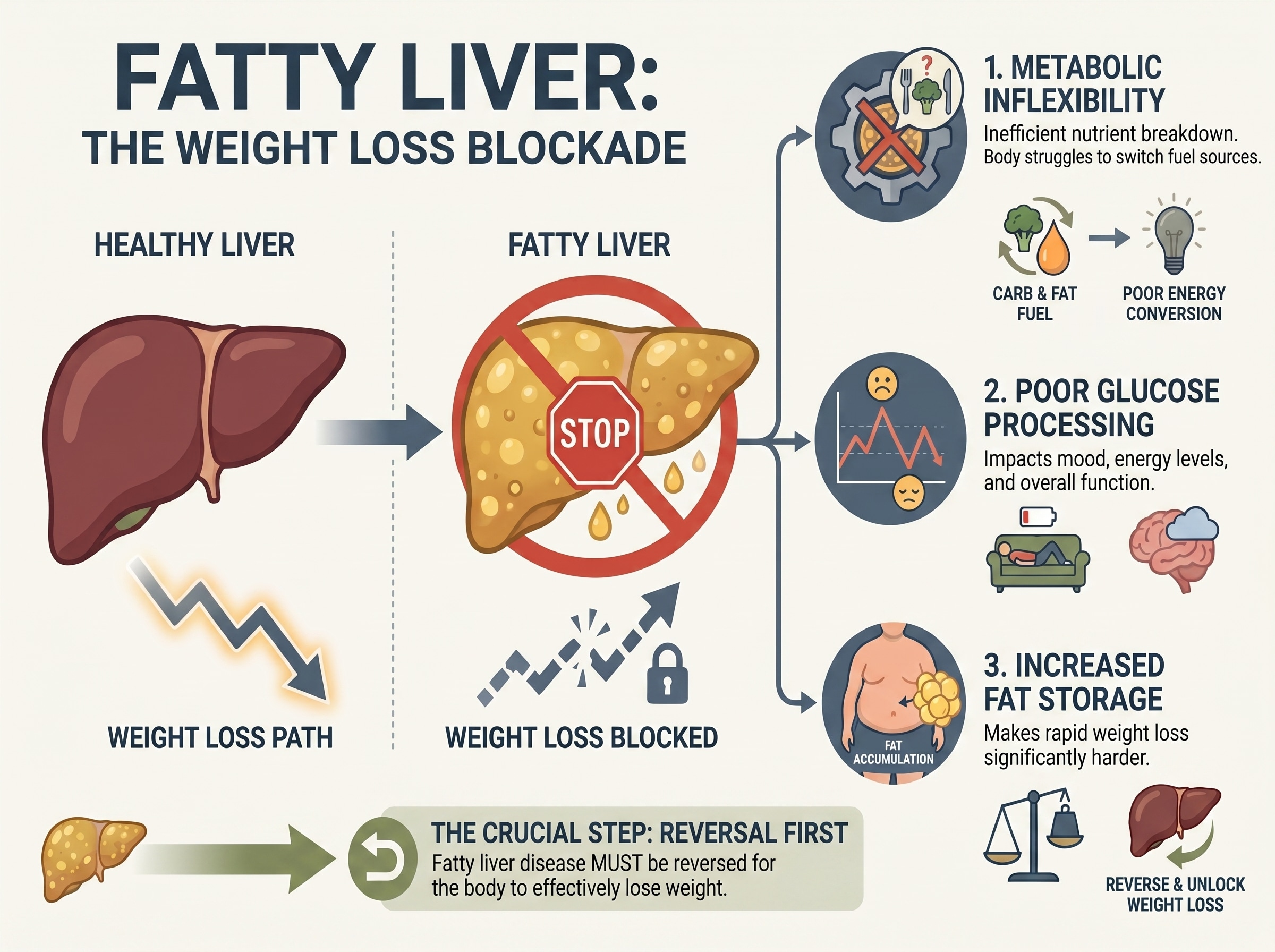
- Metabolic inflexibility impacts how the food eaten is broken down into nutrients.
- Poor glucose processing affects mood, energy levels, and overall ability to function.
- Increased fat storage makes it harder for patients to lose weight quickly.
- Fatty liver disease can make it harder to lose weight, as the disease needs to be reversed in order for the body to lose weight.
How To Reverse Fatty Liver And Boost Metabolism Naturally
Fatty liver can be reversed if it is in grade 1 through making the following changes under a medical professional's guidance:
Diet Changes
- You need to reduce refined carbs and your overall sugar intake.
- Instead, increase fibre and protein to make it better for the body to process fats.
Meal Timing
When meal timing is synced to your body's internal clock, then early eating patterns can improve metabolism.
Exercise
Taking a combination approach that involves resistance and cardio exercises is necessary.
Weight Loss
Even a 5-10% weight loss improves if liver fat is reduced.
Also Read: 5 Silent Symptoms Of Fatty Liver Disease You Can Easily Spot Just By Looking At Your Eyes
Foods That Help Repair Fatty Liver
- Coffee (scientifically linked to liver protection) in controlled doses
- Leafy greens
- Nuts and seeds
- Omega-3 fats
Dr SK Sarin (Hepatologist, ILBS Delhi) explains, "Fatty liver is closely linked to insulin resistance, making weight loss more difficult."
Who Is Most At Risk
Fatty liver can affect people who have these medical conditions, as their liver is vulnerable:
- Obese individuals
- Prediabetes / diabetes
- Sedentary lifestyle
- High sugar intake
Fatty liver disease is a major risk factor of increasing weight gain. So, you need to address the diseases first before starting weight loss efforts for effective results.
Disclaimer: This content including advice provides generic information only. It is in no way a substitute for a qualified medical opinion. Always consult a specialist or your own doctor for more information. NDTV does not claim responsibility for this information.