- Acid reflux causes stomach acid to flow back into the oesophagus, causing heartburn.
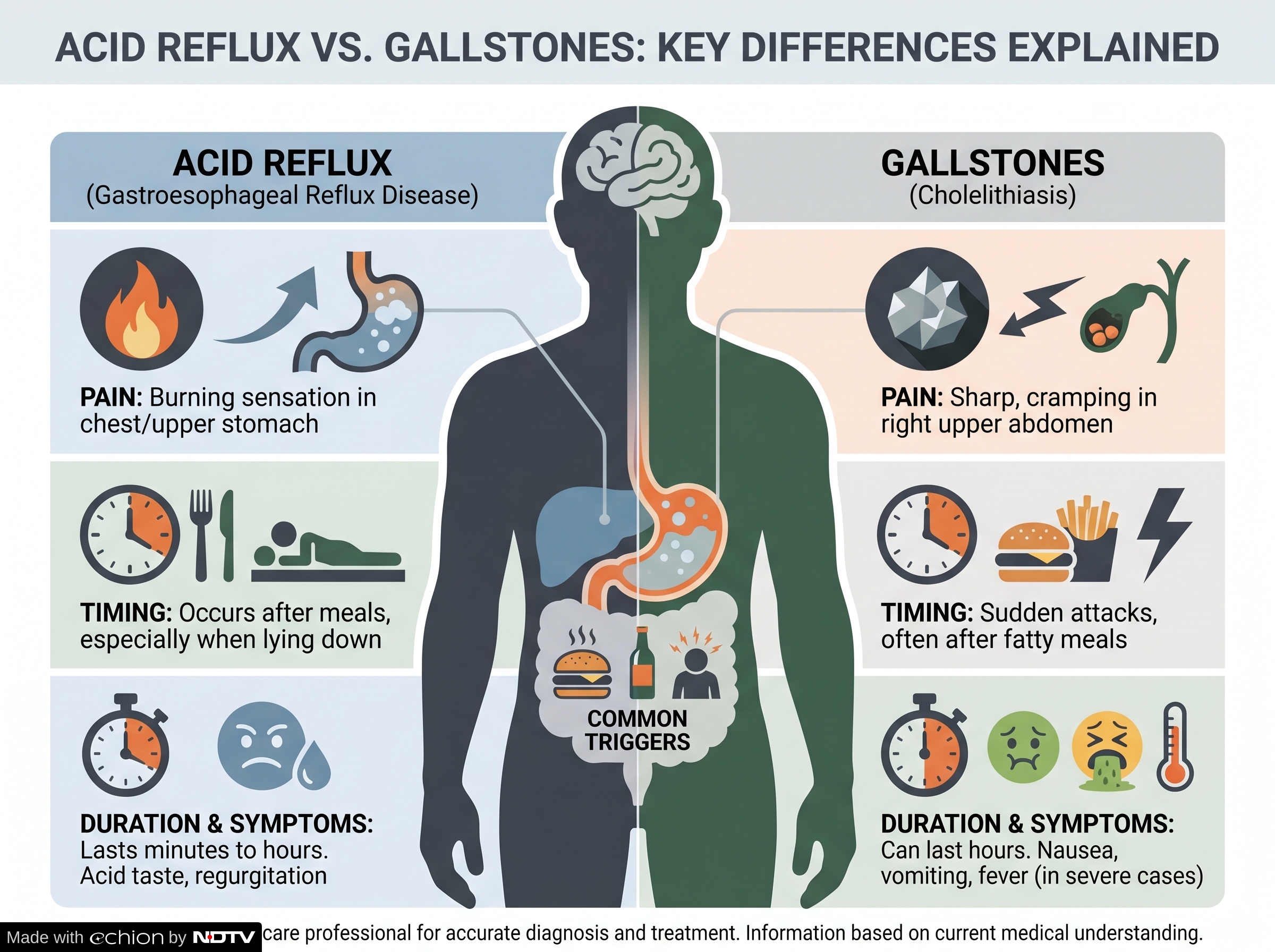
- Gallstones are hard deposits blocking bile ducts, leading to sharp upper abdominal pain.
- Symptoms of acid reflux include burning chest pain, sour taste, and difficulty swallowing.
Acid reflux is a common digestive issue that is the source of discomfort. The common digestive issue occurs mostly in extreme weather changes as the gut struggles to keep up with the temperature changes. But another health issue that mimics the discomfort caused due to acid reflux is the presence of gallstones. Both are known to cause upper abdominal pain but need very different treatment. If you are unable to figure out if the discomfort is caused due to acid reflux or gallstones, then misreading the symptoms can delay care and increase risk of health complications. This is why knowing the symptoms of each of them and the differences in each health issue is key to seek timely required medical care.
What Is Acid Reflux?
Acid reflux is a digestive issue wherein the acid flows back from the stomach into the oesophagus causing a burning sensation (heartburn). The causes of it can be certain food combinations, lifestyle habits and possible obesity. Research published in the Am J Gastroenterol journal details that acid reflux is a common problem that is treated by medical professionals when it gets too severe in patients.
What Are Gallstones?
Gallstones are hard deposits in the gallbladder that can block bile ducts leading to a sharp painful sensation. The main causes behind it are diet, cholesterol, obesity or environmental pollutants such as contaminated water consumption. Research published in the BMC Surgery suggests that gallstones can be treated via laparoscopic surgery if their positioning and blockage can be easily accessed via this method.
Symptoms Of Acid Reflux You Should Not Ignore
The symptoms of acid reflux can range based on severity. You need to understand which stage of acid reflux is affecting you based on the kind of symptoms that you are experiencing. Here are the symptoms that should force you to seek medical advice for relief:
- Burning chest pain
- Sour taste in mouth
- Difficulty swallowing
- Worse at night or lying down
Signs Of Gallstones That Can Turn Dangerous
Gallstones slowly progress over a period of time due to a number of factors that can increase the mineral load on the body. There are signs that your body can emit signalling that gallstones are turning dangerous, here is what you should know:
- Severe right-side abdominal pain that causes a sharp sensation upon touching.
- Pain radiating to the back or shoulder that doesn't go away and gets triggered after eating a meal.
- Nausea and vomiting that occur due to acid build-up in the stomach.
- Fever or jaundice is a major red flag that signals possible infection that is spreading internally.
Also Read: Festive Oily Foods Can Spike Acidity, Gallbladder Emergencies: Doctor Warns
When Does It Become A Medical Emergency?
Acid reflux and gallstones can turn into a medical emergency, when both types of health issues cause the following side-effects:
- Persistent severe abdominal pain that is unbearable to handle and can cause you to cower in pain.
- Fever accompanied by chills that causes visible discomfort.
- Yellowing of eyes and skin caused due to the liver struggling to operate normally.
- Vomiting that doesn't stop once it starts.
These side-effects could indicate gallbladder infection or blockage and need medical attention for treatment.
Why People Confuse Acid Reflux With Gallstones
People tend to confuse acid reflux with gallstones as the symptoms of both of them are similar. Here is why:
- Both cause upper abdominal discomfort that makes people visibly uncomfortable.
- Pain may occur after meals as the body is struggling to metabolise the food due to a possible blockage forming in the body.
- Overlapping symptoms like bloating, nausea add to the confusion and can lead people to ignore serious symptoms.
Also Read: Jeera Water vs Methi Water: Which Morning Drink Burns Belly Fat Faster?
Doctor Explains How To Tell The Difference
Dr Saurabh Sethi, Harvard, Stanford and AIIMS-trained Gastroenterologist explains, " Acid reflux happens when "stomach acid leaks back into the oesophagus and the common triggers include fatty foods, spicy foods, caffeine, alcohol and poor lifestyle habits"
He adds, " Gallstones, on the other hand, may remain silent until they block bile flow, leading to sudden, severe abdominal pain, nausea and vomiting."
Acid reflux causes a burning sensation while gallstones cause sharp pain. Another distinction is based on what triggers the health condition. Acid reflux is triggered by a certain cause while gallstones cause a sudden attack.
Location of the gallstones is key to treatment as where it is present can affect the mode of treatment.
How To Prevent Both Conditions
The health issues such as acid reflux and gallstones can be prevented by following the right measures. These can be :
- Avoid spicy/fatty foods that trigger acidic build-up in the stomach.
- Eat smaller meals to make sure the body can comfortably digest the food consumed.
- Don't lie down immediately as it can worsen acid reflux, give your food time to move into the intestines.
- Maintain healthy weight to ensure that your body doesn't struggle with deposition of minerals and salts.
- Consuming a balanced diet that is low saturated fats is essential to lower the baseline health risk factors that can trigger both health issues.
- Regular physical activity to facilitate the metabolism and ensure effective breakdown of nutrients.
Acid reflux and gallstones present with similar symptoms but have very different causes. By knowing how each of them are different, you are able to seek timely medical care and prevent serious health complications
\r\n
\r\n
Disclaimer: This content including advice provides generic information only. It is in no way a substitute for a qualified medical opinion. Always consult a specialist or your own doctor for more information. NDTV does not claim responsibility for this information.