





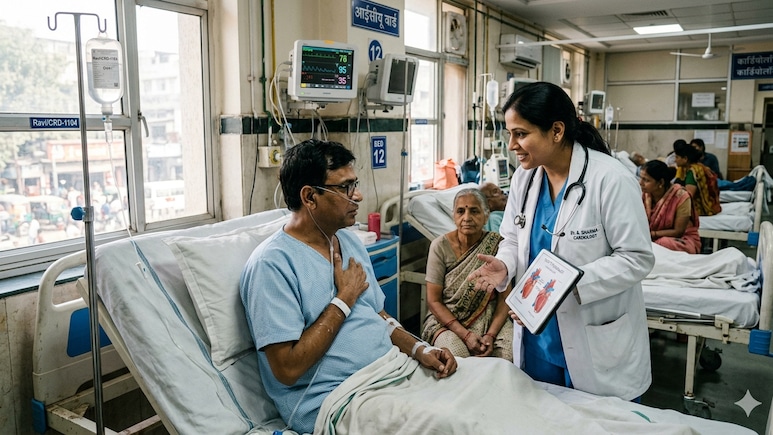
- End-stage heart disease is the final phase where the heart cannot pump enough blood despite treatment
- Dilated cardiomyopathy causes heart enlargement and weakening, leading to severe heart failure
- Symptoms include breathlessness, fatigue, swelling, and reduced ability to perform daily tasks
End-stage heart disease represents the final and most severe phase of heart failure, where the heart is no longer able to pump enough blood to meet the body's needs despite optimal medical treatment. Among the leading causes of this condition is dilated cardiomyopathy, a disorder in which the heart muscle becomes enlarged, weakened, and less efficient over time. According to the World Health Organization (WHO), cardiovascular diseases remain the leading cause of death globally, accounting for nearly 17.9 million deaths each year. In India, the burden is steadily rising, with increasing cases of advanced heart failure requiring complex interventions such as heart transplantation.
Patients with end-stage heart disease often experience debilitating symptoms that severely affect their quality of life. While medications and lifestyle changes are the first line of treatment, they may not always be sufficient in advanced stages. In such cases, a heart transplant can offer a life-saving solution.
Understanding the progression of the disease, recognising early warning signs, and knowing when to seek advanced care are crucial steps in improving outcomes. Experts stress that timely diagnosis and intervention can make the difference between decline and recovery.
What Is Dilated Cardiomyopathy?
Dilated cardiomyopathy (DCM) is a condition in which the heart's main pumping chamber, the left ventricle, becomes enlarged and weakened, reducing its ability to pump blood effectively.
Dr Dilip Ratti, from the Department of Cardiothoracic and Vascular Surgery, Manipal Hospital Vijaywada, explains: "Dilated cardiomyopathy is a serious condition where the heart muscle becomes enlarged and weak, making it difficult to pump blood effectively. Over time, this can lead to heart failure and complications affecting overall health and daily life."
DCM can be caused by genetic factors, viral infections, alcohol misuse, or underlying medical conditions. If left untreated, it can progress to severe heart failure.
Symptoms That Should Not Be Ignored
End-stage heart disease often develops gradually, with symptoms worsening over time. "People with advanced heart weakness often experience breathlessness, extreme fatigue, swelling of the legs, palpitations, and reduced ability to carry out routine activities," Dr Ratti highlights.
These symptoms occur because the heart is unable to circulate oxygen-rich blood efficiently. Fluid buildup in the lungs and extremities is a common feature of advanced heart failure. Without proper management, patients may require repeated hospitalisations, significantly impacting their physical and emotional well-being.
When Medicines Are Not Enough
Initial treatment for heart failure typically includes medications such as diuretics, beta-blockers, and ACE inhibitors to reduce symptoms and improve heart function. However, Dr Ratti cautions: "In some advanced cases, symptoms continue to worsen despite optimal medical therapy. When the heart becomes too weak to sustain the body's needs, a heart transplant may be considered as the most effective life-saving option."
The WHO and global cardiology guidelines emphasise that heart transplantation remains the gold standard for eligible patients with end-stage heart failure who do not respond to conventional treatment.
Understanding The Heart Transplant Process
A heart transplant involves replacing a failing heart with a healthy donor heart. The process is complex and requires careful evaluation. "Before the procedure, patients undergo detailed evaluation including heart function tests and overall health assessment to ensure they are suitable candidates," Dr Ratti explains.
In India, organ allocation systems such as Jeevandan play a crucial role in facilitating donor availability and equitable distribution. "Once a donor heart becomes available, the transplant surgery is performed by a specialized multidisciplinary team," he adds.
Post-surgery care is equally critical, he says. "After surgery, patients require close monitoring and lifelong medications to prevent rejection and maintain heart health." Survival rates after heart transplantation have improved significantly, with many patients living over a decade with proper care.
Recovery And Life After Transplant
Recovery from a heart transplant is a gradual process involving physical rehabilitation, regular medical follow-ups, and strict adherence to medication. "With proper care, many patients are able to return to daily activities and enjoy improved quality of life," Dr Ratti notes. Immunosuppressive medications are essential to prevent the body from rejecting the new heart, but they also require careful monitoring due to potential side effects.
A Real-Life Story Of Survival
A recent case highlights the life-saving potential of timely intervention. A young woman with advanced dilated cardiomyopathy underwent a successful heart transplant after years of worsening symptoms and repeated hospitalisations. The procedure was carried out by a multidisciplinary team at Manipal Hospital Vijayawada, including specialists from cardiothoracic surgery, anaesthesiology, nephrology, and cardiology.
Dr Ratti emphasised: "Early referral and timely transplant evaluation can significantly improve survival in patients with end-stage heart failure, giving them a real chance at long-term recovery." He also stressed the importance of financial and social support in accessing such advanced treatments. Assistance from organisations and government schemes can play a crucial role in making life-saving procedures accessible.
End-stage heart disease is a critical condition that requires timely recognition and advanced medical care. While medications can help manage symptoms in the early stages, they may not be enough in severe cases. Heart transplantation offers a second chance at life for eligible patients, significantly improving survival and quality of life. As experts highlight, early diagnosis, prompt referral, and strong support systems are key to better outcomes. With advancements in medical science and increasing awareness, many patients can now look forward to a healthier future beyond heart failure.
Disclaimer: This content, including advice, provides generic information only. It is in no way a substitute for a qualified medical opinion. Always consult a specialist or your own doctor for more information. NDTV does not claim responsibility for this information.
Track Latest News Live on NDTV.com and get news updates from India and around the world

