

)
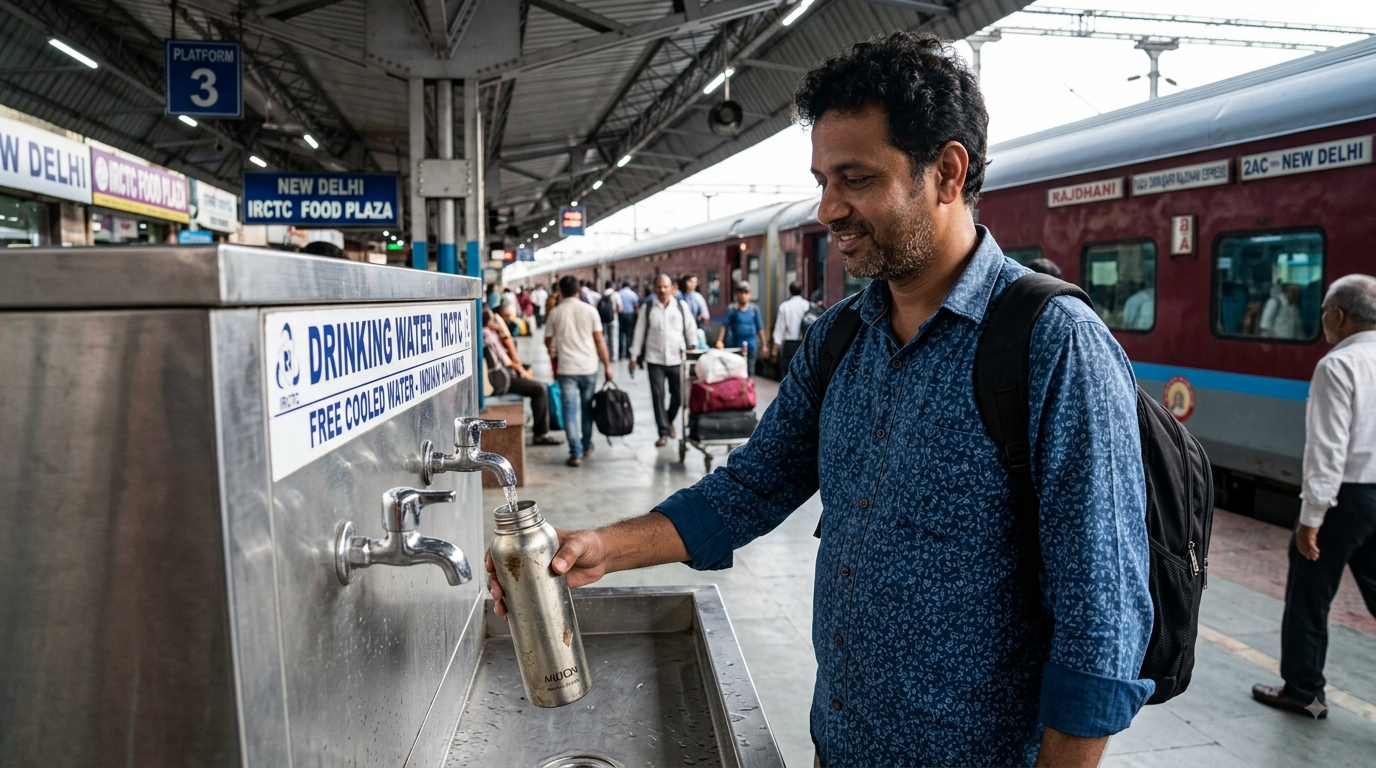
For millions of Indians, railway stations are places where a basic need is taken for granted: finding safe drinking water. A recent Comptroller and Auditor General (CAG) audit, however, has raised questions about whether that assumption is always justified. Water samples from water coolers at eight railway stations across four zones tested positive for E. coli, according to the audit findings. The stations were Coimbatore and Palakkad Junctions in Southern Railway, Hyderabad in South Central Railway, Chhatrapati Shivaji Maharaj Terminus, Bhiwandi Road, Kalyan and Lonavala in Central Railway, and Madhupur in Eastern Railway.
The audit covered 512 non-suburban railway stations and found that bacteriological analysis of drinking water had not been carried out at 59 stations across six railway zones. It also found total coliform bacteria, including E. coli, in drinking-water samples collected from taps at dozens of stations.
Why does this matter?
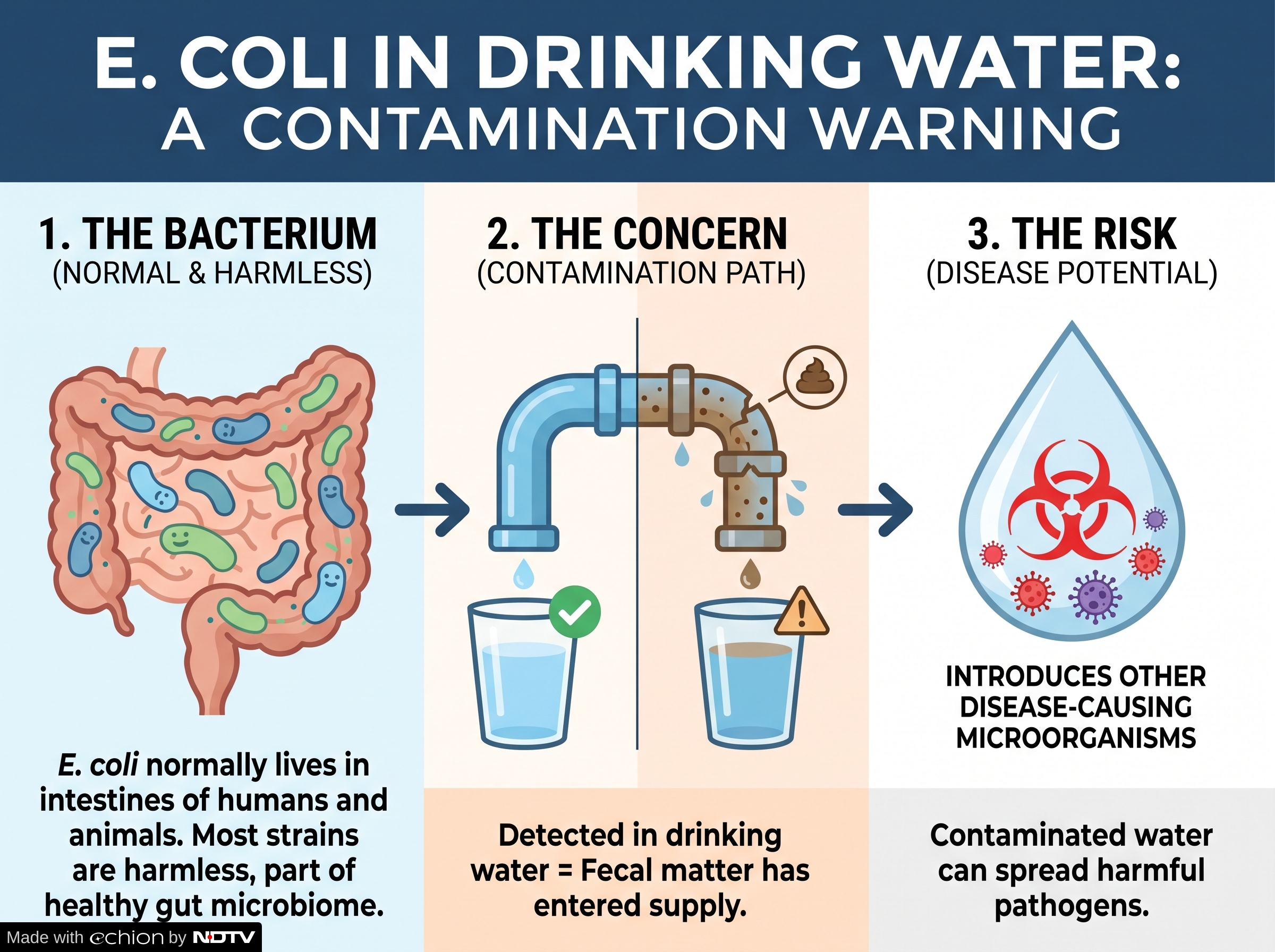
E. coli is an important indicator of possible faecal contamination of water. WHO's drinking-water guidelines state that E. coli should not be detectable in a 100 ml sample of water intended for drinking. Detection should trigger investigation and corrective action.
What does E. coli in drinking water actually mean?
Escherichia coli, commonly known as E. coli, is a bacterium that normally lives in the intestines of humans and many animals. Most strains are harmless and form part of the normal gut microbiome.
The concern is where E. coli is found. When it is detected in drinking water, it can indicate that faecal matter has entered the water supply. That contamination can potentially introduce other disease-causing microorganisms as well.
As infectious-disease specialist Dr Neha Rastogi, Senior Consultant, Fortis Memorial Research Institute, Gurugram, explains, "E. coli is commonly found in the intestines of humans and animals, and its presence in drinking water indicates possible faecal contamination."
This is why E. coli is used as a key microbiological indicator when assessing drinking-water safety. WHO's latest Guidelines for Drinking-water Quality emphasise preventing contamination and managing risks across the entire water-supply chain, from the source to the consumer.
Does E. coli in water mean you will definitely get sick?
No. Finding E. coli in a water sample does not establish that every person who drank that water became infected. It also does not tell us which strain of E. coli was present.
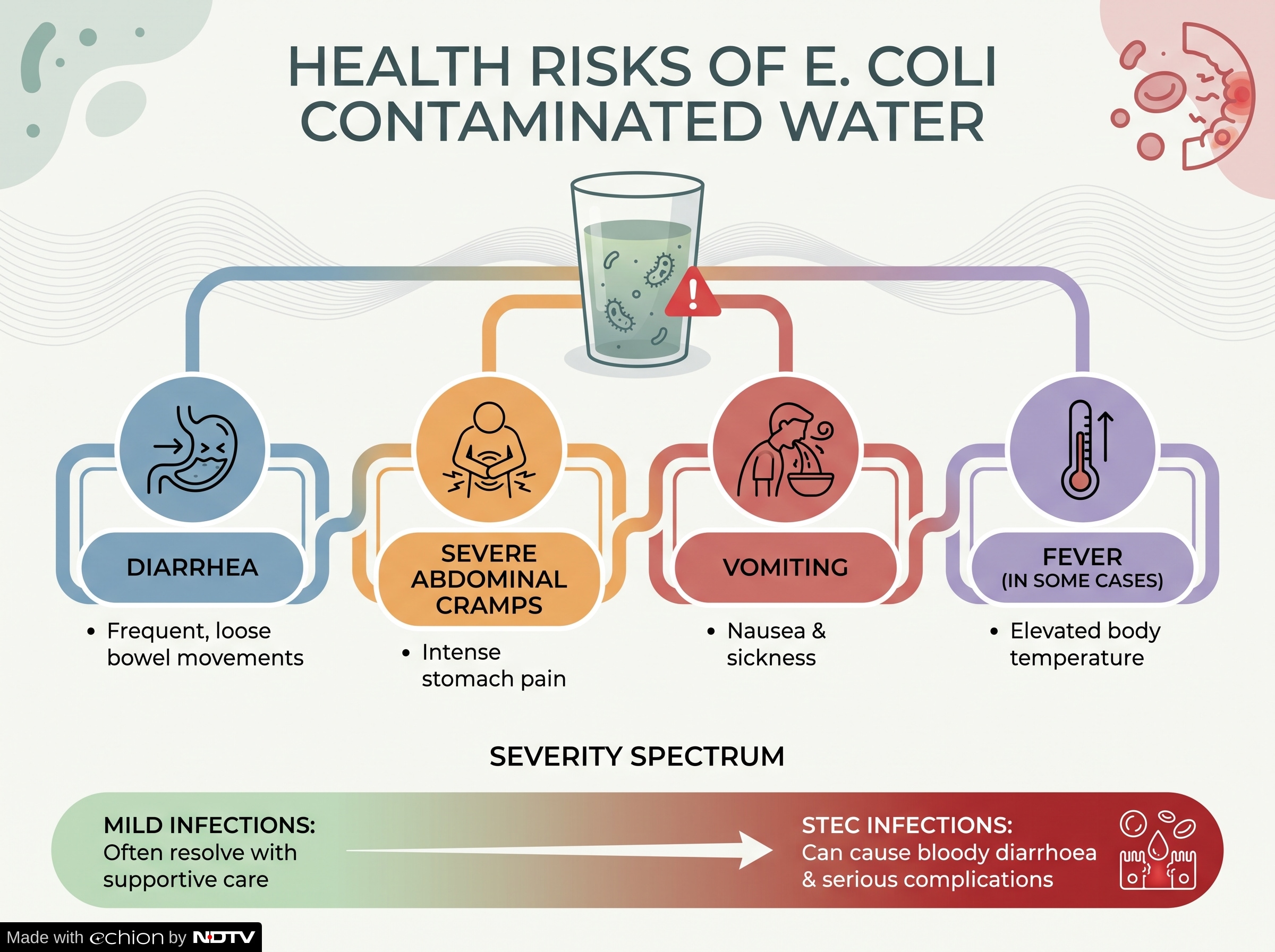
Different types of E. coli can cause different illnesses. Some diarrhoeagenic strains can cause watery diarrhoea, while Shiga toxin-producing E. coli (STEC) can cause more severe disease, including bloody diarrhoea and, in some cases, haemolytic uraemic syndrome (HUS).
That distinction is important. The CAG finding is therefore a water-safety concern and an indicator of possible faecal contamination, not evidence of an outbreak of E. coli infection among railway passengers.
What can contaminate railway drinking water?
Water can become contaminated at several points between its source and the glass or bottle from which a passenger drinks.
Dr Rastogi says contamination can occur because of "poorly maintained water tanks, leaking or damaged pipelines, inadequate cleaning and disinfection, faulty sanitation systems, or contamination during transportation and storage."
Sewage leaks or cross-connections between wastewater and drinking-water systems can also introduce faecal organisms. Even when the original water source is safe, contamination can occur later through poorly maintained infrastructure or inadequate hygiene.
This makes regular testing and maintenance just as important as treating the water in the first place. Indian Railways already has a Uniform Drinking Water Quality Protocol covering multiple parameters, including total coliforms and thermotolerant coliforms or E. coli. Railway Board instructions require bacteriological inspection of water systems, with detailed laboratory testing when a sample is suspected to be unsafe.
The CAG audit, however, found that bacteriological analysis had not been carried out at 59 stations and recommended compliance with prescribed inspection protocols and comprehensive testing of drinking water.
What happens if you drink contaminated water?
E. coli infection can cause gastrointestinal symptoms such as:
- Diarrhea
- Severe abdominal cramps
- Vomiting
- Fever in some cases
Symptoms vary depending on the strain involved. Some infections are mild and resolve with supportive care, while certain STEC infections can cause bloody diarrhoea and serious complications.
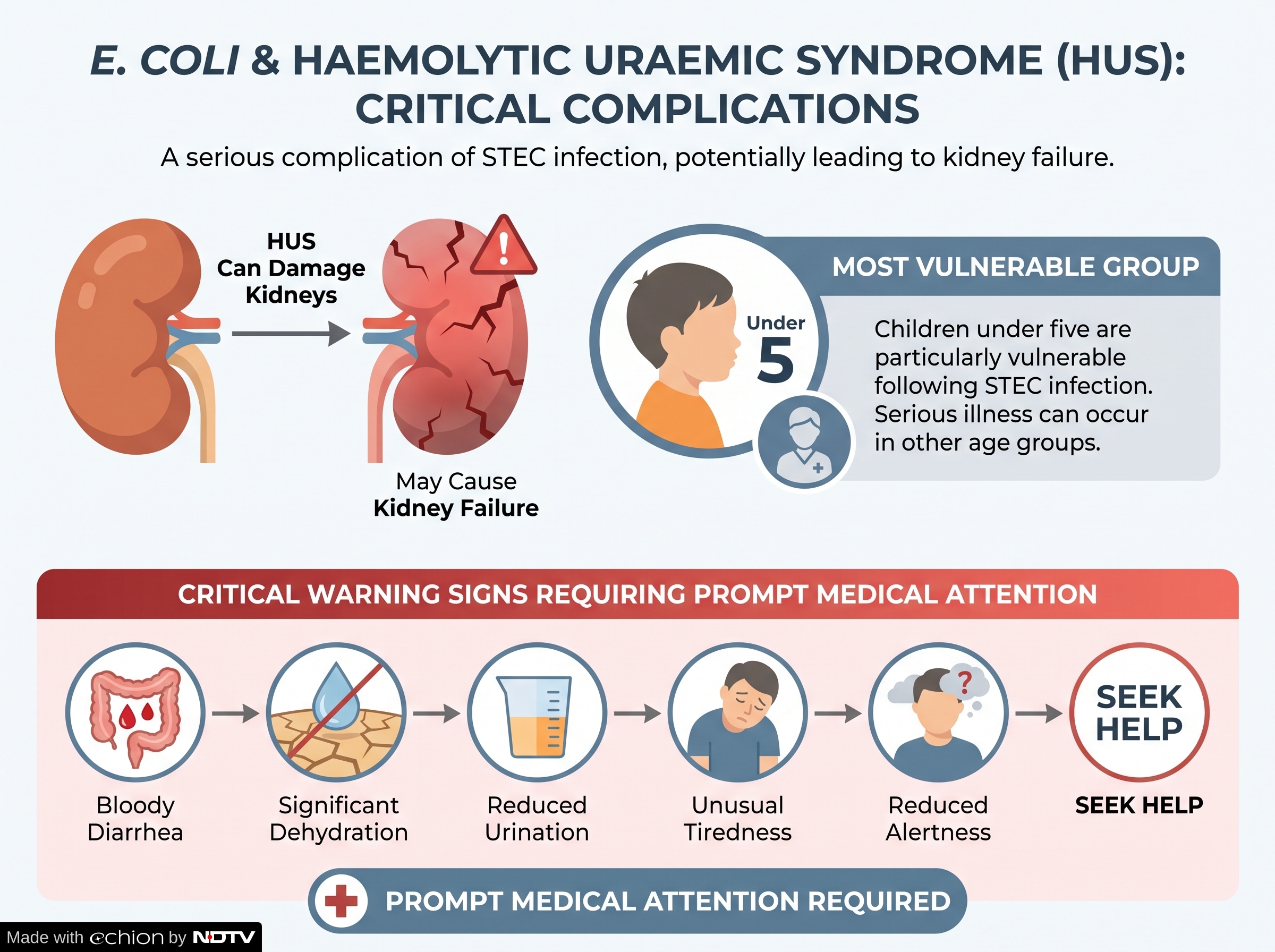
One of the most serious complications is haemolytic uraemic syndrome (HUS). HUS can damage the kidneys and may cause kidney failure. Children under five are particularly vulnerable to HUS following STEC infection, although serious illness can occur in other age groups too.
Warning signs requiring prompt medical attention include:
- Bloody diarrhea
- Significant dehydration
- Reduced urination
- Unusual tiredness
- Reduced alertness
What should railway authorities do?
The priority should not simply be testing water after contamination is suspected. Water safety needs continuous monitoring. Dr Rastogi says railway authorities should "regularly test water, clean and disinfect tanks and pipelines, repair leaks promptly, ensure hygienic water storage, and immediately investigate any detection of E. coli."
That means regular microbiological testing, documented cleaning schedules, maintenance of water tanks and pipelines, protection from sewage contamination and rapid action when a sample fails safety standards.
The CAG has similarly recommended that the Railways ensure compliance with protocols for inspecting water-supply systems and conduct comprehensive testing under the Uniform Drinking Water Quality Protocol.
The scale of the railway network makes this particularly important. Indian Railways operated more than 7,400 non-suburban passenger trains daily and carried 292.4 crore non-suburban passengers in 2023-24, according to the CAG report.
What should passengers do?
Passengers do not need to panic, but basic water-safety precautions are sensible, particularly when travelling long distances. Dr Rastogi recommends:
- Carrying sealed bottled water or using a reliable safe-water source where possible
- Passengers should avoid questionable taps or visibly unclean containers
- If the safety of the water is uncertain, use safe water not only for drinking but also for brushing your teeth and taking medicines
- Hand hygiene also matters. Wash hands regularly, particularly before eating, and choose freshly prepared, properly cooked food
- If diarrhea develops during or after travel, maintain hydration
- Seek medical advice if symptoms are severe or persistent, particularly if there is bloody diarrhoea, significant abdominal pain, repeated vomiting, high fever or signs of dehydration
Safe drinking water is not a luxury at a railway station. It is a basic public-health requirement. The CAG's finding of E. coli in water-cooler samples at eight railway stations does not mean that passengers across the country are facing an E. coli outbreak. But it does highlight why water-quality testing, sanitation and infrastructure maintenance cannot be treated as routine paperwork.
For passengers, sensible precautions can reduce exposure. For the Indian Railways, the answer lies in something even more fundamental: test regularly, maintain the system, investigate every positive result and make safe water a non-negotiable passenger amenity.
As WHO's drinking-water guidance makes clear, the goal for water intended for drinking is simple: E. coli should not be detectable in a 100 ml sample. When millions of people depend on a public system every day, that standard matters.
Read More: Doctor Explains How Water Quality Impacts Gut Health, Immunity And Long-Term Disease Risk
Disclaimer: This content including advice provides generic information only. It is in no way a substitute for a qualified medical opinion. Always consult a specialist or your own doctor for more information. NDTV does not claim responsibility for this information.