

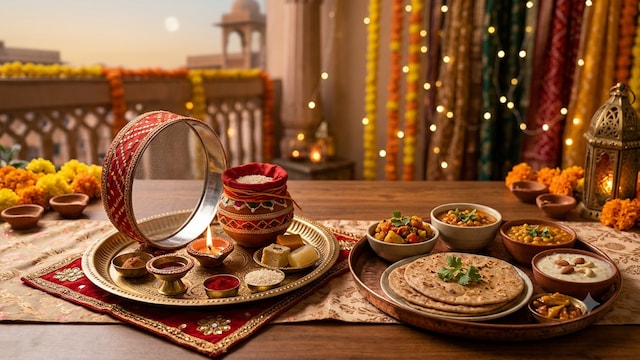
Karva Chauth is a festival marked by devotion, tradition and a day-long fast observed by many women across India. But while the fast is an important ritual, the way women prepare for it, stay hydrated and break their fast can make a difference to how they feel throughout the day. Speaking to NDTV, nutritionist Pooja Malhotra, who has observed the fast for several years, highlighted common mistakes women make during Karva Chauth and shared practical tips to avoid dehydration, hunger pangs and digestive discomfort.
1. Don't Make Sargi A Carb-Heavy Meal
Sargi, the pre-dawn meal eaten before the fast begins, is often a spread of festive foods. However, eating too many fried foods, sweets and refined carbohydrates or eating too little can leave women struggling with hunger and low energy later in the day. "Eating only refined carbs in the morning is a big mistake, because the refined carbs can get broken down very fast. They will cause a sugar spike followed by a sugar crash, which will result in hunger cravings," Malhotra said. She recommends making Sargi a balanced meal containing protein, fibre and healthy fats rather than relying solely on parathas, puris, tea or toast.
2. Start Hydrating The Day Before
One of the biggest challenges during a day-long fast without water is dehydration. Malhotra stressed that hydration cannot be achieved simply by drinking large quantities of water before dawn. "Hydration is not something that can be done right in the morning. Hydration is something that you need to build up," she said. She recommends drinking adequate fluids throughout the preceding day, including water and coconut water, while avoiding alcohol and limiting caffeinated drinks.
Read more: Karwa Chauth 2025: Biohacking The Fast For Resilience, Hormonal Balance And Longevity
3. Include Protein, Healthy Fats And Fibre In Sargi
A balanced Sargi can help provide sustained energy during the fasting period. Malhotra recommends including protein-rich foods such as paneer, dal and besan chilla, along with nuts, seeds and seasonal fruits. "Try to make your plate a balanced plate. Include all your macros. Do not just have your refined carbs," she said. She also suggests including foods such as apples, pears, guava or pomegranate, depending on availability and preference. The aim is to avoid a meal dominated by refined carbohydrates and instead include a combination of nutrients that supports satiety.
4. Don't Overeat When Breaking The Fast
After a full day without food or water, the temptation to indulge in a heavy festive meal can be strong. However, overeating, particularly rich and fried foods, may cause digestive discomfort. Malhotra recommends beginning with small sips of water or coconut water rather than gulping down large quantities at once. A small amount of fruit can follow, before moving on to a balanced meal. "Go slow. Actually, if you eat mindfully, you will realise that the same amount of food that you typically eat for your dinner is just enough, even after the entire day's fast," she said.
Read more: Should You Fast For Karwa Chauth During Pregnancy? Gynaecologist Shares Safety Tips
5. Avoid Treating The Post-Fast Meal As A Reward
The belief that a full day of fasting deserves an indulgent feast can lead to overeating. Malhotra said she has observed this tendency among women in her own circle, with some using the festival as a reason to eat large quantities of rich food after breaking their fast. Such eating can cause discomfort after a prolonged period without food. She recommends eating mindfully, avoiding excessive fried foods and sugar, and allowing the body to adjust gradually. Malhotra says fasting without water is not suitable for everyone. Women who are pregnant or breastfeeding, have diabetes or kidney disease, take medicines that require food or fluids, or have other underlying medical conditions should seek medical advice before undertaking a prolonged fast
Disclaimer: This content including advice provides generic information only. It is in no way a substitute for a qualified medical opinion. Always consult a specialist or your own doctor for more information. NDTV does not claim responsibility for this information.