





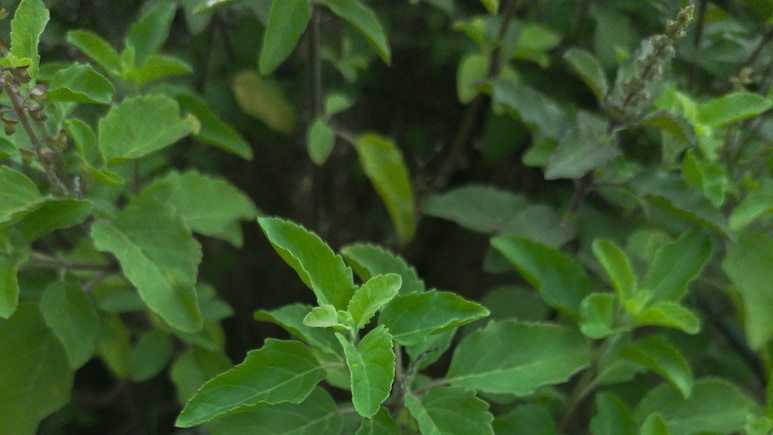
In India, few plants hold the same importance as tulsi (ocimum sanctum or holy basil). It is not merely a garden herb, as it is a sacred fixture in almost every household, traditionally worshipped and hailed as the 'Queen of Herbs'. Many generations have followed the practice of consuming its pungent, aromatic leaves first thing in the morning or as part of making immunity-boosting chai. This ritualistic approach, rooted deeply in Ayurveda, suggests that chewing a few fresh tulsi leaves right after waking up, on an empty stomach, can offer profound health benefits, especially to improve the immune system and managing daily stress levels. Modern scientific research is increasingly validating this practice, as holy basil, like most herbs, is packed with compounds that provide many health benefits.
7 Health Benefits Of Consuming Tulsi Leaves In The Morning
1. Adaptogen Powerhouse For Stress Relief
The most celebrated benefit of tulsi is its adaptogenic property. In a world full of deadlines and the hustle and bustle, chronic stress is a major concern. Studies indicate that holy basil helps the body regulate cortisol levels, often referred to as the stress hormone. By consuming the washed leaves on an empty stomach, individuals may experience a gentler, more balanced nervous system response to the day's pressures. This daily ritual is believed to promote mental clarity and a sense of calmness.
2. A Natural Immunity Booster
Tulsi is packed with bioactive compounds like eugenol, ursolic acid, and rosmarinic acid, which contribute to its immunity-supporting and antioxidant capabilities. Its antimicrobial, antiviral, and antifungal properties provide a robust shield against infections, making it a natural defence mechanism against common colds, coughs, and seasonal illnesses. Chewing the fresh holy basil leaves allows for quick absorption of these compounds, giving the immune system an instant morning boost.
Read More: 5 Ways To Relieve Stress Without Leaving Your Chair
3. Fighting Oxidative Stress And Inflammation
The antioxidants in tulsi are crucial for combating oxidative stress, which is a process that damages cells and tissues and contributes to chronic diseases. Chronic inflammation is often linked to a weakened immune response and various health issues. Research suggests that the anti-inflammatory and antioxidant action of holy basil's phytochemicals helps neutralise harmful free radicals, thereby supporting overall cellular health and resilience.
4. Respiratory System Support
Given the increasing concerns and reports about declining air quality, especially in urban cities, holy basil serves as a powerful ally for respiratory health. The essential oils in the leaves, such as eugenol and camphene, help in clearing congestion, soothing the airways, and acting as a mucus thinner. Studies document that regularly consuming tulsi leaves is a traditional remedy for conditions like asthma, bronchitis, and allergic rhinitis, offering relief from irritation.
5. Enhancing Cognitive And Mental Well-being
Beyond physical health, holy basil is traditionally known for its positive impact on the mind. Its properties as a neuroprotective herb are supported by studies suggesting it can improve memory, cognitive function, and mental alertness. For students and professionals, chewing the leaves in the quiet of the morning may promote better focus and reduce stress-induced fatigue.
Read More: Digital Detox: The AI-Powered Stress Epidemic And How To Set A 'Screen Time Budget' That Works
6. Supporting Digestive Health
Starting the day with holy basil leaves can also support the digestive system. The leaves help stimulate digestive enzymes and balance stomach acid, which can calm common issues like acidity, bloating, and indigestion. This gentle, regulating effect ensures better nutrient absorption throughout the day.
7. Gentle Detoxification And Metabolic Balance
Tulsi is known as a gentle natural detoxifier, as it supports the healthy functioning of the liver and kidneys. It also helps the body metabolise and flush out toxins that accumulate overnight. Some studies indicate holy basil has the potential to help regulate blood glucose and lipid levels, providing a simple, traditional method for supporting metabolic health.
How to Incorporate Tulsi Into Your Morning Routine
It is generally recommended to chew two to four fresh young tulsi leaves after rinsing your mouth first thing in the morning. This is based on clinical studies, but the exact size of the holy basil leaves also matters, as sometimes some leaves may be bigger while some may be smaller in size. Here are some things that you need to be careful of while consuming holy basil leaves:
- Choosing which holy basil leaf to consume is important.
- Soak the leaves in salted water, as this will help disinfect the dust and other substances that may be present on the surface.
- Make sure the tulsi leaves are homegrown, as wild tulsi leaves can have water impurities and sprayed pesticides, which can be dangerous if consumed.
- The tulsi leaves should be used in moderation as self-tested advice. Holy basil leaves or extract don't suit everyone; it is based on individual tolerance.
- Some people may develop a dryness in their throat after eating tulsi leaves, so be careful and seek an alternative.
Note that studies advise against prolonged chewing of the leaves, as the mercury content, though trace, might slightly discolour tooth enamel; therefore, one may also choose to swallow the leaves whole or consume them as a part of an herbal tea preparation, aka the tulsi chai.
While holy basil is widely regarded as safe, it is always advisable to consult with a trustworthy healthcare provider before making significant changes to your diet, especially if you are pregnant, nursing, or taking chronic medications.
Disclaimer: This content, including advice, provides generic information only. It is in no way a substitute for a qualified medical opinion. Always consult a specialist or your doctor for more information. NDTV does not claim responsibility for this information.
References:
Cohen, M. M. (2014). Tulsi (Ocimum sanctum L.): A herb for all reasons. Journal of Ayurveda and Integrative Medicine, 5(4), 251–259.
Jaiswal, V., Kosta, S., & Shrivastava, S. (2022). A review on medicinal benefits of holy basil (Ocimum sanctum L.) in human health. Journal of Pharmacognosy and Phytochemistry, 11(1), 22–26.
Puri, V. S., Singh, J., & Kaur, S. (2022). Immunomodulatory and Stress-Relieving Effects of Ocimum sanctum Linn. (Tulsi) Leaf Extract: A Prophylactic Nutraceutical. International Journal of Current Pharmaceutical Review and Research, 14(09), 374-380.
Saxena, R., Pal, R., & Saxena, S. (2022). Holy Basil (Ocimum sanctum): A review on its biological activities and therapeutic efficacy. World Journal of Pharmaceutical Research, 11(13), 224-239.
Ordak M, Wesolowski M, Radecka I, Muszynska E, Bujalska-Zazdrozny M. Seasonal Variations of Mercury Levels in Selected Medicinal Plants Originating from Poland. Biol Trace Elem Res. 2016 Oct;173(2):514-24. doi: 10.1007/s12011-016-0645-z. Epub 2016 Feb 29. PMID: 26923864; PMCID: PMC5018038.
Track Latest News Live on NDTV.com and get news updates from India and around the world

