

)
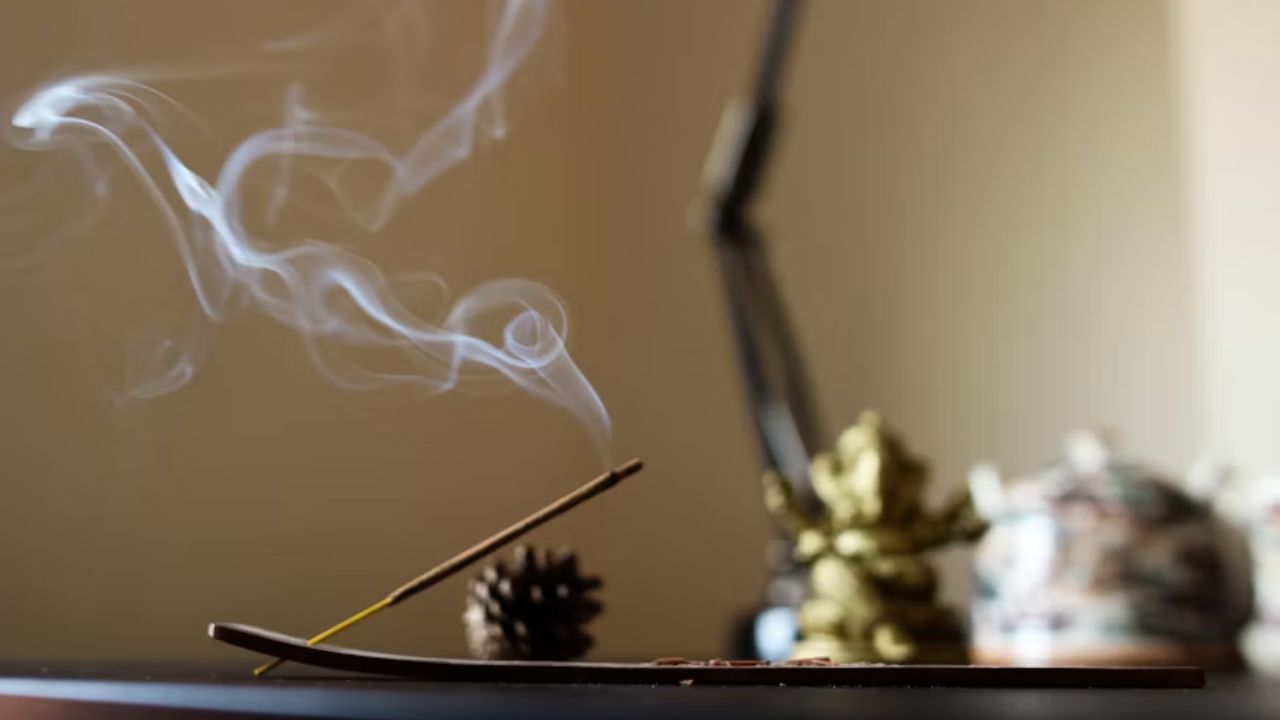
Incense sticks, or agarbattis, are a familiar part of many Indian homes, especially during prayers, festivals and other religious practices. Mosquito coils are equally common, especially during the monsoon when mosquitoes are a major concern. Although these products serve very different purposes, they have one thing in common: they release smoke into the air when burned. This means that people nearby can inhale some of the particles and chemicals produced. But does breathing this smoke mean that you are increasing your cancer risk?
Speaking to NDTV, Dr Chintan Shah, Medical Oncologist, HOC Vedanta, said that there is currently no justification for claiming that occasional household use of incense sticks or mosquito coils directly causes cancer. However, burning them, particularly in poorly ventilated spaces, can affect indoor air quality. "No justification can be done for the claim that the use of agarbatti or mosquito coil causes cancer. Cancer formation is dependent upon various factors, and there is a lack of evidence to establish the fact that household incense or mosquito coil usage leads to cancer."
What Happens When Incense Sticks Burn?
When an incense stick burns, it does not release only a pleasant fragrance. The combustion process produces fine particulate matter and gaseous substances, including volatile organic compounds (VOCs) and polycyclic aromatic hydrocarbons (PAHs). Fine particles are small enough to remain suspended in indoor air and can be inhaled into the respiratory system. The amount of exposure can increase when incense is burned for long periods or inside a closed room with little ventilation.
This does not mean that lighting an incense stick occasionally will cause cancer. Cancer develops through a complex combination of factors, and there is not enough evidence to establish that normal household incense use directly causes cancer. However, frequent and prolonged exposure to smoke is an avoidable source of indoor air pollution.
Why Do Mosquito Coils Affect Indoor Air
Mosquito coils work by slowly burning and releasing substances that repel mosquitoes. However, the burning process also produces smoke and fine particles. According to Dr Shah, the level of exposure can depend on several factors, including the formulation of the coil, how much is used, the size of the room and the amount of ventilation.
Using a mosquito coil in a small, closed bedroom can therefore result in higher exposure than using one in a larger, well-ventilated space. This is particularly relevant when people spend several hours sleeping in the same room.
Does Incense Or Mosquito Coil Smoke Cause Cancer?
There is currently no basis for saying that occasional use of agarbatti or mosquito coils causes cancer. Cancer risk is influenced by many factors, including genetics, tobacco and alcohol exposure, certain infections, obesity, environmental exposures and other lifestyle factors.
However, some laboratory and epidemiological studies have raised concerns about frequent exposure to combustion products. "Several studies claim that there is a correlation between the risk of developing respiratory cancers and frequent exposure to incense smoke, as well as between mosquito coil smoke and adverse effects on respiratory system," said Dr Shah.
Dr Shah further added, "These studies suggest a possible connection, rather than prove independently the causative relationship between these household products and cancer." More research is needed to understand the long-term effects of repeated household exposure.
Closed Rooms Can Increase Exposure
Ventilation is one of the simplest factors that can change how much smoke remains indoors. Burning incense in a closed room allows particles and gases to accumulate, particularly if there is little movement of fresh air. The same principle applies to mosquito coils. Using them in an enclosed area can increase exposure to the smoke. People may also spend several hours in such rooms, increasing the duration of exposure.
This does not mean that every exposure is dangerous, but reducing the concentration and duration of smoke is a practical way to improve indoor air quality.
How To Reduce Exposure
Dr Shah recommends a straightforward approach, "minimise exposure but retain traditions."
- Burn incense in a well-ventilated area: Open windows or doors where appropriate to allow smoke to disperse.
- Use incense moderately: Avoid burning multiple sticks or keeping them lit for unnecessarily long periods.
- Avoid burning incense in closed rooms: Especially avoid allowing smoke to build up in rooms where people spend long periods.
- Be careful with mosquito coils: Avoid using them in closed sleeping rooms whenever possible.
- Consider mosquito nets: They provide protection without producing any indoor smoke.
- Explore electric mosquito repellents: Non-combustible options can reduce the need for products that generate smoke.
- Choose low-smoke products if available: Consumers can look for products designed to produce fewer emissions.
"Cancer prevention is normally associated with tobacco, alcohol, obesity, infections and regular screening. Yet, it is also about creating environments that are safe. The smoke inside our homes may be culturally familiar but familiar does not always mean harmless," said Dr Shah.
Disclaimer: This content including advice provides generic information only. It is in no way a substitute for a qualified medical opinion. Always consult a specialist or your own doctor for more information. NDTV does not claim responsibility for this information.