

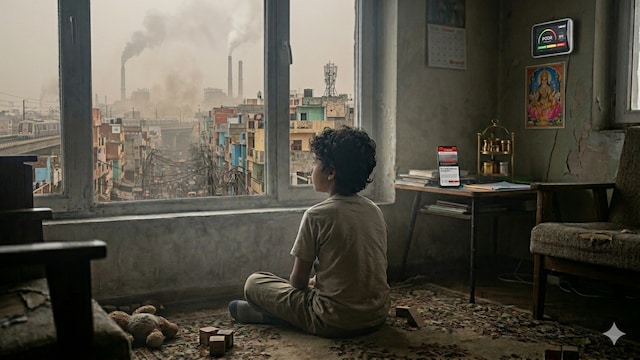
A child does not need firsthand access to cigarette smoke to suffer from its effects throughout their life. Recent findings in studies around passive smoking, air pollution impacts and even indoor cooking fume impact on young lungs show just as much. In many homes, exposure begins quietly and repeatedly through the smoke released by family members who smoke indoors, on balconies, near windows, or inside vehicles. While active smoking has long been recognised as a major health hazard, passive smoking continues to remain underestimated, particularly when it comes to children.
Passive smoking refers to inhaling smoke from burning tobacco products as well as smoke exhaled by a smoker. Children are especially vulnerable because their lungs and immune systems are still developing. They also breathe faster than adults, increasing the amount of harmful particles that enter their airways relative to their body size.
According to the World Health Organization (WHO), tobacco use causes more than 8 million deaths globally every year, including an estimated 1.3 million deaths among non smokers who are exposed to second hand smoke. Children account for a significant proportion of this exposure, often within their own homes.
Many parents assume that smoking in a separate room, near an open window, or on a balcony prevents harm to children. However, tobacco smoke does not remain confined to a single area. Fine particles can travel through indoor spaces and linger in the air long after a cigarette has been extinguished. Residues from smoke can also settle on furniture, curtains, bedding, carpets, toys, and clothing.
This means children may continue to come into contact with tobacco related toxins even when active smoking is not taking place. Infants and young children are particularly susceptible because they spend more time indoors, frequently touch surfaces, and often place their hands or objects in their mouths.
Some of the common respiratory consequences associated with passive smoking in children include:
- Persistent cough
- Recurrent wheezing
- Increased frequency of chest infections
- Aggravation of asthma symptoms
- Episodes of breathlessness
- Reduced lung growth and development over time
Children with asthma or allergic airway diseases often experience more frequent flare ups when exposed to tobacco smoke. In many cases, this can result in increased use of inhalers, repeated medical consultations, emergency visits, and school absenteeism.
The impact extends beyond the respiratory system. Research has linked passive smoke exposure with a higher risk of middle ear infections, sleep disturbances, and impaired overall wellbeing. Emerging evidence also suggests that long term exposure during childhood may influence respiratory health later in life, increasing susceptibility to chronic lung conditions.
Another misconception is that occasional smoking around children carries minimal risk. Scientific evidence does not support the existence of a safe threshold for tobacco smoke exposure. Even limited exposure can trigger airway irritation and inflammation in sensitive children.
Creating a smoke free environment remains one of the most effective preventive measures available. This includes:
- Not smoking anywhere inside the home
- Keeping vehicles completely smoke free
- Avoiding smoking near children, even in semi open spaces
- Changing smoke contaminated clothing before prolonged contact with infants
- Seeking professional support for tobacco cessation when required
For families where a child frequently experiences cough, wheezing, recurrent respiratory infections, or worsening asthma despite treatment, exposure to tobacco smoke at home should be considered as a possible contributing factor.
The conversation around tobacco often focuses on the smoker. Equally important is recognising the silent exposure occurring among children who have little control over the air they breathe. Protecting children from tobacco smoke is not only about preventing immediate symptoms but also about safeguarding lung health during the years when growth and development are most critical.
(By Dr Ravi Shekhar Jha, Director and Unit Head, Pulmonology, Fortis Hospital Faridabad)