

)
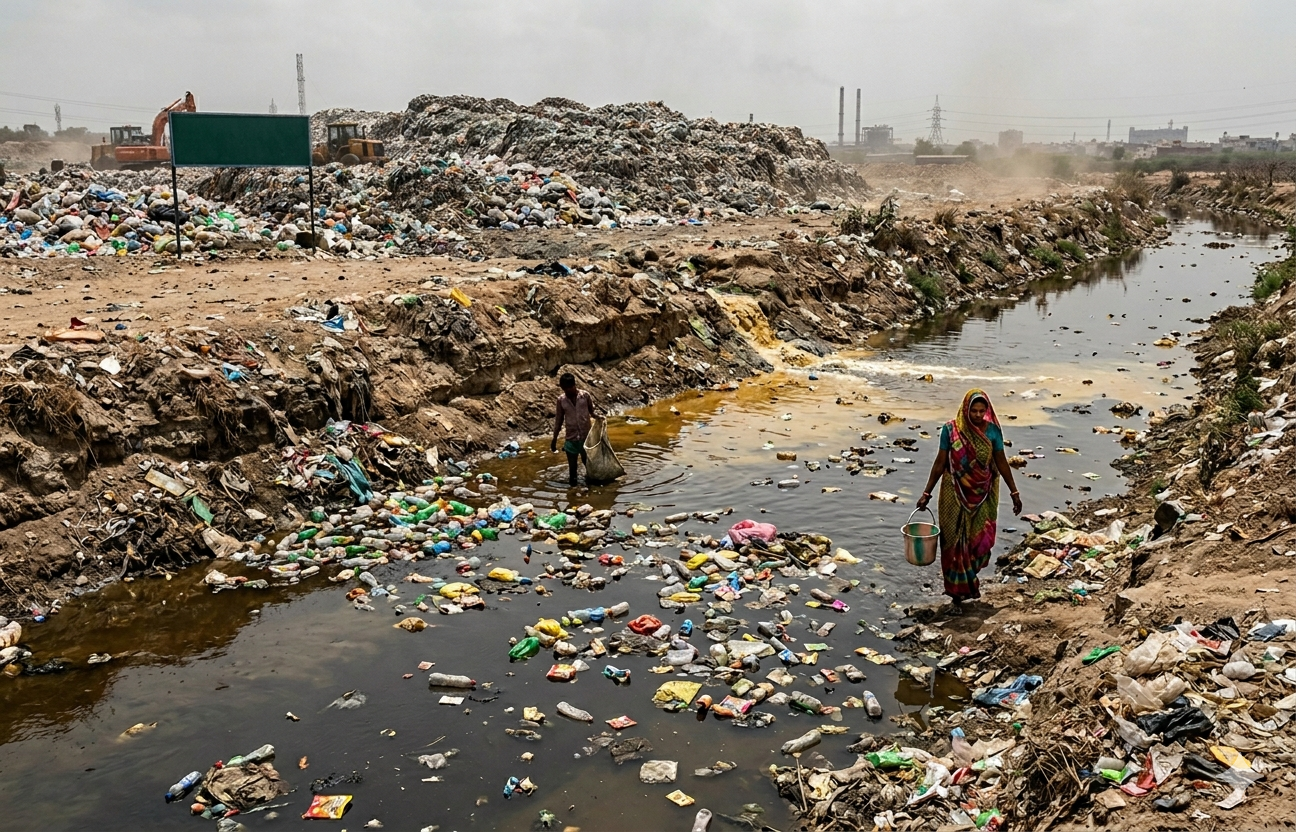
Chemicals leaching from plastic waste at the Mathuradaspura dumping yard on the outskirts of Jaipur are contaminating nearby agricultural land and water sources with BPA, posing a threat to local crops, according to a study. The year-long study on the contamination of Bisphenol A (BPA) -- used in food-grade plastics and packaging materials -- in and around the Mathuradaspura dumping yard was conducted by the Department of Environmental Science at Central University of Rajasthan, Ajmer. Preksha Palsania, who conducted the study under the supervision of Associate Professor Dr Garima Kaushik, said that soil and water samples were collected on three occasions from multiple locations within a two-kilometre radius of the landfill.
The findings revealed alarmingly high levels of BPA contamination.
According to the researchers, BPA concentrations in soil near the dumping yard reached up to 770.8 mg/L, while nearby water samples recorded concentrations as high as 798.9 mg/L.
In India, routine testing of water and agricultural soil does not include checks for BPA, as there are currently no specific government regulations addressing it, she said.
In contrast, the European Union (EU) maintains strict regulations regarding BPA. The limit for BPA in drinking water is set at 2.5 mg/L, with stringent rules to protect aquatic life in rivers and seas. In Europe, if BPA levels in water or soil exceed the prescribed limit, the government immediately issues a legal order for the site to be cleaned up, she added.
"These findings indicate that toxic chemicals released from the landfill are spreading into the surrounding environment," Palsania said.
She said that the Mathuradaspura dumping yard has grown into an artificial mountain of waste, receiving large quantities of plastic bags, bottles, food containers and household refuse every day.
"While it may appear to be an ordinary waste disposal site, a serious environmental threat is gradually developing beneath the surface," she said.
According to the study, buried plastic waste breaks down and releases hazardous chemicals into soil and water. One such chemical is BPA, commonly used in food-grade plastics, disposable containers and packaging materials.
Palsania said BPA could pose significant health risks to humans, including hormonal imbalance, reproductive disorders, developmental issues in children and an increased risk of several serious diseases.
To assess the impact of BPA on vegetation, researchers conducted experiments on chickpea plants. The results showed substantial adverse effects on plant growth and health.
"Exposure to BPA reduced seed germination, lowered chlorophyll content, and decreased protein and enzyme levels. At higher concentrations, plant growth declined by as much as 70 to 80 per cent," she said, adding that the contamination could gradually reduce soil fertility in the surrounding agricultural areas.
The researcher also examined the effects of Polyethylene Terephthalate (PET) microplastics, which are generated through the gradual degradation of plastic bottles and packaging materials.
Dr Kaushik said that the study found that increasing concentrations of microplastics had a significant negative impact on plant development. Seed germination rates declined, plants remained weak, leaf production decreased and overall plant size was reduced.
"The process of photosynthesis was also affected. In addition, signs of cellular damage were observed, including weakened cell membranes and increased stress levels in plants," she said.
The study found that plants exposed to higher levels of microplastics produced additional ascorbic acid as a defence mechanism against stress.
"Residents living near the landfill are largely unaware that the soil and water they use may already be contaminated by toxic chemicals and microplastics released from plastic waste. Farmers in the area cultivate crops on the affected land and rely on local groundwater resources," Palsania said.
(This story has not been edited by NDTV staff and is auto-generated from a syndicated feed.)