

)
BTS member Kim Taehyung, or V of BTS, opened up during a live broadcast on August 12, 2026, alongside bandmate Jung Kook, about his hearing capacity. Speaking candidly about his health, the 30-year-old artist revealed a long-standing challenge: he has been living with severe hearing loss in one ear for more than two and a half years. "If this ear has 100% hearing, this one can only hear about 30%," Taehyung shared during the stream. Taehyung explained that during his time serving in the military's Special Duty Team, he initially brushed off his ear discomfort, assuming it was just physical fatigue from intense training. Believing it was something he could simply push through, he delayed getting a proper medical checkup, a decision that allowed the issue to progress before he got medical help.
Currently undergoing medical treatment and regular doctor visits, Taehyung's experience brings urgent attention to unilateral hearing loss (single-sided hearing loss), which is a condition that often goes unnoticed until significant damage has occurred.
What Is Single-Sided Hearing Loss?
Single-sided hearing loss happens when one ear suffers a noticeable loss of hearing while the other ear continues to hear normally. Because people rely on two working ears to process sound smoothly, losing hearing on one side creates distinct daily challenges. Here are the signs that could indicate single-sided hearing loss:
- Inability to Tell Where Sound Is Coming From: The brain uses both ears together to pinpoint sound direction. With one ear damaged, it becomes very difficult to tell if a car horn, voice, or alarm is coming from your left, right, or behind you.
- The "Head Shadow" Problem: Your head acts as a physical barrier. High-pitched sounds coming from your weaker side get blocked by your head, making it hard for your good ear to pick them up clearly.
- Brain and Ear Exhaustion: When one ear isn't working well, your brain and good ear have to work twice as hard to catch words and filter out background noise. This leads to physical exhaustion, mental strain, and frequent headaches.
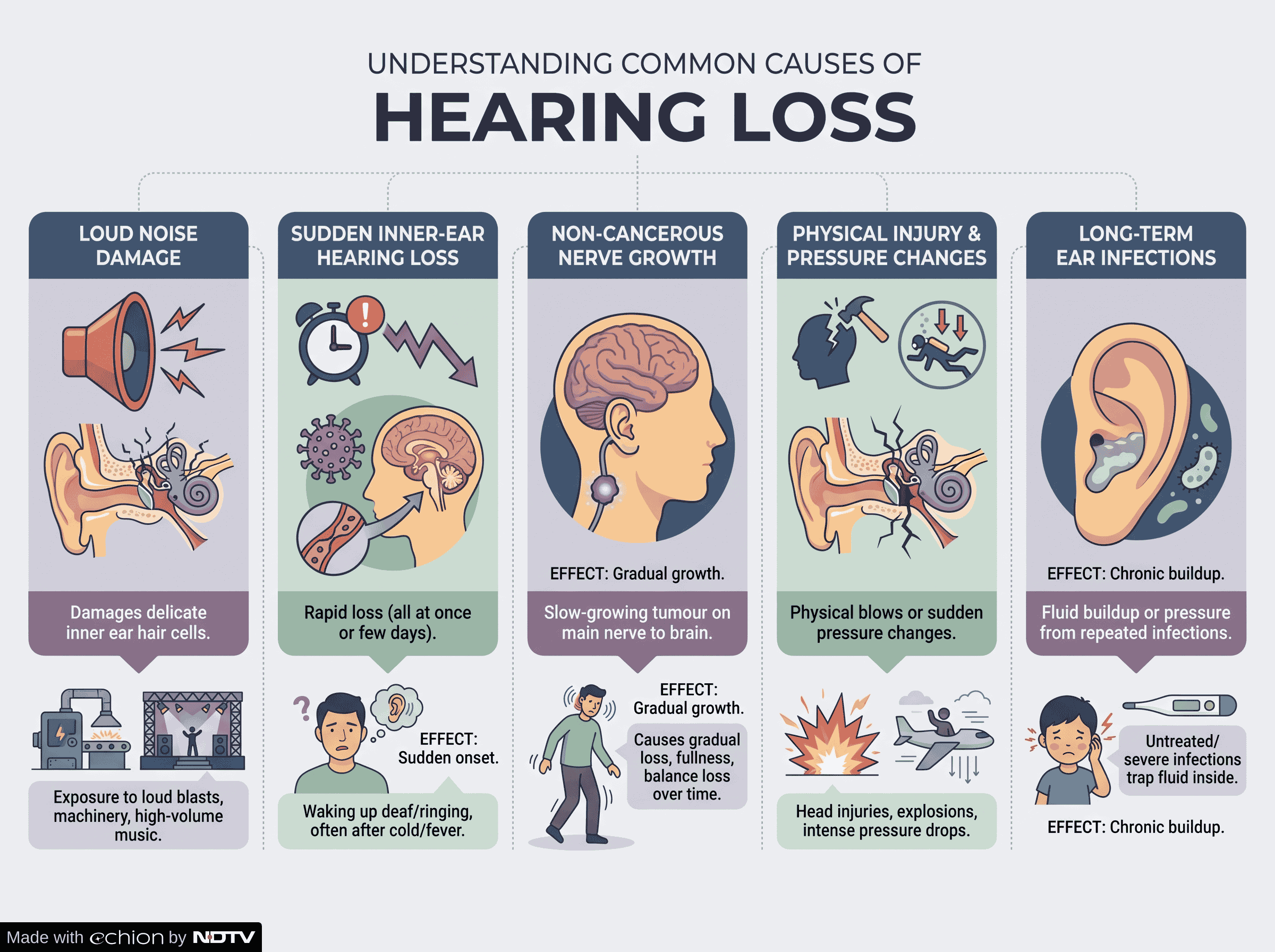
What Causes Hearing Loss In One Ear?
Hearing loss usually falls into two main categories: nerve damage (problems with the inner ear or the nerve that connects the ear to the brain) and blockage issues (problems with sound physically passing through the outer or middle ear).
Why Early Medical Help Is Critical
"Unilateral or sudden hearing loss is often mistaken for a minor problem like trapped earwax, a blocked sinus, or temporary physical fatigue. However, when the inner ear or auditory nerve is affected, time is the crucial deciding factor," explains Dr Anup Sabherwal, Senior Consultant ENT at Fortis Healthcare.
He adds, "Evaluating and treating the ear within 48 to 72 hours gives the highest probability of restoring lost nerve function. Waiting weeks or months often makes the damage permanent."
Early Warning Signs You Should Never Ignore
Because your "good ear" helps pick up the slack in quiet rooms, early hearing loss in one ear can be subtle. Keep an eye out for these clear warning signs:
- Muffled or "Underwater" Speech: Voices sound blurry or distorted, especially when someone talks to you from your weaker side.
- Ringing in One Ear (Tinnitus): A constant ringing, buzzing, clicking, or humming sound that you hear in only one ear.
- Difficulty Hearing in Crowds: Finding it almost impossible to follow a conversation at a noisy restaurant or family gathering, even though you hear fine in a quiet room.
- A Blocked or "Full" Feeling: A persistent sense of pressure or fullness in one ear canal, similar to being on an aeroplane, that won't go away when you swallow.
- Dizziness or Loss of Balance: Feeling unsteady on your feet or experiencing sudden lightheadedness alongside changes in your hearing.
How Doctors Test And Treat The Condition
If you notice a change in how one of your ears hears, an Ear, Nose, and Throat (ENT) specialist and an audiologist will run simple, painless tests:
1. Hearing Tests (Audiometry): You wear headphones and listen to tones at different volumes and pitches to measure exactly how well each ear hears.
2. Speech Discrimination Tests: Measuring how clearly you can understand spoken words in both quiet and noisy settings.
3. Imaging Scans (MRI or CT): Detailed scans to rule out nerve growths, structural damage, or fluid blockages.
Treatment and Support Options
While permanent nerve damage cannot always be cured, modern medical treatments and devices can significantly improve daily life:
- Targeted Medication: Early treatment with prescription steroids to reduce inner-ear swelling and restore nerve function.
- CROS Hearing Aids: Special hearing aids that pick up sound from your impaired side and wirelessly beam it directly to a receiver in your good ear.
- Bone-Conduction Devices: Small devices that use natural bone vibrations to send sound waves directly through your skull to the healthy ear's inner system.
Kim Taehyung's open disclosure about his 70% hearing loss serves as a powerful reminder that auditory health should never take a backseat to busy schedules or physical toughness. Single-sided hearing loss is more than a minor annoyance, as it alters how the brain interacts with the environment around us. Recognising early warning signs like persistent ringing or muffled sound in one ear and seeking immediate specialist care within the first 72 hours can make all the difference between temporary treatment and lifelong hearing loss.
Also Read: BTS's RM Injures Ankle Before Arirang Live Concert: Accessory Navicular Sprain Explained
Disclaimer: This content including advice provides generic information only. It is in no way a substitute for a qualified medical opinion. Always consult a specialist or your own doctor for more information. NDTV does not claim responsibility for this information.