

)
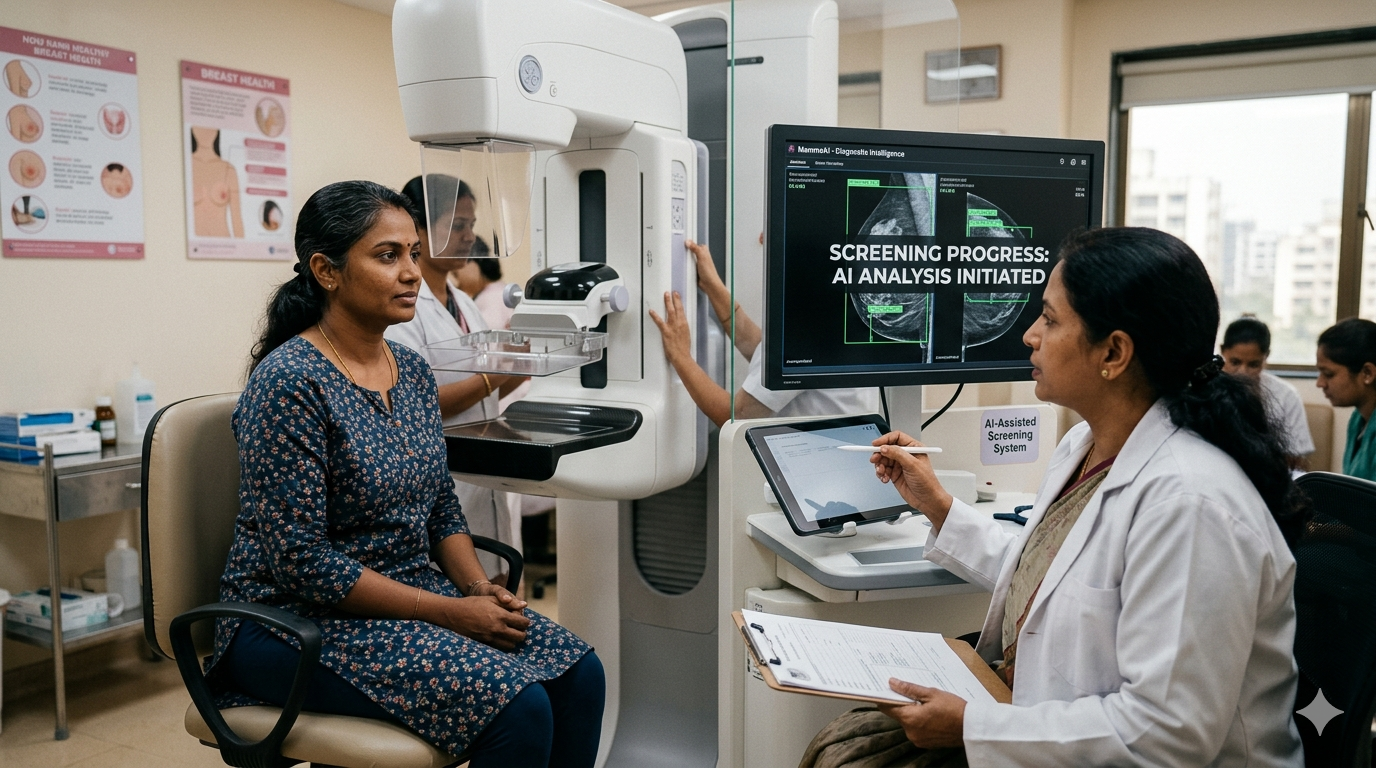
Breast cancer remains the most common cancer among women worldwide, including in India, where late diagnosis continues to drive mortality. Traditionally, screening programmes have focused on detecting cancer once it has already developed, typically through mammograms starting at age 40 for average-risk women. However, a major shift is now underway. Global experts, supported by new evidence published in The Lancet and updated guidelines from the National Comprehensive Cancer Network (NCCN), are advocating for the integration of artificial intelligence (AI) into breast cancer screening. Crucially, these recommendations propose beginning AI-based risk assessment as early as age 35, years before standard screening begins.
Unlike conventional models that rely on family history or genetic mutations, AI tools analyse mammograms to predict a woman's future risk of developing breast cancer, enabling earlier and more personalised intervention. This paradigm shift, from detection to prediction, could be particularly significant for countries like India, where awareness, access, and early diagnosis remain uneven.
A Shift From Detection To Prediction
Traditional breast cancer screening answers a simple question: Is cancer present now? AI-driven tools go further, estimating a woman's 5-year risk of developing the disease using imaging data alone. This is critical because nearly 85-90% of women diagnosed with breast cancer have no family history or known genetic mutation, meaning conventional risk models miss a large proportion of cases.
The updated guidelines introduce approximately 1.7% five-year risk threshold to identify women who may need closer monitoring or preventive strategies.
What The Lancet Study Shows
Evidence from The Lancet strengthens the case for AI integration. A large randomised trial involving over 100,000 women found that AI-supported mammography:
- Detected 81% of cancers at screening vs 74% with standard methods
- Reduced interval cancers by 12%
- Identified more aggressive cancers at an earlier stage
- Maintained similar false-positive rates (around 1.5%)
Additionally, AI reduced radiologists' workload significantly, helping address workforce shortages without compromising diagnostic accuracy.
Also Read: AI-Supported Mammography More Effective Than Standard Screenings For Breast Cancer: Lancet Study
Why Start Screening At 35?
The recommendation to begin risk assessment at 35 reflects growing evidence that:
- A significant proportion of cancers occur in women under 50
- Earlier risk identification allows preventive strategies, not just detection
- Younger women often fall outside traditional screening programmes
AI models can detect subtle imaging patterns invisible to the human eye, enabling earlier intervention even before symptoms arise.
Implications For India
India faces unique challenges in breast cancer control:
- Rising incidence, especially in urban areas
- Late-stage diagnosis in a majority of cases
- Limited access to organised screening programmes
AI-based screening could help address these gaps in several ways:
- Personalised Screening: Instead of one-size-fits-all guidelines, AI enables risk-based screening intervals, more frequent for high-risk women, less frequent for low-risk groups.
- Early Detection In Younger Women: Starting risk assessment at 35 could be crucial in India, where breast cancer often occurs at a younger age compared to Western populations.
- Resource Optimisation: AI can triage low-risk mammograms, allowing radiologists to focus on complex cases, an important advantage in resource-constrained settings.
- Expanding Access Beyond Metros: With integration into digital health systems, AI tools could support screening in tier-2 and tier-3 cities where specialist radiologists are scarce.
Also Read: Global Breast Cancer Cases Rise, Indian Spike At 74%: Lancet Study
Challenges And Cautions
Despite its promise, AI-based screening is not without concerns:
- Cost and infrastructure barriers in low-resource settings
- Need for validation in diverse populations, including Indian women
- Risk of algorithmic bias if training data lacks representation
- Ethical and regulatory considerations around data use
Experts emphasise that AI should augment, not replace, clinicians, ensuring human oversight in diagnosis and decision-making.
The integration of AI into breast cancer screening marks a fundamental transformation, from reactive detection to proactive prevention. By enabling risk assessment as early as 35, global guidelines are redefining how and when women engage with screening programmes.
For India, this shift presents both an opportunity and a challenge. If implemented thoughtfully, AI-driven screening could bridge gaps in early detection, personalise care, and reduce mortality. However, success will depend on equitable access, robust validation, and careful integration into existing healthcare systems. The message is clear. The future of breast cancer screening is not just earlier, it is smarter, more personalised, and increasingly powered by artificial intelligence.
Disclaimer: This content, including advice, provides generic information only. It is in no way a substitute for a qualified medical opinion. Always consult a specialist or your own doctor for more information. NDTV does not claim responsibility for this information.