

There is a particular kind of silence that many men grow up with. Be strong. Don't complain. Handle it yourself. Don't let people see you struggle. Boys don't cry.
For generations, masculinity has been tied to the idea of being the person who holds everything together. The provider. The protector. The problem-solver. The one everyone turns to when something goes wrong.
But What Happens When That Person Needs Help?
This World Mental Health Day, I found myself thinking about a question that goes beyond stress, burnout or depression: Have we taught men to hide their pain so well that sometimes they struggle to recognise it themselves?
As a mother of two sons, this conversation feels personal to me, too. I often think about the messages we pass on to our boys, sometimes without even realising it. We teach them to be brave, to be resilient and to stand up for others. But are we also teaching them that it is okay to be vulnerable, to ask for help and to admit when something hurts?
The question feels particularly relevant this year. The World Health Organization's theme for World Mental Health Day 2026 is "Lived experiences heard: real voices, real change." It calls for people who have experienced mental-health conditions to be heard and meaningfully involved in decisions that affect their lives.
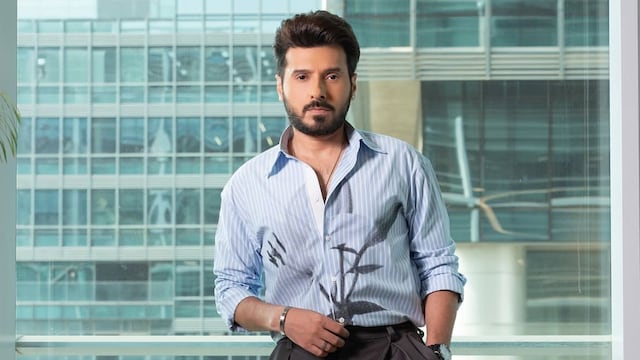
Recently, I met actor Divyenndu, widely known for playing Munna Bhaiya in Mirzapur. Here is an actor who has inhabited a character defined by rage, unpredictability and violence. So I asked him a question: What happens to Munna Bhaiya when he goes home? How does he leave that character behind?
His answer stayed with me. He spoke about locking Munna inside the vanity van before returning home to his wife.
"We are actors, we are trained to do so and over the years Munna and me are friends and I don't let him enter my life," he told me.
It made me wonder: Is it always that easy to leave the darkness at the door? For an actor, separating oneself from a character may be part of the craft. But for many men, the pressures they carry are not characters they can leave behind at the end of a shoot. Work, relationships, finances, family responsibilities and the fear of failure can follow them home. And not everyone knows how to talk about what they are going through.
Sometimes, distress does not look the way we expect it to. It may not always present as visible sadness or someone openly saying they are struggling. The US National Institute of Mental Health lists anger, irritability, changes in mood or energy, sleep problems, increased stress, substance misuse and high-risk behaviour among signs that can occur in men experiencing mental-health difficulties.
It could be anger. It could be withdrawal, sleeplessness, drinking more than usual or losing interest in things that once brought joy. Or it could simply be the familiar response: "I'm fine."
Because "I'm fine" is often what men have been taught to say.
"In men, emotional distress may not always look like sadness. It can appear as anger, rage, irritability, disturbed sleep or changes in behaviour and relationships. Some men may turn to alcohol or other substances to cope. These can be warning signs that someone is struggling, and instead of judging the behaviour, we need to ask what may be happening underneath it," says psychiatrist Dr Anjali Chhabria, founder of Mindtemple.
Divyenndu has also addressed this silence publicly. He teamed up with men's health platform Man Matters for its digital campaign #MenDontTalk, which challenged rigid ideas of masculinity and encouraged men to speak more openly about their physical and mental health, their struggles and their willingness to seek help.
Speaking to me about why men still find it difficult to open up, and what he took away from the campaign, Divyenndu said: "Men grow up with this deep conditioning that they have to be the alpha, the protector, the one who stays strong. So even when a man wants to cry or tell a friend that he is struggling, he may fear being mocked. We need to break that conditioning. Men's mental health must be part of the conversation around equality too, because silence can have serious consequences. If someone does open, don't mock them. Lend an ear. Listen."
That last line stayed with me. Sometimes, the first step towards helping someone is not offering advice or trying to fix the problem. It is simply making them feel safe enough to speak.
The silence around mental health also exists alongside a significant gap in access to care. India's National Mental Health Survey, conducted by NIMHANS in 2015-16, estimated that 10.6% of adults were living with a mental disorder. The survey found that treatment gaps varied from 70% to 92%, depending on the condition. These are older national estimates, but they underline an important point: recognising distress is only the first step. People must also be able to seek and access appropriate care.
And sometimes, we do not recognise that we are struggling until somebody else points it out.
A spouse notices a change in temperament. A friend realises you have stopped calling. A colleague sees the irritability. A parent senses that you are not quite yourself. These observations may be an opportunity to check in, rather than dismissing a change in behaviour as a bad mood or a difficult phase.
The numbers around suicide in India make the conversation even more difficult to ignore. The National Crime Records Bureau recorded 171,418 suicide deaths in the country in 2023. Suicide is complex and cannot be explained by a single cause; psychological, social and economic factors can all play a role. But the scale of these deaths makes it essential to ask whether people feel able to seek support before they reach a point of crisis.
Dr Chhabria believes that changing the way we talk about emotional distress is part of that process. "Men in our culture have often been conditioned not to talk about emotional distress. They are taught to be strong, to suppress what they feel, and as a result, many are simply not comfortable sharing when they are struggling. It is time we change that. We need more men to speak not only about their feelings, but also about seeking professional help and therapy when they need it. Asking for help is not a sign of weakness. It is a sign of strength," she says.
Perhaps this is where our definition of strength needs to change. It is not about asking men to become better at carrying the weight. It is about creating the conditions in which they feel safe enough to put some of it down. It is about making it acceptable to tell a friend, "I'm not okay," without worrying that the admission will change how they are perceived.
It is also about recognising when a conversation with a friend is not enough and professional support may be needed. Mental-health care should be as much a part of our everyday health conversations as blood pressure, blood sugar, cholesterol, fitness and sleep. We would not expect someone to manage every physical-health problem alone. Why should emotional distress be any different?
We have spent generations telling boys not to cry. Perhaps it is time to stop asking men to hide what hurts and start asking a simpler question: "Are you really okay?"
Because the goal is not to teach men to become stronger at carrying the weight. It is to create a world where being strong also means knowing that you do not have to carry it alone.
Disclaimer: This content including advice provides generic information only. It is in no way a substitute for a qualified medical opinion. Always consult a specialist or your own doctor for more information. NDTV does not claim responsibility for this information.