

)
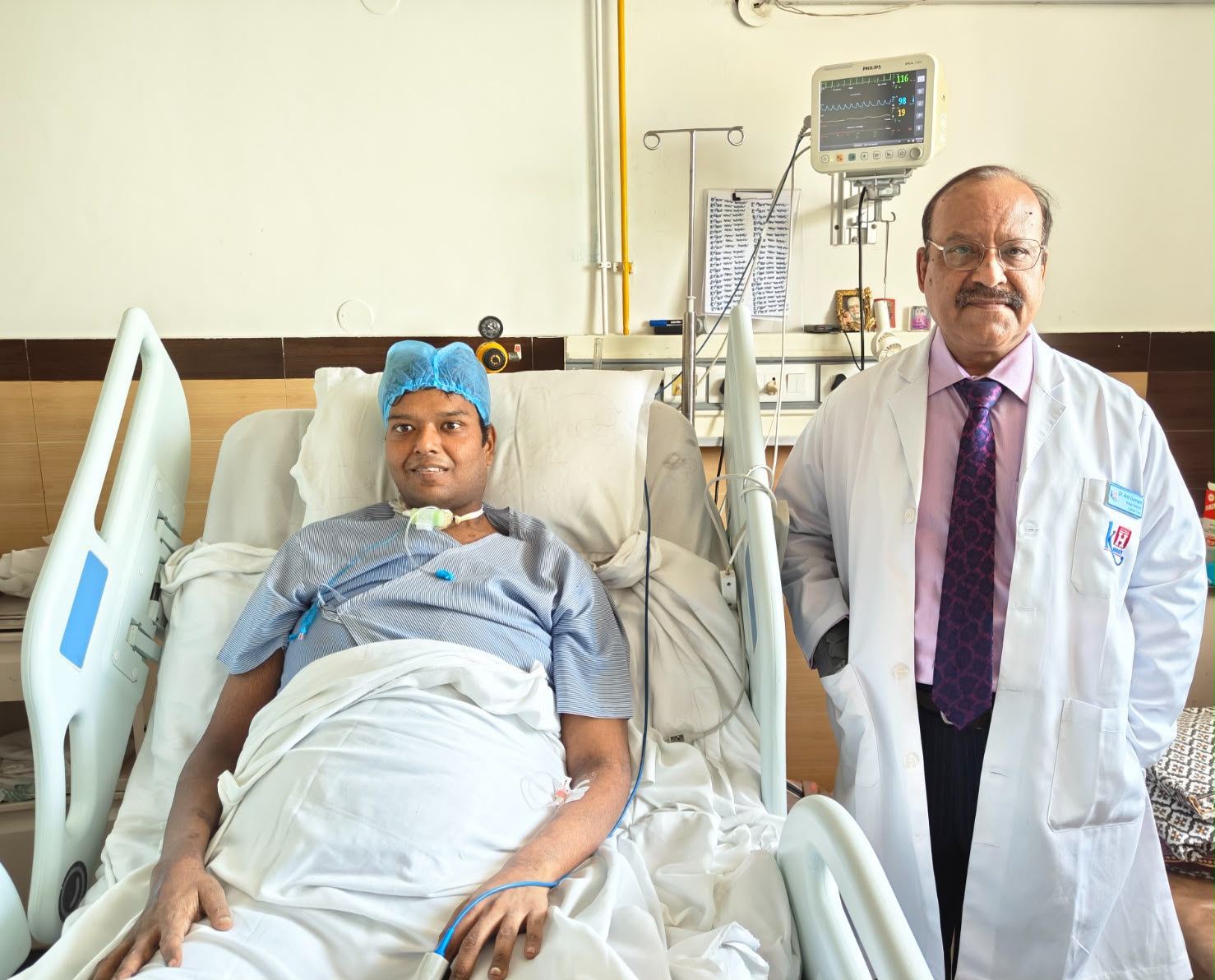
A 30-year-old man, Nakul Barua, was critically injured in a road traffic accident. He suffered multiple right rib fractures, a shattered right pelvis and acetabulum, fractures of the lumbar spine, left femur and patella, and complex injuries to the right heel and ankle. He required prolonged mechanical ventilation and underwent chest wall repair during his treatment at Kailash Hospital, Sector 27, Noida. Doctors also managed multiple injuries involving his chest, abdomen, pelvis and limbs. Barua was admitted on March 2, 2026, and discharged in a stable condition on May 15 after 74 days of hospitalisation.
Nakul was brought to the hospital after a road traffic accident in Noida in the early hours of March 2. He had sustained multiple traumatic injuries, including chest trauma, injuries to the abdomen, pelvis and limbs, loss of consciousness and spinal injuries. On admission, he was critically ill, with a respiratory rate of 44 per minute and pulse rate of 120 per minute. His blood pressure was not recordable at the time of examination. He required emergency intubation, mechanical ventilation and circulatory support.
Barua's treatment required a multidisciplinary trauma care approach which included Dr Anil Gurnani, Group Director, Critical Care, and Dr Sushil Sharma, Sr. Consultant, Joint & Knee Replacement Surgeon, Orthopedics, along with specialists from thoracic surgery and other clinical teams.
Clinical Investigations And Findings
Investigations identified multiple right-sided rib fractures and right-sided subcutaneous emphysema. A right intercostal drain was inserted on the day of admission. With the rib fractures affecting the stability of his chest wall while he was dependent on ventilatory support, the thoracic injury became an important component of his overall management. Once his clinical condition permitted, the thoracic surgery team performed right diagnostic thoracoscopy, chest wall repair and fibreoptic bronchoscopy on March 17, 2026.
Dr Gurnani said, "Nakul's case was challenging not because of one isolated injury, but because several life-threatening problems were unfolding at the same time. On arrival, he had severe chest trauma, haemodynamic instability and respiratory failure, making immediate airway and circulatory support critical. The prolonged ventilator requirement also meant that his respiratory status had to be reassessed continuously as his other injuries were being treated. In such complex trauma, critical care is about constantly balancing competing priorities, controlling complications and creating the physiological stability needed for definitive procedures. His recovery was therefore a gradual process rather than a single breakthrough treatment, made possible by sustained monitoring and close coordination between critical care, surgery, orthopaedics and other teams."
Dr Pallavi Purwar, Consultant Thoracic Surgeon, Kailash Hospital, Noida, who was involved in his thoracic management, said, "Multiple rib fractures can affect much more than the bones themselves. When the chest wall loses its stability, normal breathing mechanics can be compromised. In a critically ill patient requiring ventilatory support, restoring chest wall stability can therefore be an important part of treatment. In Nakul's case, the objective was to stabilise the chest wall while the team continued to manage his other serious injuries."
Injuries Beyond The Chest
Nakul's injuries extended beyond his chest. He sustained fractures involving the pelvis, acetabulum, femur, patella, ankle and calcaneum, requiring orthopaedic procedures during his hospitalisation. His care continued under the coordinated management of thoracic surgery, orthopaedics, critical care and other specialties as his condition evolved.
His hospital course remained complex. Nakul continued to require respiratory support and underwent a tracheostomy on March 17. During his hospitalisation, he also developed acute kidney injury requiring haemodialysis, infections requiring antibiotic treatment and wound-related complications, which were managed alongside his ongoing trauma care. His condition gradually stabilised over the subsequent weeks. Later chest imaging documented clear lung fields with postoperative implants along the right ribs. Towards the end of his hospital stay, he was conscious, haemodynamically stable and maintaining oxygen saturation on room air.
After 74 days of hospital-based treatment, Nakul was discharged from the hospital in a stable condition with follow-up advice.
Reflecting on his recovery, Nakul Barua said, "After the accident, I did not know whether I would ever be able to walk, sit up or even breathe normally again. There were days when my family was more hopeful than I was. I had to go through one surgery after another, spent a long time on the ventilator and watched my life become completely dependent on other people.
"What kept me going was seeing my family beside me every day and knowing that the doctors were still fighting to bring me back. After 74 days in the hospital, being able to leave on my own feet means much more to me than I can put into words. I feel like I have been given my life back."
Disclaimer: This content including advice provides generic information only. It is in no way a substitute for a qualified medical opinion. Always consult a specialist or your own doctor for more information. NDTV does not claim responsibility for this information.