





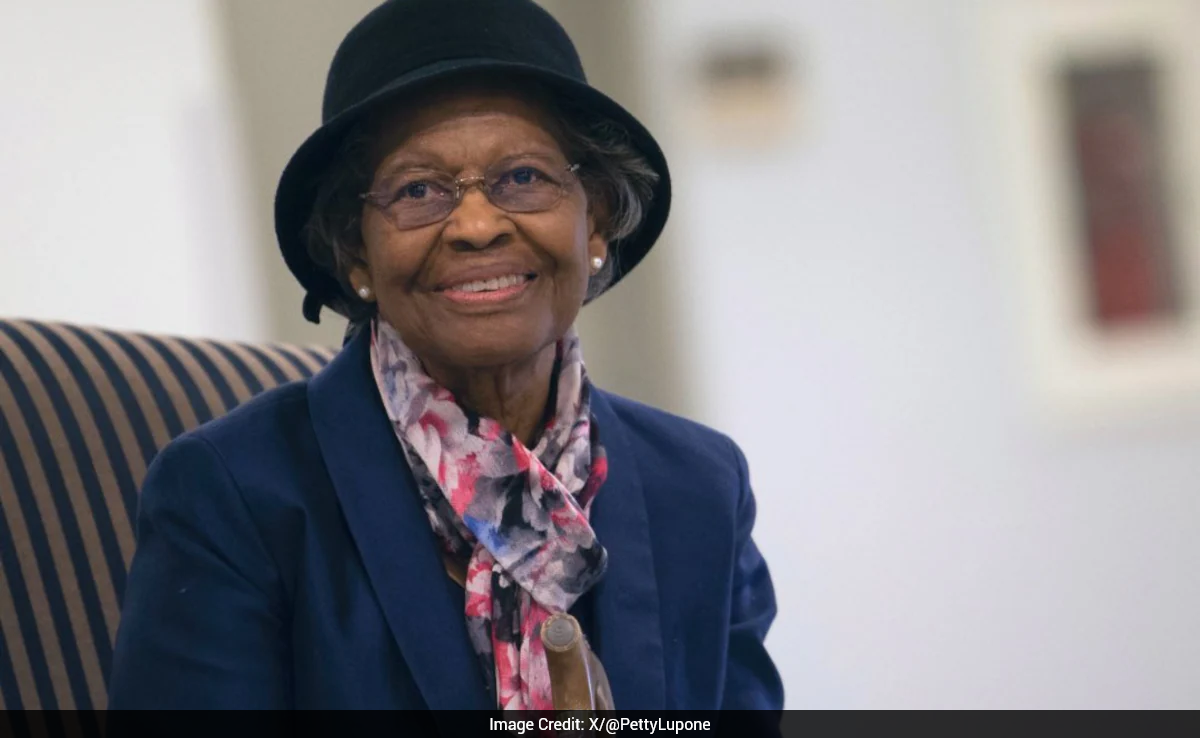
Gladys Mae West, a mathematician whose work played a critical part in the development of the Global Positioning System (GPS), the satellite mapping system that is used by billions, died on January 17 in Fredericksburg, Virginia at the age of 95. Despite her significant contribution to how the modern world operates, West remained a hidden figure who preferred to stay away from the limelight.
Born on October 27, 1930, in a rural Virginia community of sharecroppers, West was determined to make it into the big leagues. While West's ambitions were high, unexpected expenses meant that her parents could never save enough money to send her to college. West attempted to save money herself, but made little progress before a teacher announced that the state was going to offer a scholarship to the top two students.
"I started doing everything so that I would be at the top. And sure enough, when I graduated from high school, I got one," West told The Guardian, as she went on to attend Virginia State College, a historically black university.
After earning her bachelor's and master's degrees in mathematics, West taught for a time and then applied for a job at the naval base up in Dahlgren, where she became only the second black woman to be hired to work as a programmer. In 1979, she received a commendation for her hard work from her departmental head. She then became project manager for the Seasat radar altimetry project; Seasat was the first satellite that could monitor the oceans.
After proving her mettle, West focused her attention on programming an IBM 7030 Stretch computer, alongside his team of five people. The 7030 was IBM's first transistorised machine, which was the fastest computer in the world at the time and had the power to calculate the precise shape of Earth as affected by gravity and the nature of the oceans.
This detailed mathematical model of the shape of the Earth was a building block for what would become the GPS orbit. While her contribution to the technology was immense, West never spoke about it as the work was classified. Despite GPS devices emerging in the early 1990s, West kept to herself, instead of bragging about her achievements.
Also Read | 'Missing The Authenticity': NRI Man Calls US 'Boring' After Bengaluru Vacation
The 2016 movie "Hidden Figures," based on a best-selling nonfiction book of the same title, finally highlighted West's incredible contribution.
"I felt proud of myself as a woman, knowing that I can do what I can do. But as a black woman, that's another level where you have to prove to a society that hasn't accepted you for what you are. What I did was keep trying to prove that I was as good as you are," she said.
In 2018, West was inducted into the US Air Force Hall of Fame.
Track Latest News Live on NDTV.com and get news updates from India and around the world

