





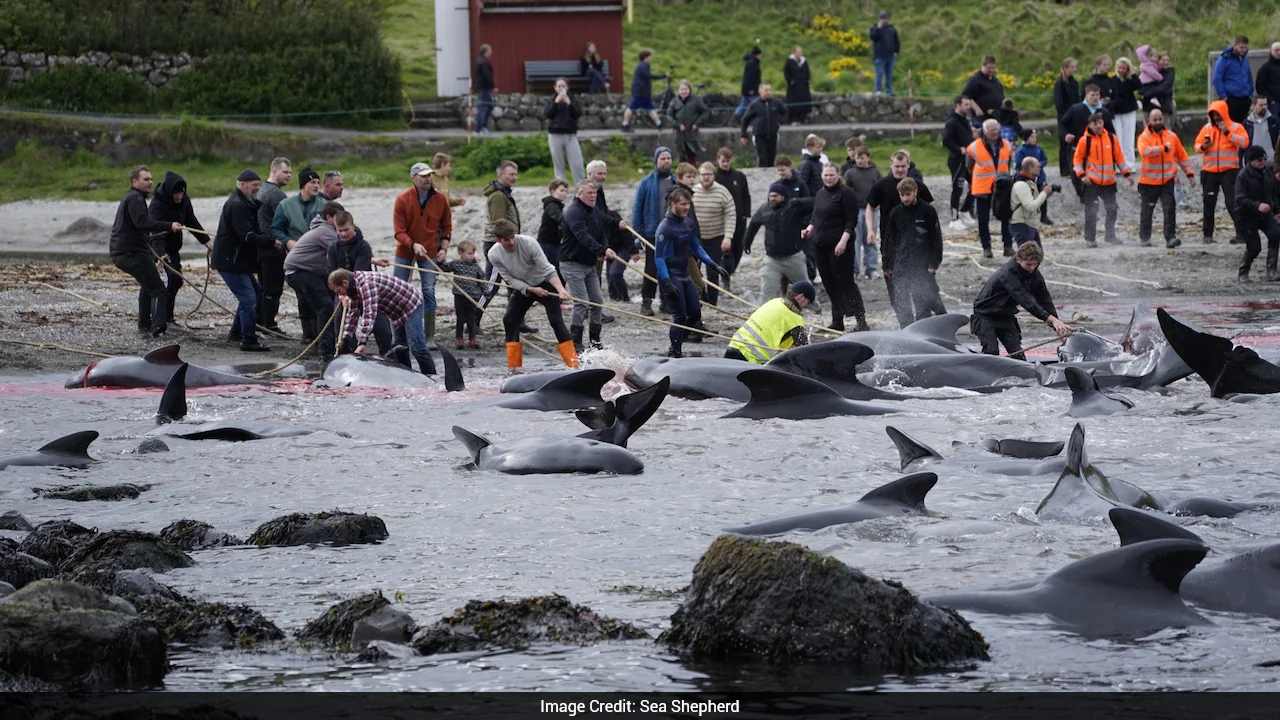
More than 700 whales and dolphins were killed near the Faroe Islands during the annual tradition called the grindadrap or grind, turning the sea crimson red. The locals used hooks and knives to herd and beach the Atlantic white-sided dolphins and long-finned pilot whales into shallow bays. Spectators, including children, watched from the shoreline as the animals were horrifically slaughtered and their bodies slashed open. Afterwards, the carcasses were piled together, hauled off, and carved up for distribution.
According to Sea Shepherd, a global environmental activist NGO, the killings took place across three hunts on Wednesday (May 27), just 200 miles north of Scotland. 402 pilot whales and four bottlenose dolphins were killed in Torshavn, 168 white-sided dolphins were killed in Skalabotnur, and 132 white-sided dolphins were killed in Hvalvik, taking the total to 706.
Reports indicate that it took hunters a long time to kill the animals, which extended the period during which the stranded animals suffered in pain and distress.
"The scale of the killings is without precedent, surpassing two-thirds of all marine mammals killed on the islands in the entire previous year," the NGO stated.
"The hunts descended into chaos as whalers admitted there was a shortage of spinal lances, which are mandatory for killing dolphins. Multiple marine mammals were instead killed using knives, only leaving the animals stressed for an extended period before bleeding to death."
Valentina Crast, campaign director for the Faroe Islands at Sea Shepherd, said 'nobody can ever justify' the level of intense suffering that was inflicted on the innocent animals. She urged governments across Europe to ban the annual massacre.
“Dolphins were killed without the mandatory equipment. Animals were crushed against rocks and struck by boat propellers. And when a third, secret grind began, one deliberately hidden from public channels, marine conservationists were arrested for documenting it," said Crast.
Also Read | Pushed AI Like Crazy, Now Asking To Be 'Mindful', Techie Exposes Company's U-Turn
Viking-Era Tradition
Framed by supporters as a 1,000-year-old Viking-era tradition, the mass slaughter of whales has sparked fierce backlash from animal rights activists, who consider it a barbaric and outdated practice unnecessary for modern survival. However, the Faroese state, an autonomous territory of Denmark, defends the tradition, stating it is a vital cultural practice that provides food for the community.
According to Ocean Care, a day before the mass killings, the Faroese Parliament on May 26 chose to rewrite the Animal Welfare Act to exclude hunted dolphins from its protection.
“Removing an activity from the protection of the law does not make it humane,” said Mark Simmonds, Director of Science for OceanCare. “What the Faroese Parliament has done is not a defence of tradition, it is a deliberate choice to place these animals outside the reach of legal protection, hours before a very large hunt takes place in the capital of the islands."
Track Latest News Live on NDTV.com and get news updates from India and around the world

