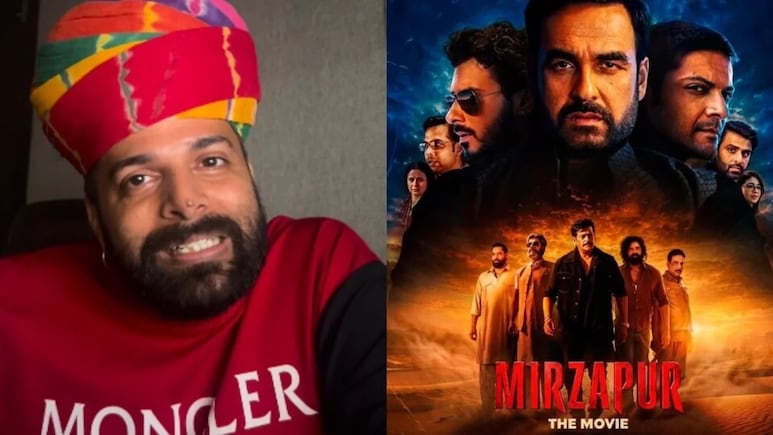
Mirzapur:The Film, based on the popular crime series, has landed in controversy after Rajput groups in Rajasthan objected to the use of the song Shoorveer, a tribute to Maharana Pratap, in the movie's opening sequence.
Former royal and direct descendant of Maharana Pratap, Vishvaraj Singh Mewar, BJP MLA from Nathdwara, has called for strict action by the Central Board of Film Certification (CBFC) over what he described as the "illegal and incorrect" use of the song.
"This has happened once too often. I really wonder if filmmakers would use something like this for contemporary leaders and get away with it. It's easy to debase history, and it should not be allowed," he said.
Bollywood forever testing the barriers of disgust, as evinced in the picturisation of the song "Shoorveer" in the film "Mirzapur: The Movie".#Bollywood #Mirzapur #Shoorveer #CulturalSensitivity #Mewar #MewarRoyalFamily #MaharanaPratap #FilmControversy
— Vishvaraj Singh Mewar (@VishvarajSMewar) September 10, 2026
The controversy centres on the film's action-packed opening sequence, in which lead character Munna Tripathi and his gang are shown engaged in a violent shootout while Shoorveer plays in the background.
The song, composed and sung by Rapperiya Balam (Ashok Manda Bishnoi), celebrates the valour of Maharana Pratap and references his charge into the Battle of Haldighati astride his legendary horse, Chetak.
Senior BJP leader, seven-time MLA and former Leader of Opposition Rajendra Rathore has written to the CBFC, calling the use of the song "highly objectionable".
"Maharana Pratap is a national icon and is regarded as India's first freedom fighter by many. The song Shoorveer describes his bravery in battle. Using it as a background score for characters involved in crime, violence and illegal activities is not appropriate," Rathore told NDTV.
He alleged that the filmmakers were distorting history and hurting public sentiments.
"This is not just an issue for Rajasthan. People across the country are upset. In the age of AI and digital manipulation, content that misrepresents historical figures must be viewed seriously. I will also lead a delegation to Delhi to raise the issue," he said.
The controversy has also drawn a reaction from Rapperiya Balam, who said he was "anguished" by the use of the soundtrack.
"This song belongs to our motherland and to Veer Shiromani Maharana Pratap. I am hurt that it has been used in this manner without my permission. I have sent a legal notice to the record company and the filmmakers," he told NDTV.
Rathore further accused sections of the entertainment industry of repeatedly misrepresenting Rajasthan's history and culture. Referring to recent remarks by actor Swara Bhaskar on the subject of Jauhar, he said historical events should be viewed in their proper context and not through contemporary comparisons.
"In the name of art, you cannot debase history. This song was created to honour Maharana Pratap. I support creative freedom, but not when it comes at the cost of misrepresenting our national heroes and cultural heritage," he said.
The filmmakers and producers of Mirzapur: The Film have not yet responded publicly to the objections raised by Rajput organisations and political leaders.
But this is not the first time social groups from Rajasthan have objected to representation of the state's history in popular culture.
The most controversial being Sanjay Leela Bhansali's magnum opus Padmaavat in 2018. Rajput organisations, particularly the Karni Sena, raised a high-pitched protest in Rajasthan against what they alleged was a distortion of the legacy of Rani Padmini, the legendary queen of Chittor. The groups objected to reports that the film depicted a romantic or dream sequence between Alauddin Khilji and Padmavati, arguing that such portrayals undermined Rajput honour and misrepresented historical traditions. Despite repeated clarifications from the filmmakers that no such scene existed in the final film, protests spread across Rajasthan and several other states, turning the film into a national political and cultural flashpoint.
Another long-running dispute involved the picturisation of Jodha Akbar. Rajput groups in Rajasthan argued that the serial inaccurately portrayed the relationship between Mughal emperor Akbar and Rajput princess Jodha Bai and took excessive creative liberties with historical events. Demonstrations were held in several districts, and petitions were filed claiming that the show distorted Rajput history and misrepresented prominent historical figures.
For many Rajput organisations, the central issue has remained the same: whether filmmakers and creators can invoke artistic freedom when dealing with figures such as Maharana Pratap, Rani Padmini, or other personalities who are regarded in Rajasthan not merely as historical characters but as symbols of a cultural and caste identity. Critics argue that popular entertainment often blurs the line between fiction and history, while filmmakers maintain that creative works are not intended as academic representations of the past.
