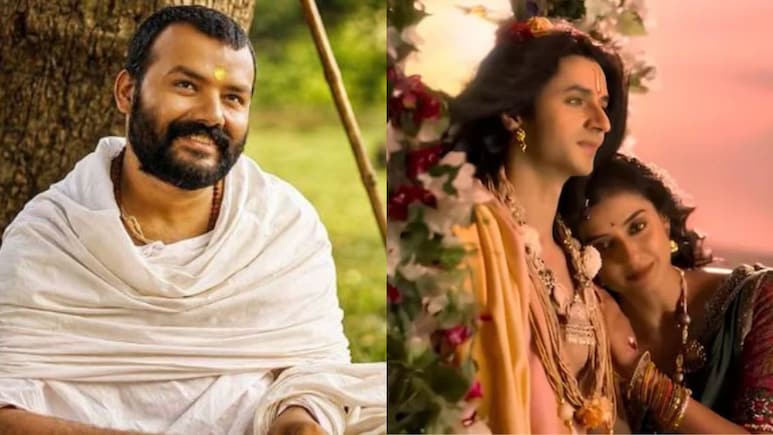
Devotion is hardly a new subject for Indian cinema. From Jai Santoshi Maa to Shirdi Ke Sai Baba, faith-based storytelling has long held a place in the entertainment industry.
Yet in recent years, there has been a noticeable increase in films centred on spiritual icons and religious themes.
The trend is also beginning to reflect in box-office numbers. In 2024, the animated mythological and divotional film Mahavatar Narsimha emerged as one of the year's biggest success stories, earning nearly Rs 250 crore net in India.
-

-
 Is AI Bubble Waiting To Burst? Nikhil Kamath Warns Of Tougher Months Ahead
 -
 "We Don't Have 5 Years": Celebrated American General Sounds Alarm On War
 -
 "There Will Be Issues Between Big Countries": S Jaishankar On India-China
 -
 Neha Goyal Makes Stunning Asian Games Gold Revelation At NDTV World Summit 2026
 -
 Big NDTV Summit Impact: RBI Governor's Tata Sons Listing Remark Makes Top Newspaper Headlines
 -
 "Certainty Is A Problem": Nikhil Kamath On Marriage, Children And Future
 -
 "High Inflation Is Like Tax On Everyone": RBI Governor At NDTV World Summit
 -
 RBI Governor Sanjay Malhotra's Big Hint On Tata Sons Listing Row At NDTV World Summit
 -
 The Mystery Of A Bare Nail In Ashwini Vaishnaw's Office
 -
 To PM Modi's "Failed Product" Jab At Rahul Gandhi, A Shashi Tharoor Counter
More recently, Krishnavataram Part 1: The Heart collected Rs 39.33 crore net at the domestic box office and has already paved the way for Part 2, which is tentatively scheduled for release in 2027.
Meanwhile, Vishal Chaturvedi's Hanuman Ansh is on course to cross the Rs 150 crore net mark in India. The devotional film's cumulative India gross collection currently stands at Rs 168.85 crore, while its domestic net earnings have reached Rs 142.88 crore. Vishal has now announced his next film, Rambola, based on the extraordinary life and legacy of Mahakavi Goswami Tulsidas.
Alongside these titles, projects such as Haare Ka Sahara, Baba Khatu Shyam Hamara, and Tera Sai suggest that filmmakers are once again turning towards devotional narratives.
According to trade analysts, this resurgence is being driven by a combination of audience demand, changing viewing habits, and the industry's constant search for stories that resonate across generations and regions.
Not A New Trend, But A Returning One
Trade analyst Taran Adarsh rejects the idea that devotional films are a completely new phenomenon.
He tells NDTV, "It's not a new trend. In 1975, when I was just 10 years old, we had Jai Santoshi Maa. Even before that, many devotional films were being made. My father himself produced several devotional films, so I know this first-hand."
Adarsh believes cinema moves in cycles. Different genres gain popularity at different times, whether they are romance, action, family dramas, horror comedies, or devotional stories.
"Over a period of time, we moved towards masala films, multi-starrers, urban-centric stories, and overseas-friendly films. Then there were love stories, followed by a return to masala films and horror comedies. So why not devotional films? There is always a market for a good film."
For him, audience connection remains the most important factor.
"What you make is important, but how many people connect with it is even more important. If people connect with a film, it will find its audience."
A Response To Audience Demand
While Adarsh sees the phenomenon as part of cinema's natural evolution, trade analyst Komal Nahta believes changing audience tastes are playing a major role.
"These films are doing well because there is a growing interest in spirituality among younger audiences. You may have heard of 'Bhajan Clubbing'. Youngsters are now taking an interest in mythology, divinity, and faith. Fifteen to twenty years ago, many young people would dismiss such subjects, saying they were boring or that no one believed in miracles. Suddenly, youngsters are also patronising such films."
Nahta says the industry's fascination with devotional cinema is ultimately driven by economics.
"Filmmaking is a business. If a certain kind of film is making money, more producers will make it. That is the simple reason."
Ramesh Bala echoes this view and argues that younger audiences are increasingly interested in reconnecting with India's cultural and mythological heritage.
"Younger audiences are becoming more curious about their cultural roots and mythology. When faith-based stories are presented with contemporary storytelling and strong visuals, they become more accessible, relatable, and engaging."
Why Producers Are Investing In Devotional Stories
For filmmakers, devotional narratives offer both emotional depth and broad audience appeal.
Bala explains, "Devotional stories come with strong emotional recall and a built-in cultural connection. They offer filmmakers a rich canvas for emotion, music, spectacle, and visual storytelling while appealing to audiences across regions and generations."
Adarsh points out that producers and studios are constantly looking for a variety of projects.
"A production house cannot survive by making only one type of film. Every producer needs a range of projects. If devotional films are being announced now, they may simply be projects that have been in development for a long time and are reaching audiences together."
The success of films such as Mahavatar Narsimha, Krishnavataram Part 1: The Heart, and Hanuman Ansh has also reassured producers that faith-based stories can achieve commercial success at the national level.
The Case Of Hanuman Ansh
Perhaps the strongest example of this trend is Hanuman Ansh, which emerged as an unexpected box-office success despite a slow start.
The film has become one of the surprise performers of the year, collecting Rs 142.88 crore net and Rs 168.85 crore gross in India so far, with the Rs 150 crore net milestone now within reach.
According to Adarsh, the film had very little going in its favour before release. "It had a first-time director, a first-time actor, and almost no pre-release promotion. The makers simply did not have the money for a large marketing campaign."
He recalls that the film struggled initially. "The first week was poor, and the second week saw a complete collapse. The producers must have been under immense stress."
What changed, he says, was the audience response. "From the third weekend onwards, the film suddenly began to grow. Audiences became its brand ambassadors. They started recommending it on social media, through WhatsApp, and among friends and family. When people become your brand ambassadors, you do not need promotions."
Nahta attributes the turnaround to strong content and positive word of mouth. "The film was a slow starter because very few people watched it initially. But those who did began telling others that it was worth seeing. Word of mouth gradually spread, and the film picked up after two weeks."
He also believes the music contributed to its success. "Sometimes music takes a long time to become popular. Combined with strong content and a sincere approach, it helped the film find an audience."
Surviving Competition
One of the most striking aspects of Hanuman Ansh's run has been its ability to perform despite competition from larger releases such as Toxic and Mirzapur.
Adarsh sees this as proof that audiences make their own choices. "That's the beauty of it. Mirzapur is working, and Hanuman Ansh is also working. They are completely different genres, yet both are coexisting. What's even more remarkable is that neither film has the traditionally big star names. They don't have the Khans, the Kapoors, the Singhs, the Roshans, or the Kumars. Some actors may be well known from web series, but the big screen is an entirely different ballgame. The audience is going in to watch the films because they are enjoying them. That's a great sign for cinema."
Nahta agrees. "Once a film clicks, no opposition is truly formidable. The word of mouth became so strong that people who had not seen it felt compelled to watch it."
Bala adds, "Its sustained performance shows the strength of genuine word of mouth. Strong audience connection can help a film hold its ground irrespective of competition."
Lessons For The Industry
For all three trade experts, the biggest lesson is that content remains king.
Nahta says, "You must be sincere in your work and deliver good content. Nothing can stop a film with good content. Do not run after big names. Focus on content and execution."
Adarsh describes Hanuman Ansh as a case study for the industry.
"The audience ultimately decides a film's fate. You can make a film, but once it is released, it is in the hands of the public. They decide whether it goes to heaven or to hell."
The success of films made without major stars has reinforced the belief that storytelling, rather than celebrity power alone, continues to drive theatrical success.
Will This Help Ramayana?
The renewed interest in devotional storytelling is also expected to benefit upcoming mythological spectacles, particularly Ramayana.
Adarsh believes the film already has significant advantages. "Ramayana is a lavishly mounted project with some of the biggest names on and off screen. More importantly, it is Ramayana. People will want to watch it."
However, he also offers a note of caution. "The footage I have seen looks fantastic, but we should wait for the final product. No one has seen the completed film yet."
The Bigger Picture
The rise of devotional films appears to be less about a sudden trend and more about changing audience preferences. The strong performance of Mahavatar Narsimha, the respectable run of Krishnavataram Part 1: The Heart, and the extraordinary word-of-mouth success of Hanuman Ansh indicate that audiences are increasingly willing to engage with stories rooted in faith, mythology, and spirituality.
As younger viewers show greater interest in cultural and religious narratives, and as filmmakers find new ways of presenting these stories through contemporary storytelling and visual spectacle, devotional cinema is finding renewed momentum at the box office.
Whether this wave continues will depend on one factor that all three trade experts agree on: strong storytelling. As Bollywood has learned repeatedly across genres, audiences may be drawn to a theme, but they stay for a good film.
Also Read: Hanuman Ansh Team Meets UP Chief Minister Yogi Adityanath As Film Nears Rs 150 Crore Milestone
